
Maternal Mortality Rates Remain High, Home-Based Early Detection Becomes Key
REPUBLIKA.CO.ID, JAKARTA — Maternal mortality rates in Indonesia remain a serious unresolved issue. With around 140 deaths per 100,000 live births, Indonesia is recorded as one of the countries with the highest maternal mortality rates in Southeast Asia.
The high rates are inseparable from classic problems: limited access to healthcare services, especially in remote areas. Many pregnant women have to travel long distances for check-ups, face long queues at community health centres, and there is a shortage of healthcare workers at the village level.
This situation indicates that maternal health issues are not solely about facilities, but also about delays in detection and handling.
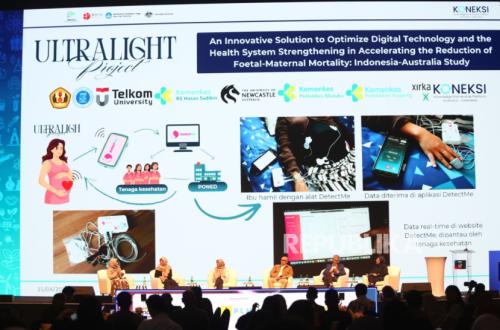
Several technological innovations are being directed to address this problem, one of which is through a home-based early detection approach. Self-contained fetal monitoring devices allow pregnant women to conduct check-ups from home, with data directly connected to healthcare workers.
If anomalies are detected, medical interventions can be carried out more quickly. This approach is considered capable of reducing the risk of delays that have long been the main factor in maternal and infant deaths.
The development of this technology is carried out through the ULTRALIGHT research project, a collaboration of seven institutions from Indonesia and Australia, including Universitas Padjadjaran, Institut Teknologi Bandung, Telkom University, Poltekkes Kemenkes Kupang, Rumah Sakit Hasan Sadikin, and University of Newcastle.
The research is conducted in high-vulnerability areas such as West Java, East Nusa Tenggara, Maluku, and refugee immigrant communities in Australia.
The lead researcher of the ULTRALIGHT project, Restuning Widiasih, stated that the main challenge is not only technology, but also behavioural change.
“There is a culture among pregnant women who are accustomed to being served. When asked to use the device independently at home, some feel hesitant,” she said at the IDE Katadata Future Forum 2026 at Djakarta Theatre, Wednesday (15/4/2026).
According to her, the healthcare system has so far positioned pregnant women as passive service recipients. Therefore, the shift towards self-monitoring requires a stronger social approach.
On the other hand, the use of technology actually encourages family involvement, especially husbands, in monitoring pregnancy conditions.
The Chairman of the Indonesian Healthcare Equipment Ecosystem Development Association, Randy Teguh, assessed that innovations like this have the opportunity to enter the government procurement system due to the efficiency offered.
However, he warned that affordable prices do not always guarantee market adoption. Previous experiences show that similar innovations developed domestically did not develop optimally.
“The momentum now is different,” said Randy.
He assessed that national health policies increasingly focused on reducing maternal mortality provide opportunities for early detection innovations to be integrated more widely.
Nevertheless, success is not determined solely by technology. Integration with the health system, digital infrastructure readiness, and the capacity of healthcare workers remain determining factors.
The home-based early detection approach is considered capable of shifting the healthcare service paradigm from previously reactive to more anticipatory.
In the end, efforts to reduce maternal mortality require a combination of innovation, a strong system, and community acceptance. Without that, technology risks remaining as a pilot project.
However, if implemented consistently, this approach has the potential to bridge the gap between home and healthcare services while saving more lives at the same time.