
Massive Waste Heaps to Be Converted into Renewable Fuel
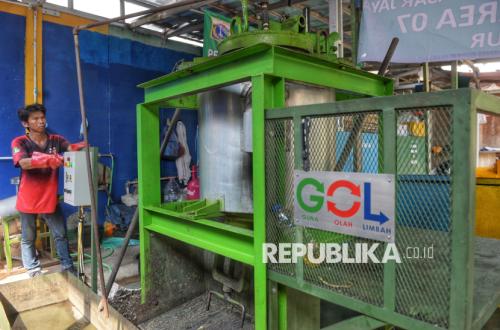
Jakarta, REPUBLIKA.CO.ID — The government has begun pushing the processing of long-standing dumps at final disposal sites (TPA) into renewable fuel using pyrolysis technology. The move is part of accelerating the implementation of waste-to-energy processing in line with Presidential Regulation No. 109 of 2025.
Coordinating Minister for Food Zulkifli Hasan said the government is no longer solely focused on waste-to-energy schemes that convert newly generated waste into electricity. The government is now targeting the long-standing waste piles at TPAs in various regions such as Bantar Gebang, Bandung, and Bali to be processed into renewable fuels through pyrolysis technology.
‘If earlier waste was processed into energy, now we are pushing the waste dumps at TPAs to be converted into renewable fuels through pyrolysis technology,’ said the man affectionately known as Zulhas in Jakarta on Tuesday (19 May 2026).
He explained that the pyrolysis scheme differs from waste-to-energy based on incineration. In the waste-to-energy scheme, new waste is processed directly into electricity. The pyrolysis technology, by contrast, is focused on handling long-standing waste piles that have piled up at TPAs.
According to Zulhas, the government faces serious issues due to the high volume of long-standing waste in several areas. In fact, the waste piles at some TPAs are reported to have reached up to the height of 16-storey buildings. ‘Well, we already have waste that has piled up to the height of 16 storeys. Such as at Bantar Gebang and other tall places. Now those using pyrolysis will be processed into fuel,’ he said.
Several ministries and agencies are involved in the project. This includes the Ministry of Environment and Forestry (KLHK), the Ministry of Education, Higher Education, and Culture (Kemenristek) or related, the National Research and Innovation Agency (BRIN), PT Pindad, and elements of the Indonesian Army (TNI AD). The parties support the development of technology and its implementation on the ground.
Zulhas said waste processing is now regarded as part of the national energy independence strategy. The government is also engaging Danantara in developing waste-to-energy projects and other waste-processing technologies.
‘In other words, waste processing is no longer seen as a burden, but as a source of energy and part of the national energy independence ambition,’ he said.
Danantara’s Chief Investment Officer (CIO) Pandu Sjahrir said the government is preparing different schemes for handling new waste and old waste. New waste will be processed through the electricity-from-waste project (PSEL), while old dumps will use a separate technology.
He named several major cities as priorities for handling old waste due to the enormous volumes. Jakarta, Bandung, and Bali are included in the initial locations for the project. ‘The largest one is Jakarta, among them. Later, the old waste that has piled up will use its own techniques, whereas the new waste will use waste-to-energy,’ Pandu said.
The government aims to accelerate the waste-to-energy project to operate in phases up to 2028. Zulhas said half the projects are targeted to be completed by 2027, with the remainder by 2028, including the Bantar Gebang project.
Waste-to-energy is projected to help reduce the burden on TPAs while strengthening the national renewable energy supply. The government will ensure the progress of waste management is monitored through cross-ministerial and agency coordination.