
Mass Conversions to Islam Among Chinese People: The Reasons
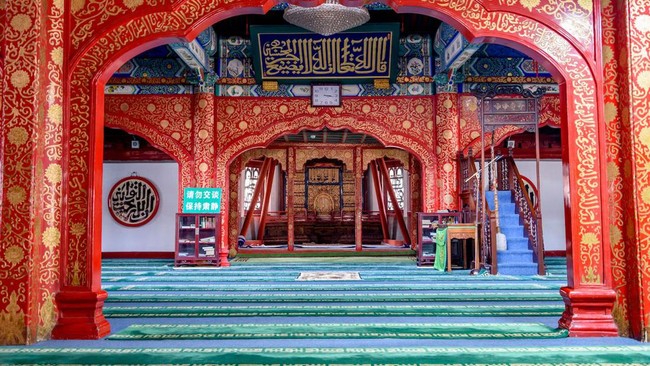
History notes there was a period when Islam grew rapidly in China, attracting many locals to embrace the faith. This occurred during the reign of Zhu Yuanzhang, founder of the Ming Dynasty (1368-1398). In that period Islam was not only surviving as the religion of a small community; instead, Islam developed and began to occupy an important space in Chinese social and political life. A study titled Islam in Imperial China (2019) notes that the early Ming Dynasty was among the most conducive periods for the growth of the Muslim community in the country. During this period, the number of people embracing Islam increased significantly. The spread of Islam occurred through various social channels. Proselytising was conducted personally and reached local communities, from villages and family clans to trade networks. This social interaction made Islam more widely known and attracted many. Beyond social factors, state support also accelerated the development of Islam. The Ming government encouraged the construction of mosques and centres of religious learning. Muslim scholars and intellectuals gained space to develop within society. Moreover, the Muslim community began to be involved in the imperial administration. Many among them were recruited to fill important positions, such as national administration, military, and the palace environment. In practice, several Muslim figures were entrusted with strategic roles such as imperial advisers, diplomatic envoys, palace officials, and provincial governors. This involvement made the Muslim community more influential in political and social life at the time. Traces of acceptance of Islamic culture are visible on imperial artefacts. Some palace objects from the Ming Dynasty era are known to bear Arabic and Persian calligraphy, indicating the influence of Islamic tradition within the royal milieu. However, support for Islam ran alongside coercive processes of cultural assimilation. The Muslim community in China gradually adjusted to local culture. A study titled Islam in Imperial China: Sinicization of Minority Muslims and Synthesis of Chinese Philosophy and Islamic Tradition (2019) notes that this process is known as sinicisation, a cultural adaptation that blends part of the Hui Muslim cultural identity with Chinese tradition. One of the most striking pieces of evidence of the close relationship between the Ming imperial court and Islam is the poem praising the Prophet Muhammad known as the Hundred-Word Eulogy. This text is often linked to the reign of Zhu Yuanzhang and depicts the Prophet Muhammad as a wise figure bringing mercy to all creation. According to the study Praising the Prophet Muhammad in China, the existence of this poem shows that Zhu Yuanzhang had an understanding of Islamic teachings, even though he did not become a follower. The praise also signals that at the time Islam was viewed as a moral and spiritual force with a place in Chinese society.