
Market Inspection Reveals Beef Prices Exceeding Rp150,000 per Kilogram
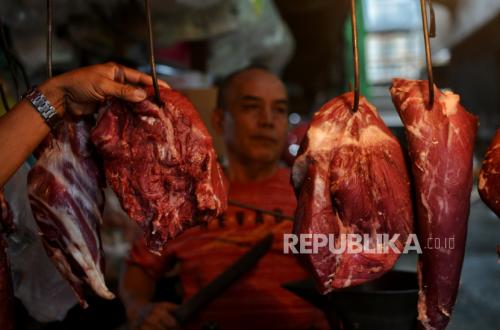
REPUBLIKA.CO.ID, JAKARTA – Bulog CEO Ahmad Rizal Ramdhani found beef prices exceeding Rp150,000 per kilogram during an inspection at Pasar Minggu in South Jakarta on Tuesday (14/4/2026). This figure is above the reference selling price (HAP) of Rp140,000 per kilogram. He, along with Bulog officials, the South Jakarta Industry and Trade Office, and Perumda Pasar Jaya, conducted the inspection to ensure that food prices and availability remain controlled at the market level. “The issue is beef. The price increase is likely due to traders holding back supplies in preparation for Idul Adha,” Rizal said. According to him, the rise in beef prices is still within controllable limits, but it needs to be anticipated to prevent it from continuing and further pressuring people’s purchasing power. Therefore, Bulog will coordinate with state-owned food enterprises to add supplies of frozen beef to strategic markets, particularly through the Stabilisation of Food Supply and Price (SP2KP) network. “We will communicate with Berdikari to provide support for frozen beef to SP2KP markets so that prices can return to the HAP of Rp140,000 per kilogram,” Rizal stated. During the inspection, Bulog also noted that prices of other commodities such as rice, cooking oil, and eggs were relatively stable. Rice and Minyakita were sold at the highest retail price (HET), although demand for Minyakita has increased. The increase in demand is due to consumers shifting from bulk oil as packaging plastic costs rise. This situation requires additional supplies in the field to maintain distribution balance. Rizal stated that Bulog has requested an additional quota for Minyakita to meet national needs, especially in traditional markets. Previous distribution was prioritised for the food assistance programme during Ramadan and Idul Fitri. “Now that Ramadan and Idul Fitri are over, we are pushing distribution back to SP2KP markets,” said this three-star retired general. On the distribution side, Bulog still found traders who are not registered as official Minyakita retailers. This is related to the requirement to have a Business Identification Number (NIB) as a condition for distribution. According to Rizal, some traders are reluctant to apply for NIB due to concerns about tax obligations, even though the government has assured that the process is easy and free. “It’s not difficult, but traders are not yet willing to register for NIB. They are worried about taxes,” he explained. Rizal emphasised that Bulog is opening access for traders to become Minyakita retailers as long as they meet administrative requirements. Coordination with relevant agencies for socialisation will be strengthened to avoid misunderstandings in the field. Bulog assures that it will continue to monitor developments in food prices and supplies through routine inspections at various markets, and prepare quick actions to maintain stability, especially for commodities that are starting to face pressure.