
Mark Zuckerberg Testifies in Social Media Addiction Trial
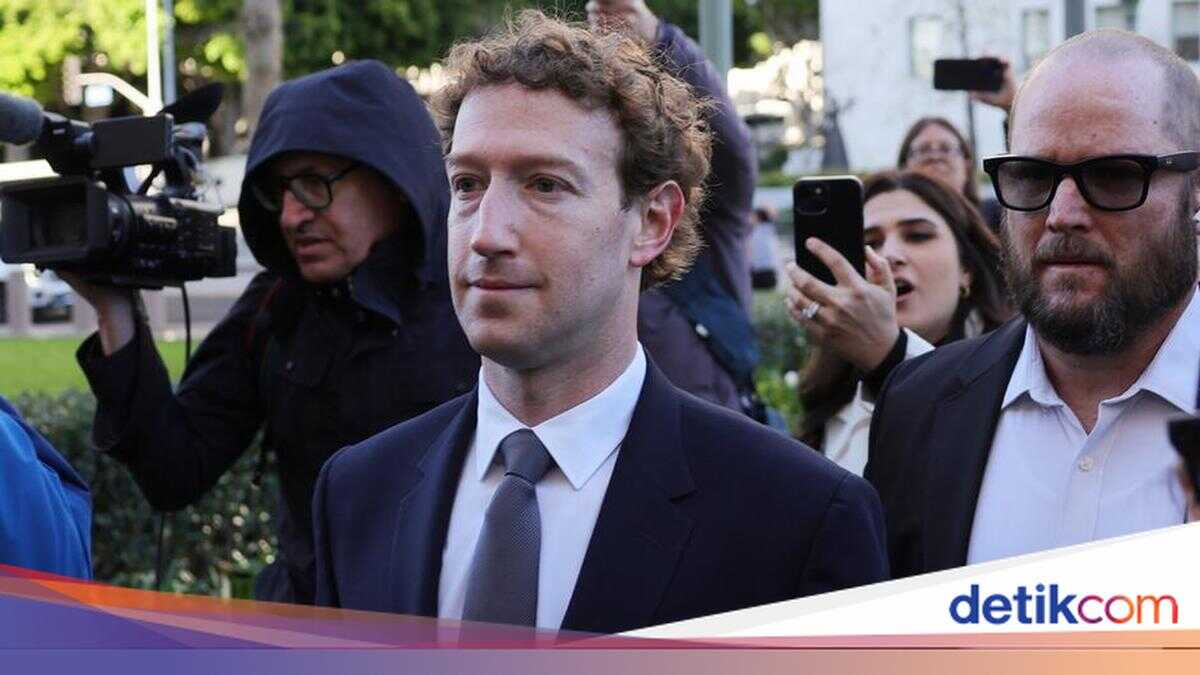
Meta CEO Mark Zuckerberg appeared in a Los Angeles court on Wednesday (18 February) to testify in a trial concerning the harmful effects of social media on children, placing his company firmly in the spotlight.
A Californian woman who had used Meta’s Instagram and Google’s YouTube since childhood claimed the applications triggered depression and suicidal thoughts.
The plaintiff began using YouTube at the age of six, Instagram at eleven, followed by TikTok and Snapchat. The latter two platforms have already reached compensation settlements with the plaintiff.
The lawsuit alleges the companies deliberately made children addicted to their services despite being aware of the detrimental effects on mental health.
The central question is whether social media applications are indeed addictive for children.
Zuckerberg regrets slow detection of under-13 users on Instagram
Meta and Google have denied the allegations. Meta cited research from the National Academies of Sciences that found no evidence that social media affects children’s mental health.
Should Meta lose the case, the company would be required to pay compensation to the plaintiff. The ruling could also potentially undermine the credibility of social media companies, particularly as an increasing number of governments worldwide are banning the use of such applications for children under 16.
In his testimony, Zuckerberg said he regretted the company’s slow progress in detecting Instagram users under the age of 13. He added that a number of improvements had been made.
“I always wish we could have done it faster,” he said.
Last week, Instagram CEO Adam Mosseri also testified and firmly rejected the notion that social media causes addiction.
“I’m sure I’ve said I was addicted to a Netflix series when binge-watching late into the night, but I don’t think that’s the same as clinical addiction,” Mosseri said.
Internal emails presented in court
The Los Angeles case is one of several trials against social media companies in the United States.
The ruling in this case could serve as a benchmark for the resolution of thousands of other lawsuits alleging that social media has exacerbated cases of depression, anxiety, eating disorders and suicide among young people.
The focus is on application design, algorithms and platform personalisation features.
The plaintiff’s lawyers presented an internal Instagram memo from 2018 stating: “If we want lots of teenagers to use Instagram, we need to start attracting them as pre-teens.”
Zuckerberg said the presentation of the document in court “misrepresented what I said.” He added that he had “held various discussions over time to try to build different versions of the service that children could use safely.”
Meta had discussed creating a version of Instagram for children under 13 but ultimately never built the service.
Prosecutors also displayed internal email exchanges showing Mosseri defending Zuckerberg’s 2020 decision to continue allowing cosmetic filters on Instagram.
Several other executives opposed the decision and warned of the harmful effects of such filters on teenage girls. Meanwhile, those who wanted to retain the filters sought to avoid losing market share amid increasing competition from TikTok.
The jury was also shown emails from 2014 and 2015 in which Zuckerberg explicitly targeted double-digit percentage increases in user time spent on the application.
Growing number of countries banning social media for minors
The lawsuit forms part of a global wave of pushback against social media platforms, as several countries have enacted legislation restricting social media use to protect children’s mental health.
A ban on social media use for children under 16 in Australia is already in effect.
In France, a bill banning social media use for users under 15 is being debated in parliament. Meanwhile, the Spanish Council of Ministers is expected to approve similar regulations for users under 16 before submitting them to parliament.
German Chancellor Friedrich Merz also publicly stated on Wednesday (18 February) that he was considering a similar prohibition policy.
Norway, Greece, the United Kingdom, Denmark, Italy and the Netherlands are among the European countries currently discussing various forms of restrictions.