
Maritime and Fisheries Ministry Projects Red-White Fishing Villages in NTB-NTT to Boost Regional Economy by IDR 29.2 Billion Annually
The Ministry of Maritime Affairs and Fisheries (KKP) projects that the Red-White Fishing Village (KNMP) programme in East Nusa Tenggara (NTT) and West Nusa Tenggara (NTB) will boost regional economic growth by IDR 29.2 billion annually.
This optimism was conveyed directly by the Maritime and Fisheries Minister, Sakti Wahyu Trenggono, following inspections of several KNMP locations in eastern Indonesia.
During his visits, Trenggono inspected KNMP sites in Sikka Regency, Sulamu Village, Kamanlaputi in East Sumba, Warloka in NTT, as well as Bungin Island and Ekas Buana Village in NTB. These inspections were part of the government’s commitment to ensure optimal development and deliver direct impact to fishing communities.
“If something is damaged, repair it. Remind the cooperatives, because this belongs to all of you. The government built this for your benefit,” Trenggono stated in a statement on Friday, 27 February 2026.
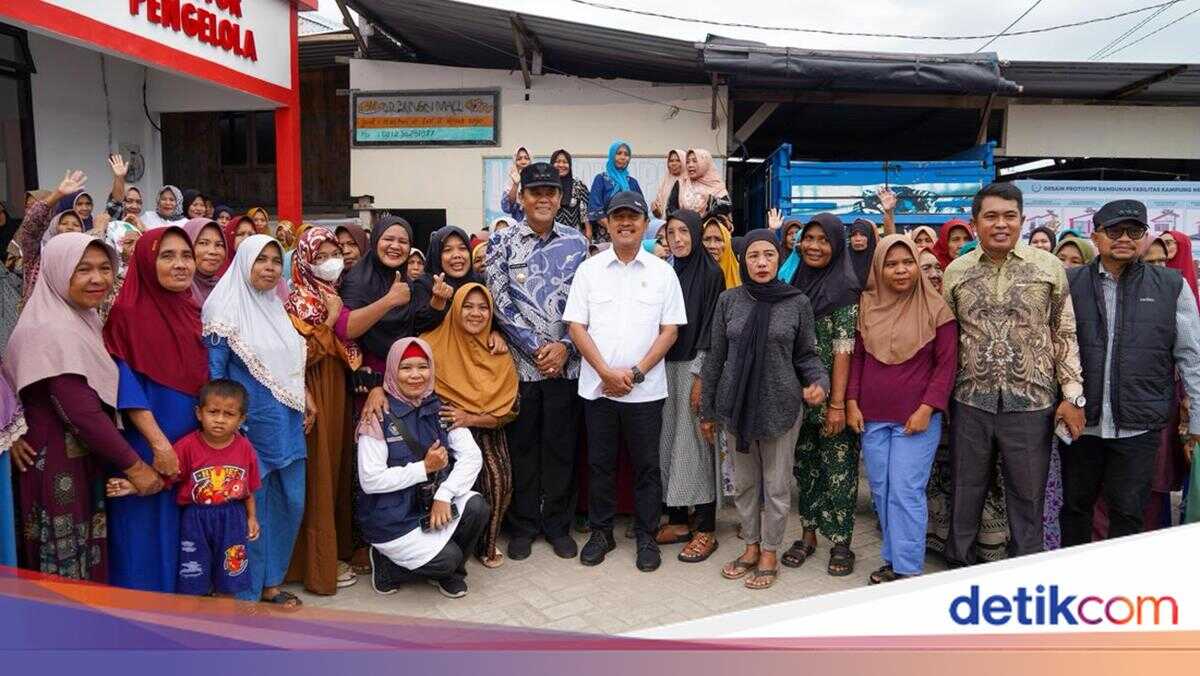
He made this statement to fishermen in Ekas Buana Village. He emphasised that the primary objective of KNMP development is to combat poverty in coastal villages. In East Lombok, particularly in Ekas Buana Village, the poverty rate stands at 13 per cent.
“What is our objective? To combat that 13 per cent poverty. In two years to come, there should no longer be anyone living in poverty. Everyone should prosper,” he said.
According to Trenggono, increasing fishermen’s productivity is the key. With the availability of production facilities and supporting infrastructure, catch yields are expected to increase significantly, ultimately raising community incomes.
“The objective is really for the people of East Lombok, in Ekas Buana, who are mostly fishermen, to increase their productivity. Once they increase, their welfare will automatically improve as well. That is why I came here,” he said.
The KNMP programme is designed as an integrated system from upstream to downstream. The government not only builds physical infrastructure but also implements social engineering through empowerment of coastal communities, including enhancement of human resource capacity, strengthening of cooperatives, entrepreneurship development, and business certification and standardisation.
Through these interventions, each KNMP location is targeted to increase fish production by up to 800 tonnes annually, absorb approximately 700 workers—both fishermen and non-fishermen—and increase the area’s economic value by IDR 29.2 billion annually in accordance with programme design.
The KKP has been constructing 100 KNMP sites throughout Indonesia since late 2025. One that has been physically completed is the Ekas Buana Village KNMP, in Jerowaru Subdistrict, East Lombok Regency.
Ekas Buana Village was selected because it possesses significant fishing potential with main commodities including skipjack tuna, smoked fish, mackerel, and shrimp. Of 1,226 households, 854 are engaged in fishing, with 396 active fishing vessels operating.
Various facilities have been constructed to support fishing activities, ranging from portable cold storage warehouses, ice factories, fish landing shelters, vessel docking facilities, fishermen’s workshops, fishermen’s halls, and fish marketing kiosks to wastewater treatment installations. The government has also distributed 10 marine engine units, 1,620 fishing implements, one refrigerated vehicle, and 50 cool boxes.
Beyond physical construction, the KKP strengthens managing institutions through capacity building of village cooperative officials, mentoring from community empowerment specialists, and skills enhancement for fisheries extension officers.
Trenggono affirmed that all fishing villages in NTB and NTT have the opportunity to benefit from KNMP development as long as they meet the criteria of being fishing villages.
“As long as it is a fishing village, we will develop it. We must create all economic potential that exists here,” he said.
With the strengthening of supply chains, implementation of cold chain systems, and enhancement of fish product competitiveness in regional and global markets, the government hopes that KNMP will not merely be an infrastructure project but rather an engine for transforming the coastal economy in eastern Indonesia.