
Marhaban: Resilient State-Owned Insurance
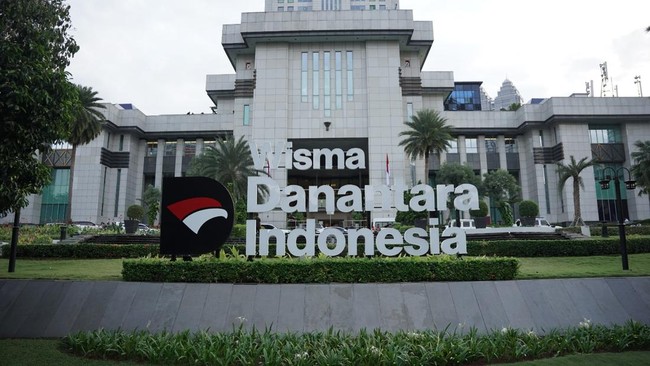
The state-owned insurance industry is on the brink of a major transformation. Danantara, the Agency for Managing Investments in Nusantara’s Future Power, is accelerating plans to consolidate around 15 state-owned insurance companies and affiliated entities into three main pillars: general insurance, life insurance, and credit/guarantee insurance. If implemented consistently, this step has the potential to create state-owned insurance entities that are stronger in terms of capital, more efficient operationally, and more resilient in facing increasingly complex risk dynamics.
Currently, fundamental evaluations of each company are still underway as a stage towards final consolidation. Danantara’s Chief Operating Officer, Dony Oskaria, stated that the consolidation is expected to streamline bureaucracy, improve operational efficiency, and strengthen the companies’ financial performance. The integration of various state-owned insurance entities is believed to increase market capitalisation while expanding the companies’ capacity to absorb risks.
The consolidation scheme could proceed through streamlining or mergers, but Dony has firmly guaranteed that all employees will be absorbed into the new entities without mass layoffs. This commitment is crucial for maintaining workforce stability and ensuring the continuity of competencies in the national insurance industry.
Strengthening the Industry Structure
The Financial Services Authority (OJK) welcomes this consolidation initiative, with the note that the process must be carried out carefully while upholding strong governance and risk management. The consolidation is expected not only to strengthen the companies’ structure but also to improve operational efficiency, expand underwriting capacity, and bolster capitalisation and solvency.
This step also aligns with the regulator’s policies through OJK Regulation No. 23 of 2023, which sets gradual increases in the minimum capital requirements for insurance companies. By the end of 2026, conventional insurance companies are required to have a minimum capital of Rp250 billion, while sharia insurance companies must have Rp100 billion.
In the next stage, capital requirements increase according to the clustering of Insurance Company Groups Based on Equity (KPPE). For KPPE 1, the minimum capital is set at Rp500 billion for conventional insurance companies and Rp200 billion for sharia insurance companies. Meanwhile, for KPPE 2, the minimum capital limit rises to Rp1 trillion for conventional insurance companies and Rp500 billion for sharia insurance companies. Strengthening equity is not only important for increasing public trust, which is the main foundation of the insurance industry, but also serves as a risk buffer amid domestic and global economic uncertainties.
Foundation Towards Resilient State-Owned Insurance
The question then arises: what steps need to be taken to ensure this consolidation truly produces resilient and competitive state-owned insurance entities? At least four steps need to be considered first.
First, compliance with regulations. OJK has established various important policies to strengthen the insurance industry structure, including capital increases, the obligation to separate sharia business units, and the organisation of guarantee business units. This regulatory framework must serve as a roadmap so that consolidation is not merely an administrative merger but also a fundamental industry reform towards healthier governance (OJK, 2023).
Second, strengthening capital before consolidation. India’s experience in restructuring state-owned insurance companies shows that the government first strengthened the companies’ financial condition before proceeding with the merger agenda. The Indian government injected fresh funds to improve the companies’ balance sheets before restructuring was carried out. Without adequate capital support, merging financially weak entities will only result in a large company in size but fundamentally fragile (Business Today, 2025).
Third, planned technology integration. Global insurance company consolidation experiences show that aligning technology systems is one of the biggest challenges in the integration process. The case of AXA Singapore’s acquisition by HSBC Life demonstrates that migrating millions of policy data, aligning operational systems, and thoroughly testing technology are key factors in successful insurance company integration (HSBC Life Integration Case, 2025).
Fourth, harmonisation of risk culture and organisation. Each entity naturally has different underwriting philosophies, risk appetites, and work cultures. Without a mature harmonisation process, these differences can trigger friction in business decision-making. Studies on global insurance company integrations show that consolidation success greatly depends on the company’s ability to retain expert personnel and build cross-organisational teams to align underwriting policies and risk management (Skyward Specialty Integration Study, 2025).
Momentum for Governance Reform
This consolidation step should be viewed as a momentum to strengthen industry governance. The history of the national insurance industry shows that weak governance has a significant impact on public trust, as seen in past insurance cases that shook this sector.
Those experiences must serve as a reminder that industry reform is not only about company size or capital strength but also about the quality of governance and oversight systems. The World Bank’s study on SOE reforms emphasises that state-owned company restructuring will only succeed if supported by market discipline, transparency, and effective supervision (World Bank Public Fi