
Mardiono Reaffirms that Indonesia's Stance on International Conflicts Must Refer to the 1945 Constitution
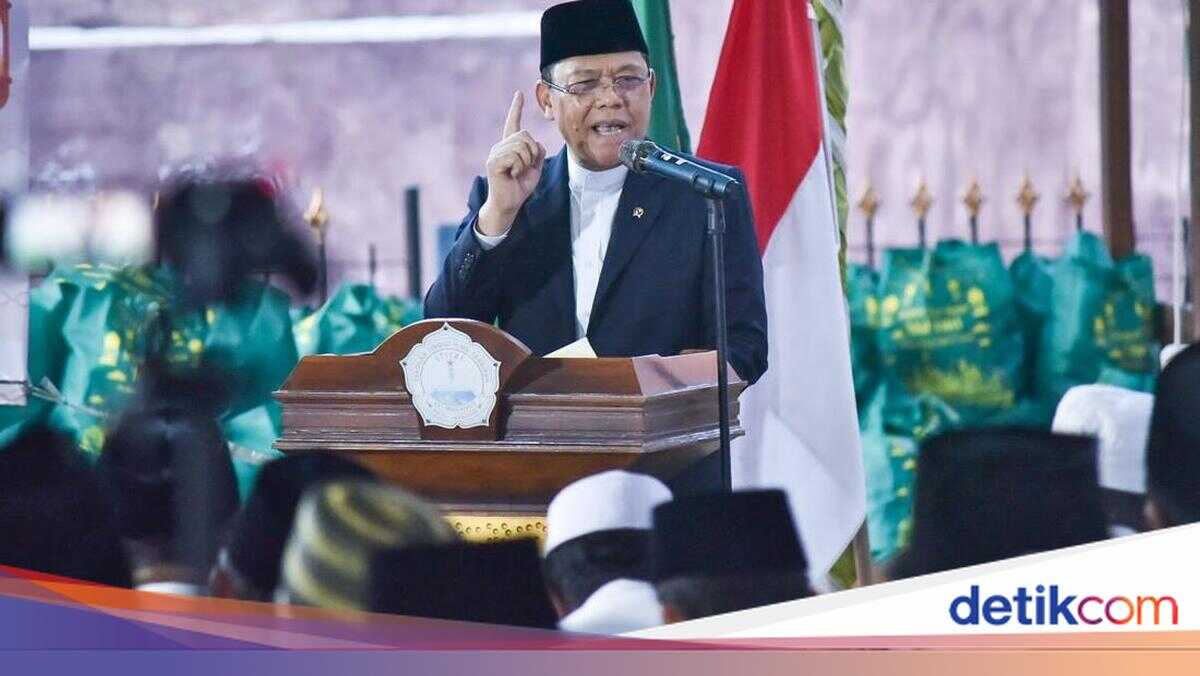
Muhamad Mardiono, Chairman of the PPP’s Central Leadership Council (DPP), reaffirmed that Indonesia’s stance on international conflicts must be anchored in the values enshrined in the opening of the 1945 Constitution. Specifically, he cited the principle that independence is the right of all nations and that colonialism must be eradicated from the face of the Earth.
‘That sentence is not only a historic declaration, but also the moral foundation and the direction of Indonesia’s foreign policy. All forms of aggression, military domination, and violations of sovereignty are essentially contrary to the spirit of our constitution,’ Mardiono said during a Ramadan safari at Al-Ibrohimy Islamic Boarding School in Galis, Bangkalan, Madura, East Java, on Wednesday, 4 March 2026.
Mardiono emphasised that resolving conflicts through armed force is not in line with the ideals of lasting peace and social justice. He stated that in every armed conflict, civilians are always the most affected.
He also reminded that since independence, Indonesia has adhered to a free and active foreign policy. ‘Free’ means not bound to any power bloc, while ‘active’ means playing a role in creating world peace.
‘In international conflict situations, Indonesia does not side with the interests of any geopolitical bloc, but rather with peace, justice, and respect for international law,’ he said.
Mardiono assessed that the use of military force that violates a state’s territorial integrity has the potential to undermine the principles laid out in the Charter of the United Nations. Thus, if international norms are continually ignored, the global order will become increasingly fragile and potentially drag the world into a ‘law of the jungle’ where the strong decide everything.
According to Mardiono, such conditions are very dangerous for developing countries, including Indonesia, which rely on global stability to sustain economic growth, food security, and the welfare of its people.
From the perspective of international human rights, Mardiono asserted that any military action that results in civilian casualties and the destruction of public infrastructure must be a matter of serious concern for the world community. The right to life, security, and legal protection are universal principles that must not be compromised by short-term political interests.
‘If violations of these humanitarian principles are left unchecked, the credibility of the international system in protecting humanity will continue to erode,’ he explained.
During the event, Mardiono said Indonesia can take on a more constructive role amid rising global conflict. Diplomacy should continue to be prioritised and channels of inter-state communication must remain open.
Mardiono assessed that Indonesia’s reputation as the country with the largest Muslim population in the world, and its consistency in pursuing a free and active foreign policy, can be important assets in pushing for inclusive dialogue.
‘Indonesia’s role as a bridge for communication is greatly needed amid increasing global polarisation,’ concluded Mardiono.