
March Is the Best Time to See the Aurora: When and Where to Observe It
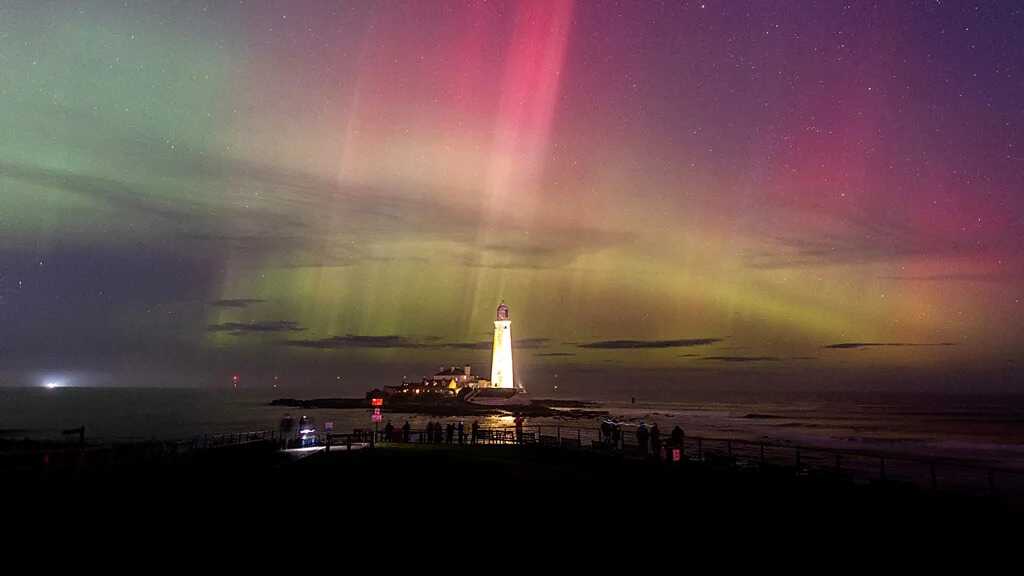
March 2026 is predicted to be the best time to witness the aurora borealis through the mid-2030s, thanks to a blend of celestial mechanics and a highly active Sun. As the vernal equinox approaches, Earth’s position shifts toward configurations that favour auroral displays, a scientifically supported advantage known as the equinox effect. Technically, the northern lights are caused by geomagnetic storms that occur when charged particles from the Sun collide with gases in Earth’s atmosphere. Around 20 March, Earth’s magnetic field lines align in a way that makes it easier for charged particles from the solar wind to penetrate the atmosphere.
Research data cited from Space.com shows that geomagnetic activity peaks statistically around the March and September equinoxes, a phenomenon described by space weather experts as the Russell‑McPherron effect.
Ideal Observation Times
Beyond these technical factors, the dark sky of northern latitudes before the long days of summer makes March a particularly ideal time. To obtain the best views, patience is essential because the aurora is notoriously unpredictable.
The phenomenon is usually clearest on clear, dark nights, typically between 10 p.m. and 2 a.m. local time when geomagnetic activity reaches its peak. It is highly recommended to monitor daily aurora forecasts and the KP index to gauge the likelihood of its appearance.
The most reliable locations lie within the auroral oval around high-latitude regions such as Alaska, northern Canada, Iceland, Greenland, Norway, Sweden, and Finland. However, during strong geomagnetic storms, the aurora can be visible as far south as northern United States and central Europe.
The further north you are, and the darker the skies with minimal light pollution, the greater your chances of witnessing this cosmic display.
Preparations for viewing should prioritise locations far from city lights with a wide horizon facing north. High-altitude sites with minimal light pollution typically offer the clearest views. Allow at least 20 minutes for your eyes to dark‑adapt in order to capture the full beauty of the light waves.
An astronaut on the International Space Station captured a stunning halo around the Moon above Earth’s atmosphere. Some atmospheric particles leak and travel to the Moon; this process is believed to have occurred for billions of years. The Earth’s atmosphere was not always as oxygen-rich as it is today; around three billion years ago, free oxygen was almost non-existent in the air. The colour of the sky is not paint on the air but a physical effect of the interaction between sunlight and Earth’s atmosphere. Ancient ice layers in Allan Hills, East Antarctica, have been dated to around six million years old and contain microscopic air bubbles that record the conditions of Earth’s atmosphere.