
Many Roads Still Damaged; Observers Urge Regional Leaders to Report to President, Not Remain Silent
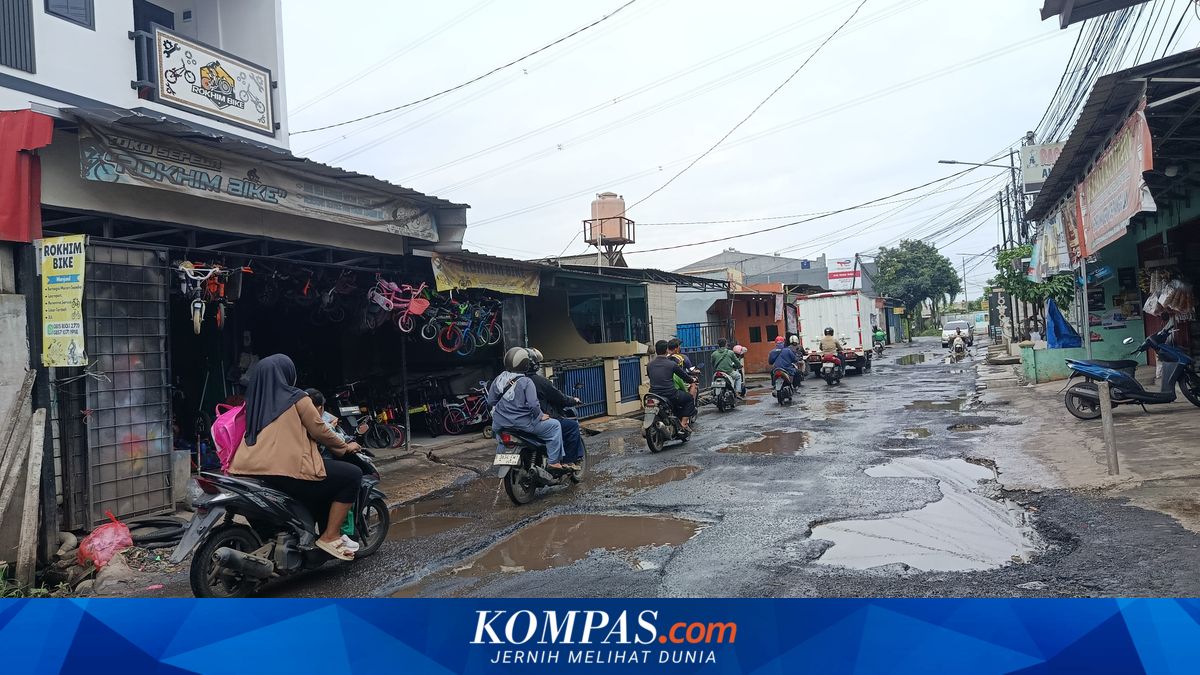
BEKASI — Public transport observer and Member of the Advisory Council of the Indonesian Transport Society (MTI), Djoko Setijowarno, has stated that the government bears responsibility for urgently repairing damaged roads.
He explained that road repair responsibility is divided according to road status. National highways fall under the purview of the Ministry of Public Works, provincial roads are managed by governors, whilst district and municipal roads are the responsibility of regents or mayors.
“Regional leaders should report to the President; they should not remain silent. The state is not serious about ensuring safety, yet this is a fundamental right of the people,” said Djoko when contacted by Kompas.com on Tuesday (17 March 2026).
Djoko argued that road damage is not merely a technical matter, but rather a form of government negligence that directly impacts public safety.
“This is clearly negligence. It means the state is absent. If not pressed, there will be no repairs,” he said.
According to Djoko, the condition of damaged roads is worsened by inadequate public street lighting (PJU), thereby increasing the risk of accidents, particularly at night.
He also highlighted the limited infrastructure budget at both central and regional levels, which affects the pace of road repairs. Budget allocations for repairs are reportedly declining whilst road damage is worsening.
Good road access is said to enhance asset value and reduce regional isolation, enabling people easier access to healthcare, education, and economic centres.
However, in reality, amid high rainfall and preparations for the returning-home period, many roads remain in poor condition.
“This condition is not merely a technical issue, but a real obstacle that cripples the economic and social activities of communities,” he said.
Djoko highlighted weak oversight of vehicle load limits and poor road maintenance that has created “death traps”.
“There may be certain vested interests behind the neglect of road damage that results in the disregard of people’s basic right to safety,” Djoko said.
Legally, Djoko explained that responsibility for road repairs is regulated under Law Number 22 of 2009 concerning Traffic and Road Transport (LLAJ) and Law Number 38 of 2004 concerning Roads, which was updated through Law Number 2 of 2022.