
Many Roads in Central Java Lack Street Lighting; Travellers Urged to Exercise Caution During Night Journeys
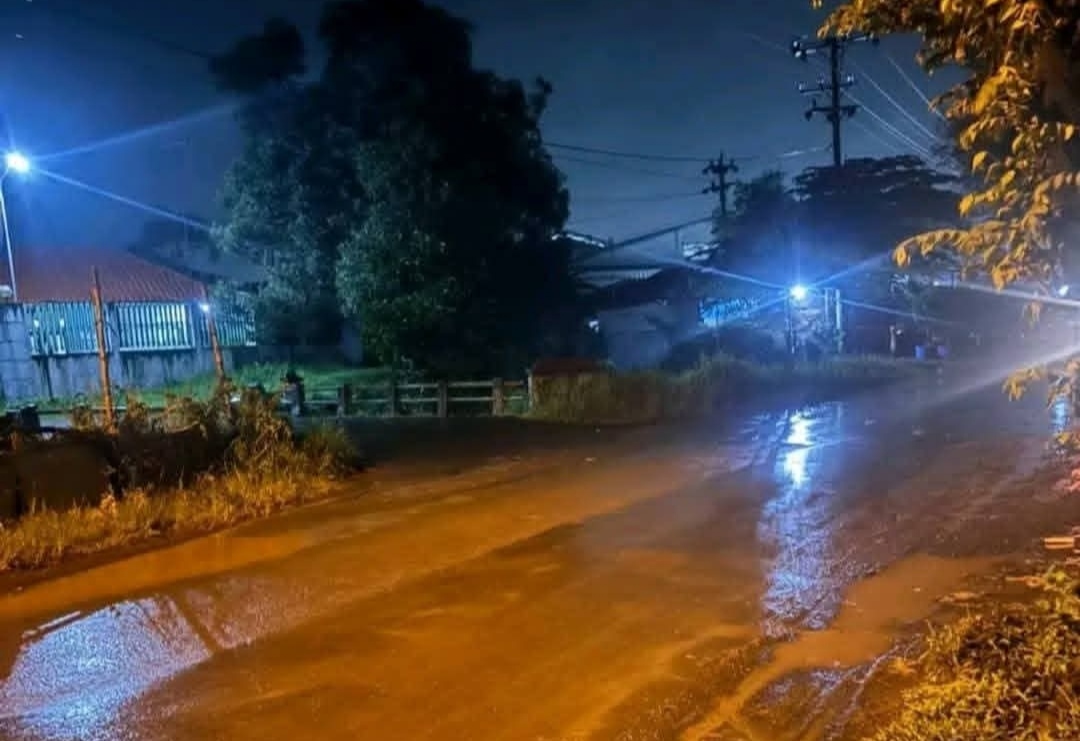
Travellers passing through roads in Central Java during night-time are urged to exercise caution and vigilance, as thousands of kilometres of roads still lack street lighting, creating substantial risks to security and safety.
Monitoring by Media Indonesia on Tuesday, 10 March, ahead of the anticipated Lebaran exodus beginning Wednesday, 11 March, revealed that vehicle traffic across toll roads, national highways, provincial routes, and district/municipal roads in Central Java has begun to increase, particularly heavy goods vehicles.
Traffic congestion extends beyond daytime hours, with significant vehicle density also observed during night hours, expected to escalate considerably as the Lebaran exodus period approaches from H-10 Lebaran. Beyond weather concerns, two- and four-wheeled travellers are advised to exercise caution regarding road conditions.
Along numerous road sections, temporary patch repairs continue to be expedited to meet completion targets before the peak exodus period. Travellers are also urged to exercise care as the majority of roads in Central Java still lack adequate street lighting, resulting in rather dark conditions.
“This condition requires heightened vigilance, particularly for travellers passing through during night hours, as many road sections remain dark,” said Suwardi, 50, a travel coach driver in Semarang.
Similar observations were made by Sutrisno, 48, a goods transport driver encountered in Gringsing, Batang Regency, noting that dark road conditions pose significant safety and security risks, especially for motorcycle travellers, as temporary repairs create uneven road surfaces that pose additional hazards.
This assessment was corroborated by Arief Djatmiko, Head of the Central Java Department of Transportation, who confirmed that more than 50 per cent of the province’s 2,440 kilometres of provincial roads currently lack street lighting, resulting in dark conditions at night that require heightened vigilance from road users.
“Based on data collection and calculations, there is a shortage of 19,000 street lamps, as only 15,000 lamps have currently been installed on Central Java’s provincial roads,” stated Arief Djatmiko.
The absence of street lighting across these thousands of kilometres, according to Arief Djatmiko, stems from budgetary constraints. Although the department has allocated funds for additional street lamps, these allocations are frequently adjusted according to other development priorities.
Even though street lamp additions are budgeted annually, according to Arief Djatmiko, the issue remains one of budgetary adjustment to scale of priorities, such that previously allocated funds are redirected to other priority areas. “In 2025, the Central Java Department of Transportation can only install 100 units along the Pemalang to Purbalingga route,” he added.
For 2026, Arief Djatmiko stated, the Central Java Provincial Government will once again budget for street lamp installation, though the quantity remains modest at approximately 250 locations, with each location requiring a budget allocation of 20 million rupiah.
Ahead of the 2026 Lebaran exodus, the Traffic Unit of Karawang Police Headquarters conducted readiness checks on primary and alternative routes within Karawang Regency.
Purbalingga Police Headquarters in Central Java has identified accident-prone locations from the Pemalang toll exit to the boundary with Banjarnegara.
The overall structural integrity of national roads spanning 47,604.34 kilometres across Indonesia has reached 95.22 per cent. Specifically for the Java and Bali region.
The Klaten Health Office has deployed 180 health personnel from 34 primary health centres, 13 hospitals, 45 clinics, health facilities, the Health Office, and health community centres for health posts.
Inspections were conducted at CBU Coach Company Terminal Sumber, Bhineka Sangkuriang Coach Company in the Ciperna area, and Sahabat Coach Company in Weru Sub-district.
The ideal timing for vaccination administration is a minimum of 14 days or two weeks before departure to ensure optimal protection during the holiday.
Cilacap Refinery ensures fuel supply security ahead of the 2026 Lebaran exodus. The Block Mode innovation enhances crude processing efficiency and maintains national energy production.
The Central Java provincial government stands ready to welcome tens of millions of people during the 2026 Lebaran period. Central Java Governor Ahmad Luthfi emphasises the importance of safety.