
Many Developers Protest Protected Rice Field Policy, Here Is Ministry's Response
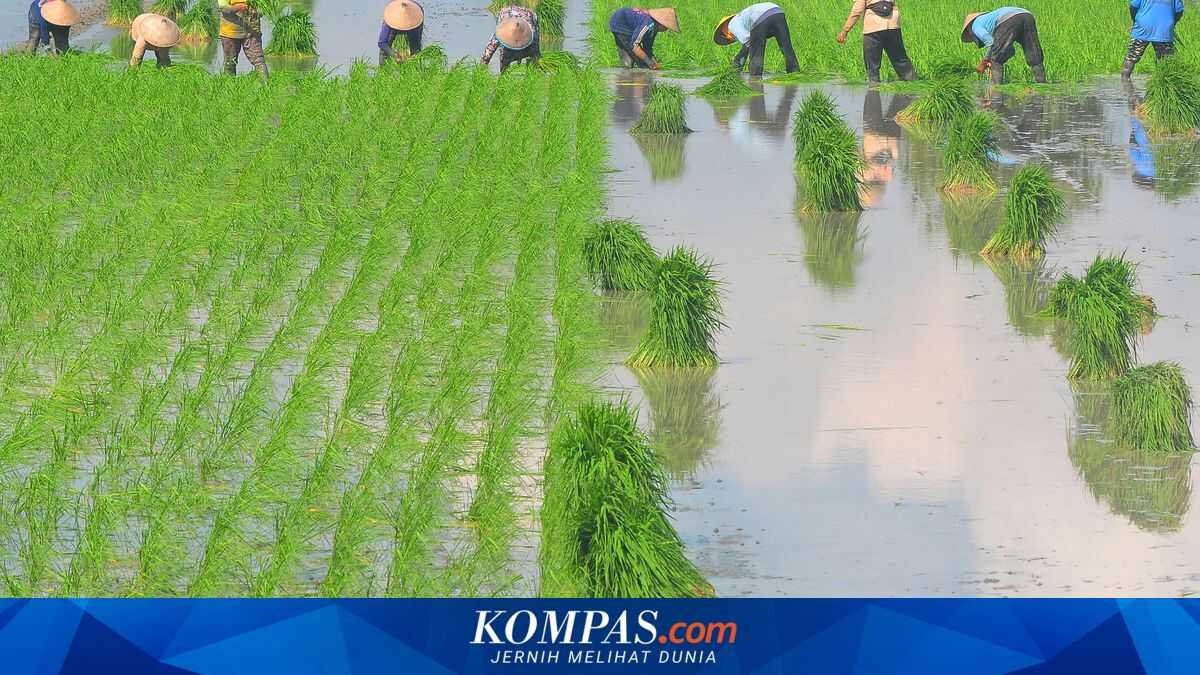
JAKARTA, KOMPAS.com - Deputy Minister of Agrarian Affairs and Tata Ruang/Deputy Head of the National Land Agency (ATR/BPN) Ossy Dermawan responded to protests from several developers regarding the Protected Rice Field (LSD) policy.
He stated that the policy is currently undergoing updates and data cleansing to ensure greater accuracy. According to him, the updates are being conducted to prevent errors in land designation.
Ossy emphasised that this step is part of refining the LSD database. With cleaned data, future policy decisions are expected to be more targeted.
“Once this data is in order, all our regions will communicate with one another, exchange data, and if regions also have a mandate under the National Medium-Term Development Plan that 87 per cent of their Standard Rice Field Area (LBS) is protected rice field (LSD), then land conversion can automatically be carried out in a measurable manner,” he said.
“I think if the data is good, the policy will also certainly be good. We should not rely on data that is quite old, which is no longer up to date, no longer relevant, and then use it as a basis for policy-making—that is not good,” Ossy stated.
The government has recorded that Indonesia has lost approximately 554,000 hectares of rice fields over the period 2019-2024 due to conversion to industrial areas, residential areas, and other non-agricultural uses.
This situation has prompted the Ministry of ATR/BPN to prepare an emergency policy for agricultural land protection.
The policy will be implemented after receiving approval from President Prabowo Subianto at a meeting at the State Palace on Wednesday (28 January 2026), as part of efforts to achieve food self-sufficiency in accordance with the President’s Asta Cita agenda.
“We are establishing a policy that for regions whose spatial planning does not include permanent food land (LP2B) covering a minimum of 87 per cent of their Standard Rice Field Area (LBS), all such LBS shall be considered LP2B. In other words, all rice fields cannot be converted until the local government establishes LP2B in accordance with regulations,” said Nusron, quoted from official statements on Friday (27 February 2026).
This policy refers to Presidential Regulation Number 12 of 2025 on the National Medium-Term Development Plan (RPJMN) 2025-2030, which mandates that a minimum of 87 per cent of LBS be designated as permanent food land (LP2B).
However, the designation of LP2B within regional spatial planning documents is still considered not to be in accordance with regulations.