
Many Countries Have Iron Dome, How Advanced is the US Golden Dome?
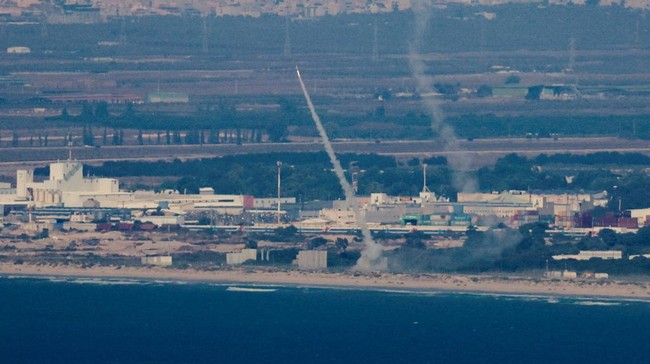
The United States is working to build a national missile shield designed to defeat advanced threats from China and Russia, marking a major shift towards domestic defence against hypersonic and ballistic weapons. The “Golden Dome for America” effort, valued at US$17.9 billion, aims to close critical gaps in early warning and interception, strengthening deterrence by reducing the effectiveness of long-range strike capabilities. This architecture centres on space-based sensors and interceptors connected to kinetic and non-kinetic systems for tracking and engaging missiles across all flight phases. The layered approach seeks to enhance survivability and response speed while aligning with broader trends towards integrated multi-domain missile defence and space-supported warfare. Announced on 21 April 2026 as part of the Pentagon’s fiscal year 2027 defence budget submission to Congress, Golden Dome reflects a strategic shift towards defending US homeland against peer-level missile threats, not just limited rogue state scenarios. This initiative directly addresses the escalating operational challenges posed by China’s hypersonic glide vehicles, Russia’s advanced strategic systems, and evolving missile arsenals capable of penetrating legacy defences. Golden Dome is not a single air defence system but a comprehensive “system of systems” that integrates all available US air and missile defence capabilities into a unified national architecture. Stemming from Executive Order 14186 signed on 27 January 2025, the programme aims to fuse space, air, land, and sea assets into a persistent defence network capable of countering “aerial attacks from any adversary.” This approach represents a fundamental change from previous missile defence strategies that heavily relied on nuclear deterrence against peer adversaries, shifting to active layered defence of US territory and critical infrastructure. At the core of the Golden Dome concept is the creation of a fully networked battlespace, where sensors, interceptors, and command systems operate as an integrated network. Existing capabilities such as the Long-Range Discrimination Radar (LRDR), AN/TPY-2 radar, Upgraded Early Warning Radar, and Sea-Based X-Band Radar are expected to be linked with next-generation space-based infrared and tracking constellations. These systems will collectively provide continuous detection, tracking, and discrimination against complex threats, including hard-to-detect hypersonic weapons and manoeuvrable re-entry vehicles. Iron Dome Increasingly Sought After The Iron Dome air defence system, developed by Israel to counter short-range rocket attacks, is attracting growing global attention. Its success in protecting civilian areas from aerial threats has led many countries to consider or purchase this technology as part of their national defence strategies. Several countries have acquired similar technology for territorial defence. Since Iron Dome’s successful operation in 2011, a number of European and Asian countries have purchased or considered buying radar components or the full Iron Dome system to protect their territories. The high demand for Iron Dome is inseparable from the global situation rife with threats. On the other hand, Israel is regarded as proven in delivering capable security technology. Azerbaijan is also known to have purchased the system since 2016, making it the first country outside Israel to officially possess Iron Dome. This step is seen as an effort to balance regional power, especially after its neighbour Armenia acquired Iskander missiles. Singapore, although never publicly confirmed, is strongly suspected to have possessed and operated the system since the mid-2010s. The country is known as one of Israel’s strategic defence customers and has invested in various advanced defence systems. In addition, Romania signed an agreement in 2018 to purchase Iron Dome and produce some components domestically through Romaero company. Cyprus followed with the purchase of the system in 2022 in response to rising drone threats from the surrounding region. Meanwhile, several other countries have chosen to buy only key components of the system, such as the EL/M-2084 radar. Countries like the Czech Republic, Slovakia, and Hungary have acquired this radar to bolster their national air defence systems, although they have not yet purchased the full Iron Dome. On the other hand, India and Saudi Arabia have expressed interest in adopting Iron Dome. India even signed a major agreement with Israel in 2017, but to date remains more focused on developing domestic defence systems. Saudi Arabia began considering this option after US missile defence systems were withdrawn from its territory in 2021. With the continued rise in aerial threats, whether ballistic missiles, rockets, or drones, systems like Iron Dome are becoming an increasingly sought-after strategic solution by countries around the world. Although expensive and complex, its real-time protection capabilities make it one of the most relevant defence systems in the modern era.