
Mangroves and Blue Carbon: A Natural Solution to Climate Change
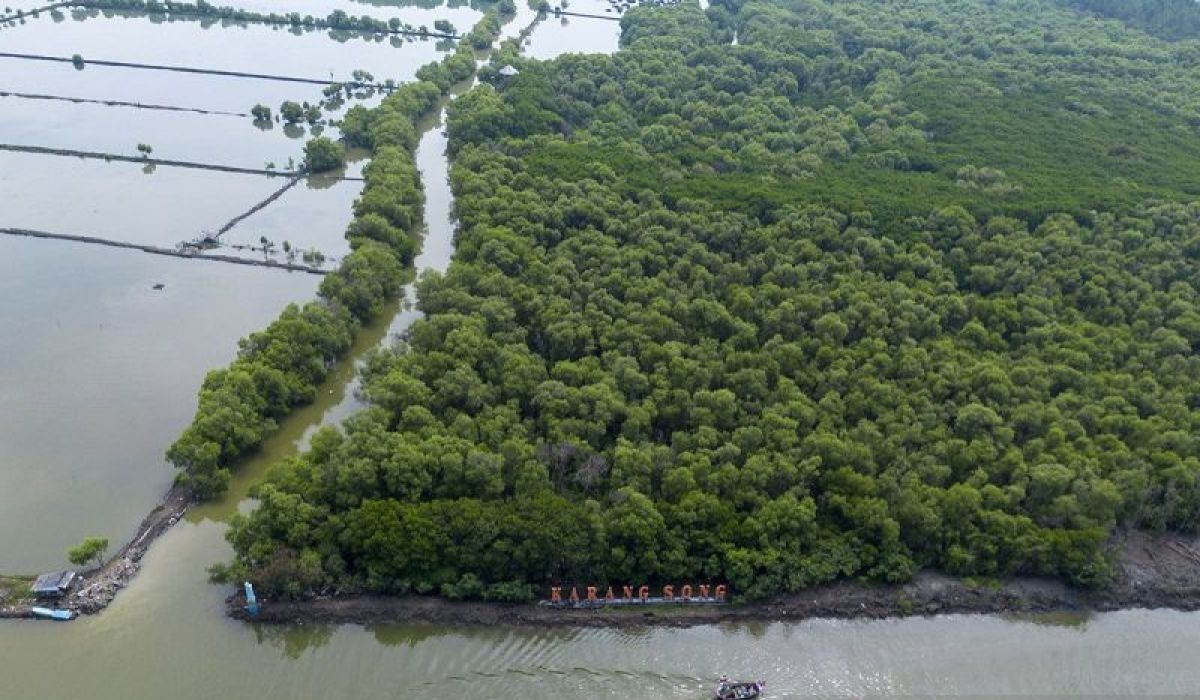
Ecosystems of mangroves play a crucial role in maintaining coastal balance, absorbing carbon, and protecting biodiversity. To strengthen understanding of these strategic functions, students from the Department of Environmental Science, School of Postgraduate Sustainable Development Studies (SPPB) at the University of Indonesia conducted an Ecology Field Practicum 2026 in the Jakarta Mangrove Resort area, Angke Kapuk, North Jakarta. The activity, held to commemorate World Environment Day, carried the theme ‘Introduction to Ecosystems and Greenhouse Mangrove: Ecology Field Learning’. The field practicum was attended by students from the Master’s Programme in Environmental Science, the Master’s Programme in Disaster Management, and the Doctoral Programme in Environmental Science at the University of Indonesia. Through this activity, participants gained direct learning experience regarding various aspects of mangrove ecology, from ecological functions, conservation and rehabilitation efforts, to the role of the mangrove greenhouse as an environmental education tool. The participants were also encouraged to understand the importance of environmental education in building awareness and driving real community action to preserve nature.
Andreas Pramudianto, the activity chairperson and a lecturer in Environmental Law at SPPB UI, stated that the commemoration of World Environment Day is an important momentum to increase the younger generation’s awareness of the environmental challenges currently faced. According to Andreas, mangroves not only function as natural fortresses that protect coastal areas from abrasion and disaster impacts, but also play a vital role in climate change mitigation through their ability to absorb large amounts of carbon. ‘Mangroves are not only natural coastal fortresses capable of absorbing carbon and protecting communities from abrasion and coastal disasters, but also natural laboratories that serve as learning tools for future generations. Through this activity, we hope to give rise to agents of change who possess concern and commitment towards environmental preservation,’ he said. This activity also served as a form of support for the global theme of World Environment Day, which emphasises the importance of collective action in maintaining the earth’s sustainability through education, conservation, and active community participation.
As the country with the largest area of mangrove ecosystems in the world, Indonesia bears a significant responsibility to maintain the sustainability of its mangrove forests. Besides functioning as blue carbon sinks, mangroves also act as coastal protectors and habitats for various species of flora and fauna. Through the Ecology Field Practicum 2026, Environmental Science students at the University of Indonesia affirmed their commitment to continuously developing applicable and sustainable environmental education. This effort is expected to produce a generation that not only possesses knowledge about the environment but is also able to contribute through real actions in preserving nature. Such field learning activities are considered one of the effective ways to bridge theory and practice, enabling participants to directly understand the challenges and opportunities in sustainable environmental management in Indonesia.