
Mandiri Institute: Consumer Spending Returns to Normal After Eid
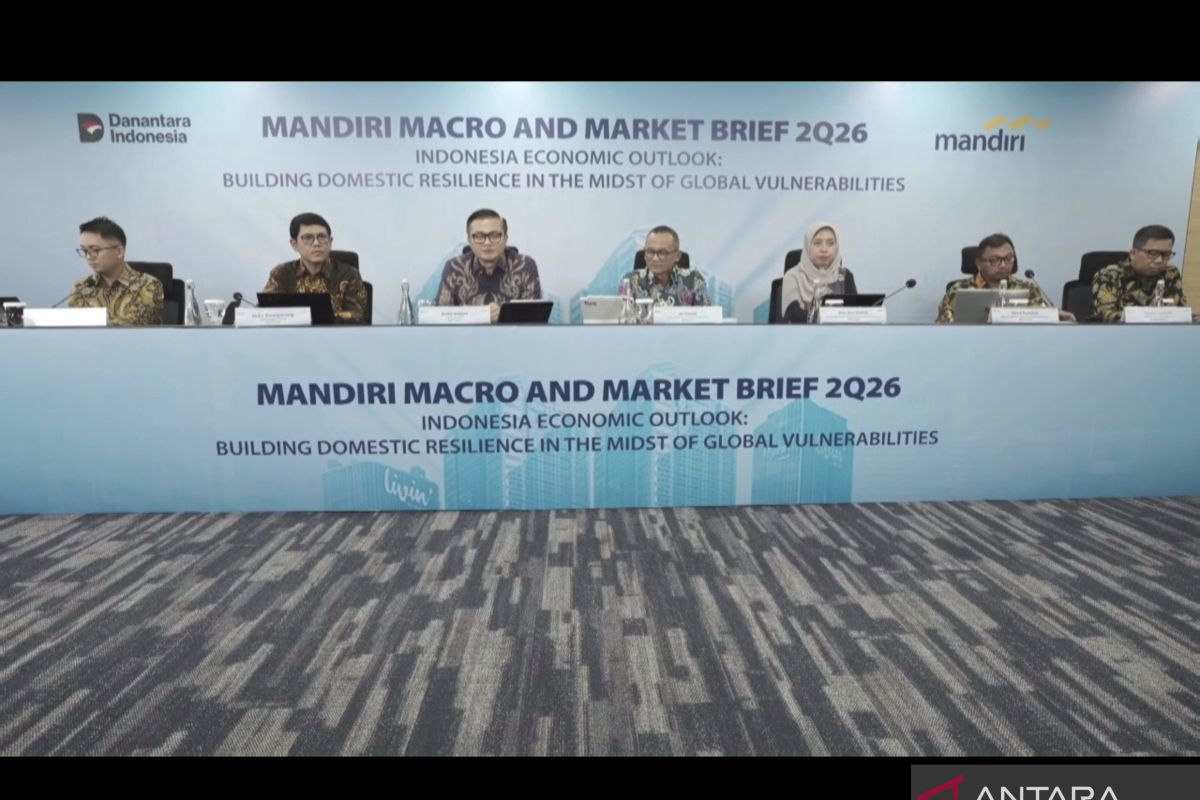
Jakarta (ANTARA) - Mandiri Institute records that consumer spending patterns are starting to return to normal after passing the Eid al-Fitr 2026 period. Based on Mandiri Spending Index (MSI) data, the consumer spending index peaked at 124.3 points on 22 March 2026, during the Eid period, before moderating to 122.3 points in the first week of May 2026. “Consumer spending is experiencing moderation. So, up to 5 May, the MSI has moderated to 122.3 after five consecutive weeks of correction,” said Head of Mandiri Institute Andre Simangunsong during the Mandiri Macro and Market Brief 2Q26 in Jakarta on Monday. Although it represents a slowdown, Andre assesses that this year’s consumption patterns are still better than the same period last year. According to him, post-Eid 2025 saw a sharp drop in consumption followed by a strong recovery. In contrast, in 2026, the spending slowdown is more gradual, reflecting more stable consumption patterns. “If we compare 2026 with 2025, we see that the moderation in 2026 is more gradual. Last year, after the Eid peak, consumer spending dropped significantly, but the rebound was also significant,” Andre explained. “But at least here, in the fifth week or during the Labour Day holiday week, the MSI has entered positive weekly growth or positive territory,” he added. From an income group perspective, Mandiri Institute observes that consumption growth is still supported by upper-income groups. Upper-class spending growth was recorded at 5.3% year-on-year in 2026, higher than last year’s 3.1%. Conversely, lower and middle groups experienced a slowdown in spending growth. Andre stated that upper-class consumption remains the main pillar, especially in premium segments such as department stores, premium e-commerce, and speciality stores. Additionally, Mandiri Institute has detected a shift in consumer patterns towards more essential needs. This shift is reflected in supermarket category growth of nearly 6% year-on-year up to early May 2026, higher than the same period last year at 3.3%. Meanwhile, other categories like electronics and leisure remain subdued. “We conclude there seems to be a slight shift in spending on a year-on-year basis. Because next month is June, and I think people are preparing to shop for school needs for the new academic year,” he said. Andre added that the current cautious stance among consumers is also influenced by global uncertainties, including oil price developments and the world economic outlook. “What happens globally also affects consumer expectations going forward. If people are a bit cautious, that’s a reasonable attitude,” he concluded.