
Mandatory Halal Certification Effective October 2026, Business Owners: Don't Make It Expensive and Complicated
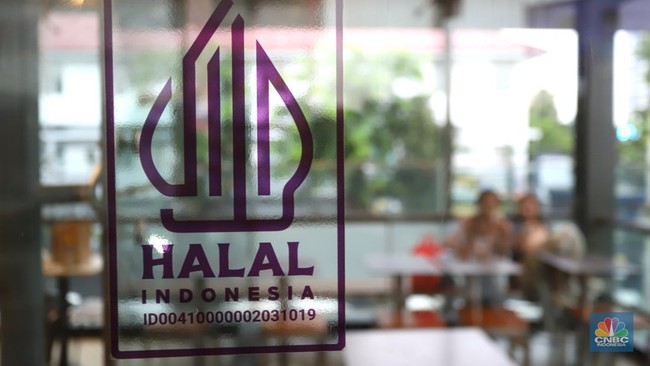
The mandatory halal certification starting in October 2026 is not only a regulatory issue but also a matter of costs for small and medium-sized industry players (IKM). Amid efforts to recover businesses, this additional obligation is seen as a new burden.
Nandi Herdiaman, Chairman of the Bandung Convection Business Association (IPKB), stated that certification costs are one of the main concerns for business actors, although the exact figures vary.
“It’s quite significant, for IKM it’s fairly substantial. I haven’t found the exact figure yet, but it does feel heavy,” said Nandi to CNBC Indonesia on Friday (24/6/2026).
He explained that this situation feels even more pronounced because business actors have only just begun to recover from previous economic pressures.
According to him, this additional cost could impact the production cost structure, although not significantly affecting selling prices.
“There will be an increase in costs to consumers, but not too large. Like SNI, the impact isn’t really felt on prices.”
Nevertheless, Nandi assessed that the accumulation of obligations such as SNI, trademarks, and halal could pressure small business actors.
He also highlighted that halal certification is not just about initial costs, but also periodic reporting and renewal obligations.
“If I’m not mistaken, once a year we must report the certification. That also becomes an additional burden,” he said.
Furthermore, he emphasised the importance of government intervention to lighten this burden, both in terms of costs and procedures.
Nandi hopes for subsidies or special assistance schemes for IKM so they are not left behind in implementing this policy. The success of halal implementation greatly depends on support for small business actors.
“If we have to follow the rules, please help us too. Don’t make it expensive, don’t make it complicated,” said Nandi.
Needs Accompaniment
Besides costs, the complexity of the process is the main challenge in implementing halal certification in the textile industry. Business actors must ensure the entire production chain is free from non-halal elements. Nandi explained that the certification process involves a thorough examination of raw materials to the final product.
“When we register for halal, our industry will be surveyed. They’ll check where the materials come from, where the oil comes from, where the accessories come from,” he said.
He revealed that in the textile industry, many components could be points of concern in halal assessments.
From chemicals, dyes, to accessories like buttons and threads, their origins must be traced.
“Raw materials can be mixtures of chemicals, some even from pigs. Dyes also come from there.”
Nandi also highlighted the use of certain materials in the production process, such as tools or supporting materials that might unknowingly contain non-halal elements.
“In textiles, there are things like brushes or fabric smoothers made from pig bristles.”
According to him, this complexity makes IKM actors feel the certification process is complicated and intimidating.
He assessed that without accompaniment, many business actors will struggle to meet the requirements. However, he acknowledged that the system is designed to ensure product halal status comprehensively.
“Everything must be checked, from materials to the processes,” he said.
Nandi emphasised the importance of education and training so that business actors fully understand the process. He also asked the government to be more active in providing technical accompaniment in the field.
“IKM friends need understanding, not just rules,” he concluded.