
Managing Crisis Communication on School Children's Plates
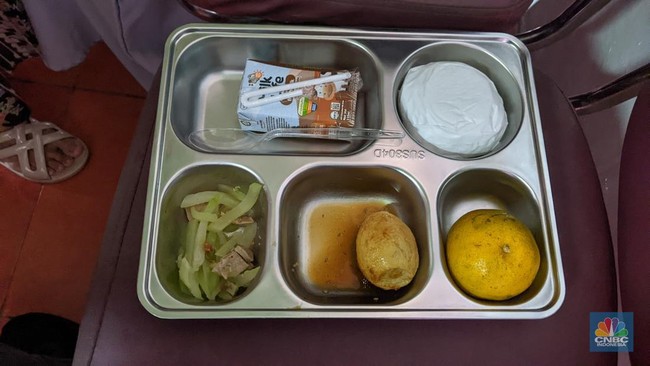
The Free Nutritious Meals Programme (MBG) is not merely a technical policy for fulfilling national nutrition needs, but a major reputational gamble for the new government. As a newly established institution, the National Nutrition Agency (BGN) bears a highly fragile initial trust burden.
From a public communication perspective, new institutions often lack sufficient “reputational savings” to withstand crisis blows. Every meal box that reaches students in remote areas carries significant legitimacy risks; if it brings nutrition, it becomes an achievement, but if it brings bacteria, it turns into deadly political ammunition.
The series of poisoning incidents throughout 2025 and 2026 illustrates how vulnerable this programme is in practice. These tragedies are no longer isolated incidents but systemic alarms ringing repeatedly. Dozens of students in Anambas Regency experienced vomiting and dizziness after consuming MBG food and had to be treated at Palmatak Hospital last Thursday (15/04/2026), as quoted from Batampos.
Previously, we noted how from early 2026 until April, such events continued to recur. Before the incident in Jakarta in early April, dozens of students in Sukoharjo, Central Java, had to be rushed to hospital due to unfit chicken preparations.
Not long after, a more massive crisis erupted in Bogor involving over 200 victims with findings of E. coli bacteria. The peak came with a severe wave of poisonings hitting West Bandung and the Riau Islands in September 2025, where the cumulative national victim count exceeded 5,900 students. This phenomenon creates public perception of a “blind spot” in supply chain oversight involving thousands of local vendors and SMEs.
If we dissect this situation using the Situational Crisis Communication Theory (SCCT) developed by Coombs, W.T. (2007), the MBG poisoning crisis falls into the preventable crisis category.
In this category, the public tends to attribute very high responsibility to the BGN institution because the problem is seen as arising from management negligence or weak quality control.
When viral videos showing lethargic or fainting schoolchildren spread on social media faster than official government releases, as we often see on news site social media accounts, the public will not blame remote village local vendors.
They will point the finger at the National Nutrition Agency as the holder of the highest mandate. Failure to demonstrate transparent corrective actions at this stage will destroy BGN’s image before the institution can truly stand firm.
Narrative War and Image Recovery Strategy
In the vortex of a crisis involving children’s lives, BGN is often trapped in a dilemma between political interests to maintain the image of the president’s flagship programme and the obligation of medical transparency to the public. Referring to William Benoit’s Image Repair Theory, BGN’s responses so far show repair efforts but are still overshadowed by old bureaucratic defensive patterns.
The corrective action strategy or repair actions have indeed been taken, such as forming an investigation team with BPOM and evaluating the Nutrition Fulfilment Service Unit (SPPG). However, on the other hand, there is a tendency towards the evading responsibility strategy by blaming local vendors’ unpreparedness as the main cause.
This responsibility shifting is a high-risk move. From Benoit’s perspective, the public values the mortification strategy or sincere apologies accompanied by full responsibility more highly.
As the programme owner, BGN cannot delegate its moral responsibility to third parties. The narrative built should not only focus on technical laboratory explanations about bacterial types but must prioritise empathy for victims and peace of mind for parents. Effective crisis communication must be able to shift perceptions from “a government defending itself” to “a government protecting its people”.
BGN’s crisis communication problems are also complicated by information decentralisation. Often, statements from central-level officials clash with those from field officers in the regions, which only muddies the waters and provides room for hoaxes to flourish.
To address this, BGN needs to implement a more structured public information model by establishing a single point of contact or single spokesperson. In the narrative approach, narrative consistency is key (Walter, 1987). Without consistency, no matter how sophisticated the technical audits are, they will not be able to quell public anxiety that has already set in, feeling that their children’s food safety is being gambled for an ambitious project.
Towards Real and Open Accountability
Looking ahead, BGN’s challenge is no longer just ensuring food distribution but ensuring its crisis defence system works automatically. Transparency must not be mere jargon on policy paper but embodied in accountability accessible to the wider public.
One concrete step that can be taken is to publish vendor audit results periodically. BGN must dare to implement a “White List” system to reward vendors with high hygiene standards and a “Black List” for those who are negligent and endanger student safety. This step will provide positive pressure on service providers while rebuilding public trust that has waned.
In addition, BGN must start building a crisis communication protocol from scratch (zero-based crisis protocol) that involves coo