
Mamuju City Experiences Highest Radiation Exposure, Causes Prove Unexpected
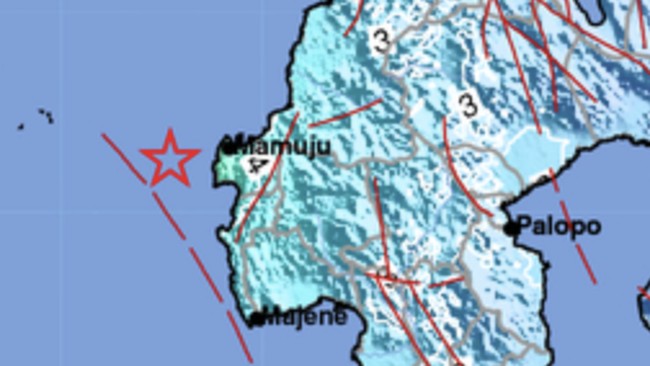
The Mamuju region in West Sulawesi has been recorded as receiving far higher natural radiation exposure compared to the global average. The radiation level in this area is approximately nine times higher than the natural radiation exposure typically received by humans worldwide.
These findings are contained in the UNSCEAR 2024 Report - Annex B released by the United Nations Scientific Committee on the Effects of Atomic Radiation (UNSCEAR). The report evaluates ionising radiation exposure to populations across various countries.
Nur Rahmah Hidayati, Senior Researcher at the BRIN Centre for Research on Radiation Safety, Metrology and Nuclear Quality Technology and Indonesia’s representative to UNSCEAR, stated that Mamuju is classified as a High Natural Background Radiation Area (HNBRA).
The estimated annual effective dose from natural radiation sources in this region reaches approximately 27 millisieverts (mSv) per year. By comparison, the average natural radiation exposure globally is only about 3 mSv per year.
“If compared, the exposure received by Mamuju residents is almost nine times greater than the global average,” Nur Rahmah stated.
She explained that the high radiation exposure in Mamuju is mainly caused by very high concentrations of uranium and thorium in the soil. The concentration of uranium-238 and thorium-232 at several locations even reaches hundreds to more than 1,000 Bq/kg, far above the global average of approximately 33 Bq/kg and 45 Bq/kg respectively.
Additionally, radon gas levels in Mamuju’s outdoor air are also relatively high, ranging between 22 to 760 Bq/m³ with an average of approximately 290 Bq/m³. Radon gas is one of the main contributors to natural radiation exposure.
Despite this, local building conditions and residents’ lifestyles help reduce radon accumulation inside homes. Natural ventilation and traditional house structures mean radon concentrations indoors do not increase drastically compared to the outdoor environment.
“The presence of areas with high natural radiation like Mamuju is considered scientifically important as it can serve as a research location to understand the long-term impacts of low-level radiation exposure on human health,” she stated.
Globally, UNSCEAR also confirms that natural sources remain the largest contributor to radiation exposure for the world’s population. Most comes from radon inhaled through breathing as well as natural radionuclides in soil and building materials.
Heru Prasetio, Head of the BRIN Centre for Research on Radiation Safety, Metrology and Nuclear Quality Technology, stated that variations in natural radiation levels across different world regions are a normal geological phenomenon.
“This finding shows that Indonesia, through BRIN, is contributing to updating the global database regarding natural radiation exposure through studies in Mamuju,” Heru said.
He added that research data from Mamuju becomes an important component in international studies regarding variations in background radiation across different parts of the world whilst strengthening Indonesia’s contribution to global research in the field of radiation safety.