
Malfunctioning Computer Button Triggers Catastrophic Nuclear Explosion, 60,000 Dead
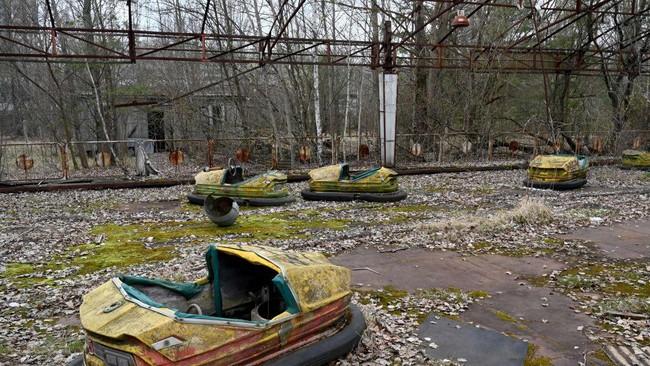
Malfunctioning computer button triggers catastrophic nuclear explosion, 60,000 dead
Jakarta, CNBC Indonesia — The development of nuclear energy demands high safety standards, from equipment reliability to the competence of personnel. Without both, the world risks facing tragedies like the Chernobyl Nuclear Disaster of 26 April 1986.
As a result of the absence of these two elements, 60,000 people died and hundreds of thousands were forced to leave their hometowns for up to 20,000 years.
For context, the Chernobyl site was the Soviet Union’s ambition to possess the world’s largest nuclear capability. Since 1977, the government had built nuclear reactors of around 1,000 megawatts. This was enough to power a country for years.
From here, the Soviet Union continued developing nuclear energy. By 1986, there were four large-scale reactors in Chernobyl with similar capacity. However, some reactors remained in the test phase.
Quoted from The Guardian, the test in question concerned continuous cooling. A nuclear reactor must remain cool, so a constant water supply must be available 24 hours a day, 7 days a week. If not, the reactor could overheat and trigger an explosion.
In the Chernobyl case, the Soviet nuclear team attempted a test to activate a generator that would cause the turbine to continuously release water to cool the reactor.
The test occurred on 26 April 1986. In theory, water would be released by the turbine to continuously cool the core. From this, the team would determine how long the turbine could stay running.
Unfortunately, during the test, the people involved were not competent. They were in denial and not open to input. This involved Deputy Chief Technician Anatoly Dyatlov and Chief Technician Nikolai Fomin.
Quoting Chernobyl: 01:23:40 (2014), Fomin was inattentive and seemed to hide the fact that the cooling power was sufficient. In reality, far from it. Fomin knew the reactor power was only 200 megawatts, well below the minimum of 700 megawatts.
Meanwhile, Dyatlov insisted the test must be conducted that day. On the other hand, technicians had already given up on the day of the test; they were unable to do it. Yet because Dyatlov persisted and threatened dismissal, the technicians eventually complied.
This is where disaster began. As night fell, the technicians started the generator. The water turbine successfully engaged. However, mid-process, the generator power fell drastically. It could not stay on continuously. As a result, the reactor core temperature rose rapidly. When this happened, the technicians hurried to press the SCRAM button on the computer.
The button is the computer command to the system to start the generator. Sadly, the button did not function because it had never been checked. Then the disaster occurred. The nuclear reactor heated to 3,000 degrees Celsius. Soon after, the nuclear explosion occurred.
As radiation spread, many residents remained asleep. Consequently, they could not escape and were exposed to extremely high radiation. At that time, the radioactive fallout could not be detected by instruments. The equipment could not determine the level of radiation because it was so high.
Only when the sun appeared did people realise there was dust scattered. Not ordinary dust, but nuclear dust. Thus the people perished.
BBC noted there were 90,000 deaths due to long-term radiation. Then 600,000 people were exposed to radiation but did not die. WHO notes that radiation reached up to 200,000 kilometres to Europe. Meanwhile, Chernobyl itself could not be inhabited by humans for 20,000 years due to the severe radiation effects.