
Malaysia's WFH policy: 'Very small' impact on fuel savings, so should it extend to private sector?
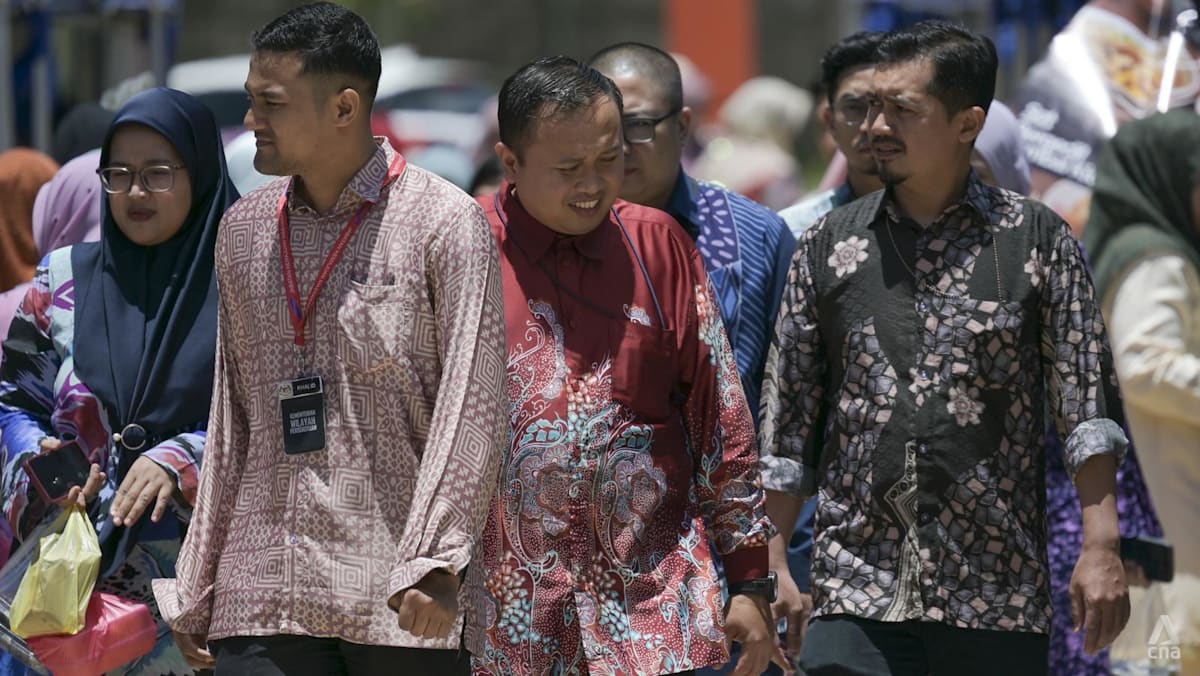
Malaysia’s WFH policy: ‘Very small’ impact on fuel savings, so should it extend to private sector?
As segments of Malaysia’s civil service gear up to work from home thrice a week, economists say fuel savings from the move will be minimal. But businesses warn expanding the policy will hurt the economy.
KUALA LUMPUR: Malaysia faces a balancing act as some civil servants gear up to work from home (WFH) thrice a week from next Wednesday (Apr 15), with experts saying the policy is unlikely to make a dent in fuel savings unless it extends to the private sector.
But the Malaysian Employers Federation said it does not support a mandatory, one-size-fits-all WFH policy for the private sector, and businesses have warned that widespread implementation of WFH could lead to a drop in consumer spending and hurt the economy.
Meanwhile, civil servants who have been excluded from the policy told CNA they are not disgruntled, but wondered if the policy could be more flexible to include more employees and maximise fuel savings.
Those who are eligible welcomed the arrangement but cautioned that certain tasks could take longer to complete, while some individuals could find workarounds to slack off.
The WFH policy, announced by Prime Minister Anwar Ibrahim last week, is to mitigate energy supply disruptions caused by conflict in the Middle East.
It applies to ministries, agencies, statutory bodies and government-linked companies (GLC), but generally excludes workers in the security, health and education sectors to prevent disruption to essential services.
In addition, only civil servants who live more than 8km from their office and who work in Kuala Lumpur, Putrajaya, Selangor and state capitals qualify for the policy.
Those working remotely will have to use a geolocation app to record their attendance at home during work hours.
The Secure Personnel Online Tracking (SPOT-Me) app enables civil servants to log check-in and check-out times whether working from the office or remotely, as well as submit completed tasks for verification, local media reported.
“Those allowed to WFH are also required to log in to the online monitoring system every hour to record their attendance using geolocation functions on their devices at home,” public service director-general Wan Ahmad Dahlan Abdul Aziz reportedly said.
Besides Malaysia, Indonesia is another Southeast Asian country that has implemented a WFH policy every Friday for public sector employees in response to the energy crunch.
CIVIL SERVANTS WEIGH IN
Some Malaysian civil servants welcomed the WFH policy but are unsure about its impact and what it will achieve.
“WFH helps to save time, money and electricity, but some tasks will take longer,” said a
civil servant in the Prime Minister’s Department, who is eligible to WFH and only wanted to be known as Ida.
Colleagues working remotely could lack ready access to certain information and documents, she said. Like the other civil servants CNA spoke to, Ida declined to be identified as she is not authorised to speak to the media.
Ida, 45, also welcomed the use of the SPOT-Me app as some civil servants could use WFH as an excuse “not to work”.
“It gives some accountability, although it’s not 100 per cent (foolproof),” she said.
A 34-year-old junior officer involved in policy planning at a federal ministry was optimistic about the WFH policy, calling it a “timely” move.
He was, in fact, “surprised” by the speed at which the government was reintroducing WFH for the civil service, considering how some of the more senior staffers had previously pushed back against it, given their more traditional work ethic and lack of digital skills.
GLCs and government-linked investment companies (GLICs) will participate in the WFH policy to ensure fuel savings go beyond just a small segment of the civil service, he noted.
In 2022, GLCs and GLICs directly employed half a million Malaysians. GLCs - such as national oil company Petronas - are primarily commercial companies that the Malaysian government has a controlling stake in, often through GLICs like sovereign wealth fund Khazanah Nasional.
And apart from WFH, the government has introduced other fuel-saving measures, like requiring air-conditioning in all government buildings to be set to a minimum of 24°C, the officer said.
“So I feel that these kinds of measures will definitely make an impact in reducing the amount of fuel that we consume,” he said.
The junior officer said the policy will not have an adverse impact on his work as it involves finding consensus and decision-making. He cited his smooth experience doing this in online meetings when WFH was the norm during the COVID-19 pandemic.
But he cautioned that ministries have different levels of digital preparedness and infrastructure, with varied roles that might not be suited for WFH.
“I would say that some roles in the civil service - like operations assistants - are more office-based. These are the ones that, if you give them WFH, it’s actually a paid holiday,” he said.
“That being said, department heads can allow or disallow certain people from WFH, so I know some ministries have already said that their senior officers are not allowed to WFH. Individual ministries will have different work cultures.”
Two educators excluded from the WFH policy were neutral about it, but one – a high school teacher in Terengganu – pointed out that the education ministry should put more effort into online learning.
The high school teacher said he commutes roughly 140km every day from his home to his school in rural Terengganu.
“Most of the teachers here travel roughly 50km to 60km one way,” the 28-year-old said.
The WFH policy should be more flexible and the private sector should be involved if the government is serious about saving fuel, he added.
“Surely the ministries have figured out a way to make sure that learning can happen, even though it is conducted online,” he said. “We should be doing everything that we absolutely can to preserve our oil.”
The