
Malaysia’s LGBTQ groups tread more carefully amid recent enforcement, ministers’ rhetoric
Malaysia’s LGBTQ groups tread more carefully amid recent enforcement, ministers’ rhetoric
Recent moves by the Malaysian authorities point to a more restrictive climate for LGBTQ people in the country, analysts say, and this could be due to political competition as well as the visibility of some events.
SINGAPORE: The blocking of two same-sex dating websites; a deputy minister urging Malaysians to use the term “deviant culture” to refer to the LGBTQ (lesbian, gay, bisexual, transgender or queer) community; a high-profile police raid on a men’s wellness centre.
These and other moves in recent months by Malaysian authorities have raised questions among the community about whether enforcement against LGBTQ-related activities is being stepped up.
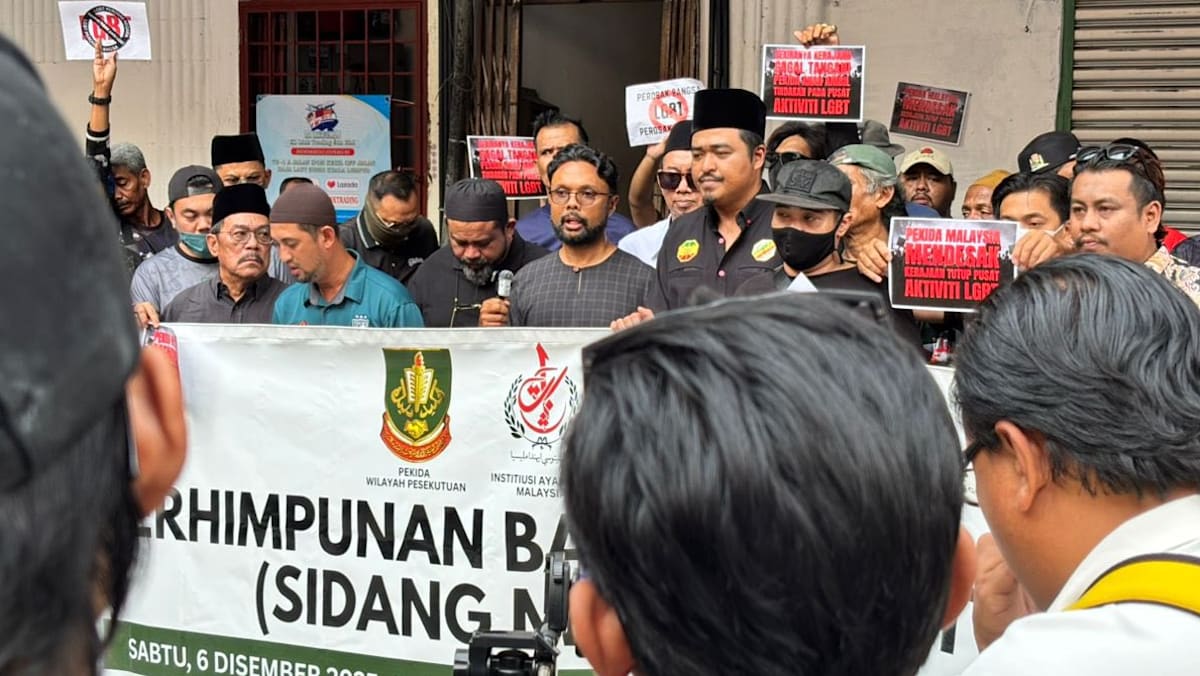
Experts say the enforcement efforts suggest the authorities are taking a more “preventive” approach amid a competitive political landscape, while advocacy groups say they are now treading more carefully when organising and promoting events.
Some LGBTQ individuals – including those who were previously rounded up in raids – told CNA they have become more cautious about the places they go to and events they attend, while others in Malaysia said they support the government’s recent enforcement moves.
AUTHORITIES TAKE ACTION
On May 25, 51 men were arrested in four separate police raids linked to an alleged “gay party” that involved drugs at a Kuala Lumpur hotel.
The group was found to be using hotel rooms for entertainment and drug abuse, and “is believed to be involved in immoral activities”, said narcotics investigations department director Hussein Omar Khan. The case is being investigated under Malaysia’s Dangerous Drugs Act 1952, news agency Bernama reported.
This followed the much-publicised raid on a men’s wellness centre in Kuala Lumpur on Nov 28 last year, when the police detained over 200 men on suspicion of same-sex activity, which is criminalised under federal and Islamic laws.
Although the raid backfired – with the men later released when a magistrate ruled that the police could not prove anyone had been exploited or coerced into prostitution or “abnormal sexual activity” – Kuala Lumpur police chief Fadil Marsus said the police, local authorities and religious department were working to ensure the centre ceased operations.
Then in January, a camping retreat in Selangor organised by gay, bisexual and queer (GBQ) men’s group Jejaka was cancelled after authorities said no permits would be issued for such events. The state ruler also ordered “firm action” against activities linked to the retreat.
On Feb 25, the Malaysian government blocked the websites of Grindr and Blued and said it would mull measures to curb the presence of LGBTQ dating apps from app stores.
Ministers have also pledged a tough stance against LGBTQ persons and content.
On Feb 26, Marhamah Rosli, Deputy Minister in the Prime Minister’s Department (Religious Affairs), urged the public to use the term “deviant culture” to replace “LGBT” to curb the spread of LGBTQ social media content.
“The more we utter, write and mention the term ‘LGBT’, the more related content will pop up. Unknowingly, we may appear to be promoting the deviant culture,” she said in reply to a senator’s question in Parliament.
In a written parliamentary reply in January, Minister in the Prime Minister’s Department (Religious Affairs) Zulkifli Hasan said Malaysia recorded 135 LGBTQ-linked arrests between 2022 and 2025.
He said the government “remains vigilant in enforcing Syariah criminal laws”, adding that this covers lesbianism, sodomy and men posing as women. Enforcement is not limited to arrests, he said.
These developments, observers told CNA, point to a chillier climate for LGBTQ people in Malaysia, where homosexuality is illegal and there has traditionally been pushback against the community, especially by conservative Islamic segments including political parties.
INTERPRETING RECENT REGULATORY ACTION
Malaysian lawyer Yoges M Verasuntharam, who has advised parties in LGBTQ cases, told CNA that recent enforcement suggests a trend towards a more preventive approach than one based on proven crime.
She has seen around a 20 per cent increase in calls seeking legal advice on LGBTQ-related enforcement over the past year, compared with the previous year.
“This suggests an enforcement model that prioritises anticipated risk mitigation and public order considerations over post-offence prosecution,” Verasuntharam said.
Recent cases she advised include a 2025 Women’s Day Rally event in Kuala Lumpur where a rainbow flag was flown, and LGBTQ couples posting photos during Hari Raya this year, which were subject to police probes.
Verasuntharam advised these clients on giving police statements, including what questions they should answer.
Data collected by non-governmental organisation Justice for Sisters do not point to a clear trend. It recorded at least 307 LGBTQ-linked arrests in 2025 under federal and state Syariah laws, and 32 people arrested in 2026 as of May 8.
It also recorded five to six LGBTQ events disrupted in June 2025 alone, compared to at least eight LGBTQ events recorded between 2019 and 2023 that it said were “intimidated, raided or disrupted”.
It is unclear if the arrests and disruptions are due to heightened enforcement, increased number of groups organising events or greater visibility of the events, said founder Thilaga Sulathireh.
Enforcement of LGBTQ matters is often tied to various federal and Syariah laws while informal public policing has also led to increased visibility of the group, said lawyer Verasuntharam.
Malaysia, a multi-ethnic country where Islam is the state religion, has a dual-track legal system, with Syariah courts handling some cases for Muslim citizens.
Under Section 377A of the Penal Code, sodomy is criminalised, with penalties including a jail term of up to 20 years with caning.
Other federal laws such as Section 504 of the Penal Code criminalising intentional insults disrupting