
Malaysian PM Anwar Ibrahim Announces New Policy: Cuts Fuel Quota and Introduces WFH
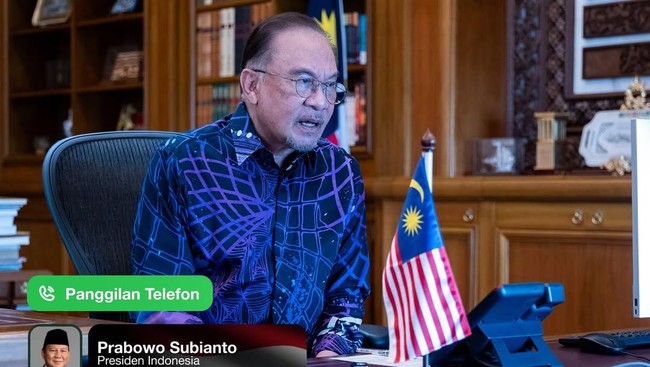
Jakarta, CNBC Indonesia - Malaysian Prime Minister Datuk Seri Anwar Ibrahim has officially announced the government’s strategic measures to address the threat of a global energy crisis triggered by escalating tensions in West Asia.
In a special announcement on Thursday (26/03/2026), Anwar emphasised that the government is compelled to make temporary adjustments to the quota for subsidised petroleum products (BBM) to maintain the country’s fiscal resilience.
This step was taken after the burden of fuel subsidies surged dramatically in a short period. Anwar explained that the subsidy value had sharply increased from an initial 700 million ringgit (Rp 2.96 trillion) to 3.2 billion ringgit (Rp 13.55 trillion) due to the spike in global crude oil prices.
“Insya Allah, I will outline the country’s strategic steps to enhance preparedness in facing the global energy crisis arising from the conflict in West Asia, with a firm, structured approach focused on the interests of the people and national resilience,” stated Anwar Ibrahim on Thursday (26/3/2026).
In the latest policy, effective from 1 April onwards, the Malaysian government has decided to adjust the monthly quota for the Budi Madani RON 95 (Budi95) subsidised programme, or RON 95 petrol. The quota, previously 300 litres per month, is now reduced to 200 litres per month for private vehicle users.
The government explained that this measure is a necessary form of fiscal discipline to prevent the national budget from collapsing. Despite the quota cut, Anwar assured that the retail price of RON 95 petrol would remain at the subsidised level to protect the purchasing power of the wider public.
“The decision to maintain the RON 95 petrol price at 1.99 ringgit (Rp 8,431) per litre is a carefully considered step to avoid burdening the people, even as global crude oil prices surge,” said Anwar.
Anwar added that around 90 per cent of Malaysians would not be significantly affected by this quota alignment.
According to government data, the majority of users consume only about 100 to 200 litres of petrol per month, so the 200-litre figure is deemed sufficient for the daily needs of most citizens.
“Every ringgit saved will be channelled back to the people through initiatives such as Sumbangan Tunai Rahmah (STR) and Sumbangan Asas Rahmah (SARA), in addition to improving clinic and hospital facilities, repairing roads, and strengthening infrastructure,” stated Ibrahim.
In addition to adjustments for the general public, the Malaysian government continues to provide special exemptions for crucial sectors. E-hailing drivers and logistics riders still receive a subsidised quota of 800 litres per month to ensure smooth urban mobility and maintain stability in transport service prices.
Anwar also reminded the public to start conserving energy and tightening expenditures amid global uncertainties. He noted that neighbouring ASEAN countries are already feeling severe economic pressures due to this energy crisis.
“Losses amounting to tens of billions of ringgit that the government has borne over decades must be recovered so they can be reinvested for the people’s welfare. I am not against the wealthy, but we must be fair to vulnerable groups who need it,” concluded Ibrahim.
For information, the Malaysian government is currently monitoring global oil price movements, particularly in the Strait of Hormuz, which is the main route for world oil supplies.
Besides BBM, the government is also committed to maintaining the stability of other essential commodity prices through increased allocations for the Jualan Rahmah programme.
List of New Malaysian Policies
The following is a list of new policies implemented by the Malaysian government, effective from 1 April 2026:
Subsidised RON 95 fuel price remains at RM 1.99 per litre, with the quota limited to 200 litres per month.
Subsidised fuel quota limited to 800 litres per month for online vehicle drivers (e-hailing).
Restrictions on diesel refuelling in Sabah, Sarawak, and Labuan, including 50 litres per purchase for private and four-wheeled goods vehicles, 100 litres for transport and goods vehicles under 3 tonnes, and 150 litres per purchase for heavy vehicles exceeding 3 tonnes.
Subsidised diesel price remains at RM 2.15 per litre in Sabah, Sarawak, and Labuan.
Smuggling will be met with firm action.
Work-from-home (WFH) initiative; work from home will be implemented gradually and selectively, and an announcement regarding the work-from-home system in the public sector will be conveyed soon.
The private sector is also urged to respond to the government’s call to implement work from home.