
Malaysian Islamic Youth Movement Condemns Attack that Killed Indonesian Military Personnel
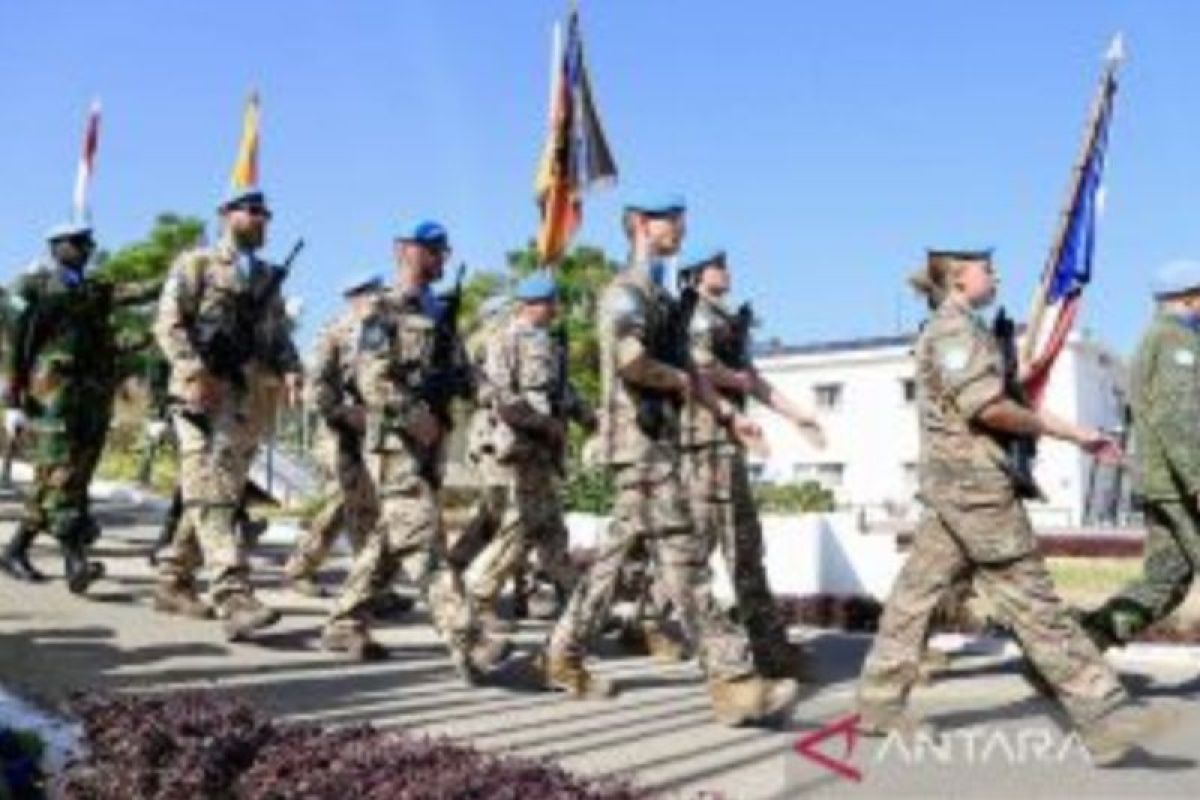
Kuala Lumpur (ANTARA) - The Malaysian Islamic youth organisation, Angkatan Belia Islam Malaysia (ABIM), has condemned the attack on the United Nations Interim Force in Lebanon (UNIFIL) headquarters that resulted in the death of one Indonesian National Army (TNI) soldier.
“Angkatan Belia Islam Malaysia strongly condemns the attack that killed an Indonesian National Army member, Head Soldier (Praka) Farizal Rhomadhon, and injured several other members while serving under the UNIFIL peacekeeping mission,” said ABIM President Ahmad Fahmi bin Mohd Samsudin.
Fahmi, in a statement to ANTARA in Kuala Lumpur on Monday, conveyed that the attack on peacekeeping forces is not merely a tragedy but a clear signal that fundamental international security norms are being eroded.
ABIM extended deep condolences to the victim’s family and expressed full solidarity with the people and government of Indonesia over this loss.
According to Fahmi, this incident represents a significant loss not only for Indonesia but also for the entire international community committed to global peace efforts.
“This event cannot be viewed as an isolated incident. It reflects a serious deterioration in the protection of international peacekeeping forces. When peacekeeping troops operating under an international mandate become targets, the world now faces a deepening crisis of confidence in the ability of the collective security system,” Fahmi stated.
In this context, ABIM emphasised that the safety of peacekeeping forces is no longer merely an operational issue but has become a strategic matter requiring immediate and coordinated action at the international level.
Any delay in action will only increase the risk of escalation and further erode the credibility of international institutions.
At the same time, ABIM noted the presence of Malaysian Battalion (MALBATT) members currently serving in Lebanon under the UNIFIL mission.
ABIM urged Malaysian authorities to provide clear and up-to-date information on the security status of Malaysian soldiers, while ensuring comprehensive enhancement of protection measures in line with the current risk level in the operational area.
In relation to this, ABIM put forward several points: first, Malaysia needs to immediately conduct a comprehensive assessment of the security level for MALBATT members, including operational readiness, rules of engagement, and the need for strengthened field protection. The safety of members must be the utmost priority in every strategic consideration.
Second, Malaysia, together with Indonesia and other ASEAN countries, needs to align a joint position to press for stronger security guarantees at the United Nations (UN) level, including ensuring accountability for any parties targeting peacekeeping forces.
Third, ASEAN must not remain a passive observer on this issue. Instead, the region needs to emerge as a more proactive regional bloc, including considering joint statements and rapid consultation mechanisms among contributor countries, to uphold the principles of protecting peacekeeping forces and international security norms.
Fourth, Malaysia, as a nation with a moderate and principled outlook, must strengthen its role as a consistent voice in upholding international law, including raising this issue on various multilateral platforms such as the Non-Aligned Movement (NAM), the Organisation of Islamic Cooperation (OIC), and Global South forums.
Fahmi assessed that failure to act decisively against incidents like this risks creating a dangerous precedent, where peacekeeping forces are no longer respected as neutral entities.
If this situation continues, he said, the entire international security framework will be vulnerable to broader collapse.
ABIM also called for a more assertive diplomatic approach, stronger regional coordination, and clearer international commitments to ensure the safety of all peacekeeping personnel remains protected.
“The safety of peacekeeping forces is a red line that must not be compromised in any conflict situation,” Fahmi stressed.
He emphasised that Malaysia, along with regional partners and the international community, must play an active role in upholding peace, the sovereignty of international law, and global human security.