
Malaysia Voids Trade Agreement with US Following Supreme Court Tariff Cancellation
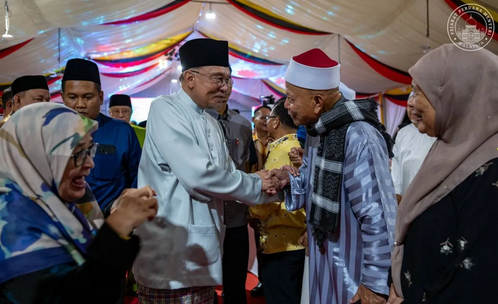
MALAYSIA’s government has stated that its reciprocal trade agreement with the United States no longer applies following the US Supreme Court’s decision to invalidate Washington’s reciprocal tariff policy.
The move is considered to have the potential to set a precedent for other nations to review similar agreements concluded under the Trump administration’s trade policies.
Malaysia’s Minister of Investment, Trade, and Industry, Johari Ghani, stated that the Reciprocal Trade Agreement (RTA) between the two nations has legally lapsed following the US court’s ruling that the government must have a clear basis for implementing tariffs.
The RTA, signed on 26 October 2025, had previously established tariff reductions from 47 per cent to 24 per cent, then 19 per cent, and exemption from import duties for certain commodities. In return, Malaysia opened broader market access and granted various policy concessions to the United States.
However, on 20 February 2026, the US Supreme Court invalidated the reciprocal tariff policy. Shortly thereafter, President Trump imposed a general 10 per cent tariff on all nations for 150 days, with plans to increase it to 15 per cent.
Washington also warned that countries withdrawing from trade agreements could face serious consequences.
At the India Today Conclave 2026 forum, US Ambassador to India Sergio Gor affirmed that Washington expects all trading partners to remain compliant with agreed-upon agreements.
A report from the Global Trade Research Initiative (GTRI) cited two main factors that could encourage other nations to follow Malaysia’s lead.
“First, the agreement has lost its economic value following the US Supreme Court ruling. Therefore, the preferential advantages promised by the agreement have been lost,” the report stated.
The second factor is the continuation of trade pressure from the United States even after the agreement was signed. Washington continues to launch various new investigations against many nations, demonstrating that trading partners remain at risk of facing additional tariffs at any time.
“For many governments, this combination raises fundamental questions: why maintain politically costly concessions if the same tariff treatment applies without the agreement and trade pressures persist? Malaysia’s decision to declare its agreement null may well be followed by many other nations,” said Ajay Srivastava, founder of GTRI.
On 11 March, the US announced the launch of an investigation under Section 301(b) of the Trade Act of 1974 concerning excess manufacturing production capacity in several nations, including China, the European Union, Singapore, Switzerland, Norway, India, Malaysia, Cambodia, Thailand, South Korea, Vietnam, Taiwan, Bangladesh, Mexico, and Japan.
One day later, Washington launched another Section 301 investigation regarding alleged forced labour practices in 60 countries, including India, China, the European Union, the United Kingdom, Japan, Canada, Australia, Mexico, Brazil, Vietnam, Bangladesh, Cambodia, and Pakistan.
Meanwhile, India and the US announced in early February that they had reached an initial-stage trade agreement that eliminated 25 per cent penalty tariffs and reduced reciprocal tariffs to 18 per cent. Nevertheless, both nations stated that negotiations are continuing to reach a more comprehensive agreement, without certainty regarding the timeline or final details of the accord.