
Malaysia Envoy: Indonesia Partnership Key to ASEAN's Future Resilience
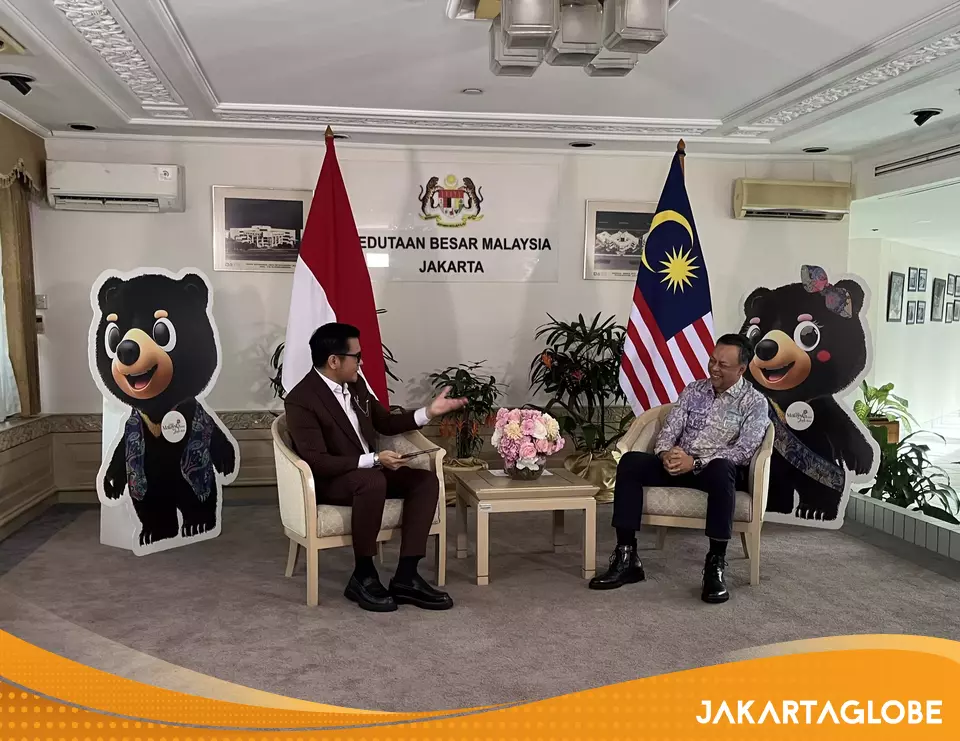
Malaysia Envoy: Indonesia Partnership Key to ASEAN’s Future Resilience
Jakarta. Southeast Asia must deepen regional cooperation to withstand mounting global economic shocks, Malaysia’s ambassador to Indonesia said, warning that rising geopolitical rivalry and trade disruptions are increasingly testing ASEAN’s resilience.
In an exclusive interview with the Jakarta Globe, Malaysian Ambassador Dato Syed Mohamad Hasrin Tengku Hussin said ASEAN economies, which are deeply integrated into global supply chains, remain highly exposed to external shocks, from tariff disputes and energy crises to financial market volatility.
“ASEAN countries are open economies and are closely connected to global supply chains. When disruptions occur globally, the effects are inevitably felt in our region,” Hasrin said. “But these challenges also provide an opportunity for us to reassess how we respond and how we can strengthen cooperation within ASEAN.”
The region, home to around 680 million people, has the potential to become a major global economic player, he said, but only if member states expand cooperation in trade, investment, and economic connectivity. While geopolitical tensions among major powers have intensified, Hasrin said Southeast Asia currently faces a greater threat from economic pressure than from military confrontation.
“Our economies rely heavily on trade and exports, so economic weaponization becomes a significant concern for Southeast Asia,” he said.
At the same time, ASEAN must ensure that global rivalries do not spill over into the region, he added.
“The role of ASEAN is to maintain constructive engagement and ensure that major power competition does not destabilize our region.”
Hasrin said the current global uncertainty could push ASEAN countries to strengthen intra-regional trade, which currently accounts for just over 20% of the bloc’s total commerce. “Intra-ASEAN trade still has significant room to grow. Strengthening it can provide a safety net against external shocks,” he said.
Global interest in ASEAN is also increasing as countries recognize the bloc’s economic potential and strategic location, he added.
Beyond regional cooperation, Hasrin emphasized that Indonesia remains one of Malaysia’s most important partners. Relations between the two countries, he said, are deeply rooted in cultural similarities, strong people-to-people ties, and long-standing diplomatic engagement.
“Indonesia is extremely important for Malaysia, and the relationship between our two countries is unique and special,” he said.
Bilateral trade between the two countries reached around $26 billion last year, making Indonesia Malaysia’s sixth-largest trading partner globally. Malaysia is also among the largest foreign investors in Indonesia.
Tourism exchanges have also grown strongly in recent years, with Malaysians consistently among the largest groups of visitors to Indonesia.
Hasrin said ASEAN’s consensus-based decision-making model, often criticized for slowing regional responses, remains an important foundation for stability in Southeast Asia.
“The consensus approach has worked for decades in maintaining peace and stability in the region,” he said. “There are discussions about whether some adjustments are needed, but the fundamental principle remains important.”
At the same time, he noted that ASEAN still requires support from global partners in addressing regional challenges, including the ongoing crisis in Myanmar.
Looking forward, Hasrin said Indonesia and Malaysia have significant opportunities to expand cooperation in emerging sectors such as renewable energy, digital economy, artificial intelligence, and advanced manufacturing, including semiconductors.
Energy connectivity across Southeast Asia is also gaining momentum, with electricity exchanges already taking place between Peninsular Malaysia and Sumatra, as well as between Sarawak and Kalimantan, as part of a broader effort to eventually connect the ASEAN power grid.
“As founding members of ASEAN, Malaysia and Indonesia have a special responsibility to strengthen the region,” Hasrin said. “When both countries work closely together, it contributes directly to stronger regional cooperation.”
Tags: Keywords: