
Makassar Sub-District Heads Sign Commitment to Overhaul Waste Management from Source to Disposal
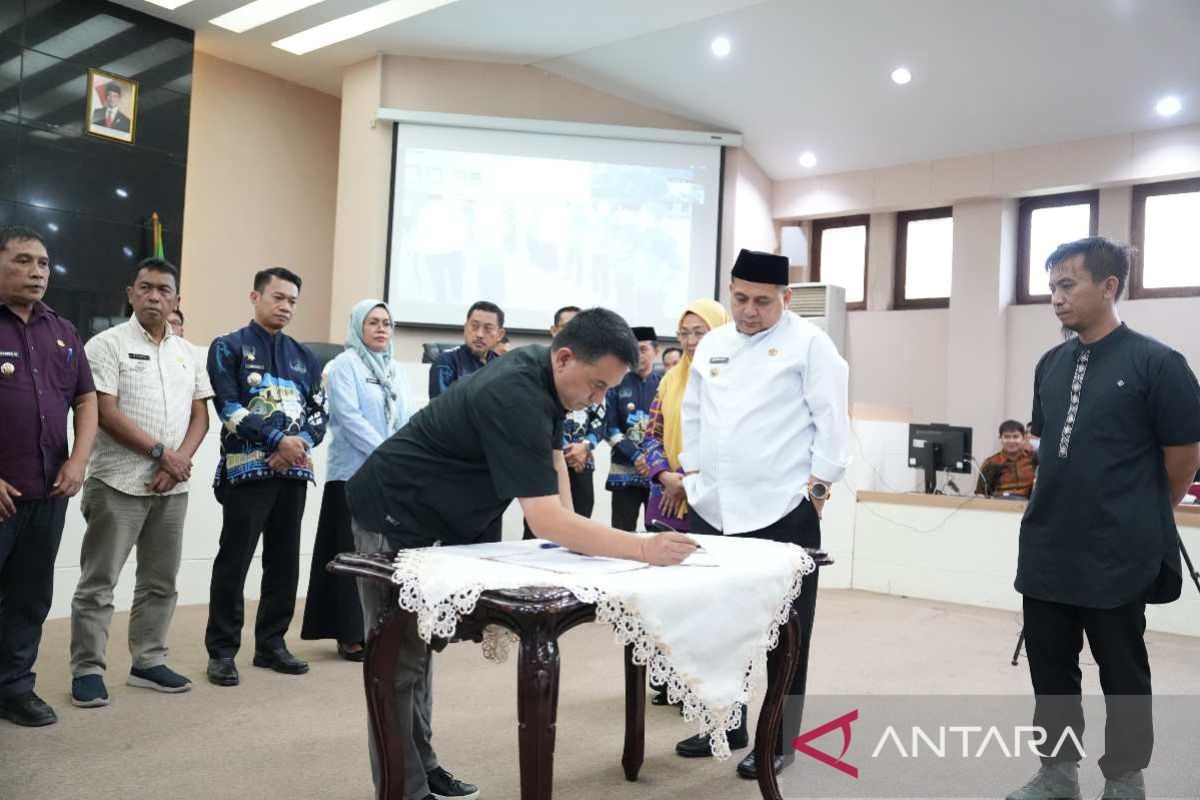
Makassar (ANTARA) - All sub-district heads in Makassar, South Sulawesi, have signed a joint commitment to overhaul the city’s waste management system, abandoning the old pattern of open dumping in favour of a more modern, environmentally friendly, and sustainable sanitary landfill system.
The Head of the Makassar City Environmental Agency (DLH), Helmy Budiman, in Makassar on Friday, emphasised that the Makassar City Government is racing to complete several major tasks in improving the waste management system.
“Various improvements are currently being prepared, starting from the repair of facilities and infrastructure to the organisation of on-site management systems, particularly at the Antang landfill site, which has been the most critical point,” he said.
Helmy explained that waste organisation and management must be carried out seriously, and Makassar Mayor Munafri Arifuddin will issue a circular to strengthen other regional regulations, with that circular related to the prohibition of open dumping practices.
“The heaviest burden is indeed at the landfill. The conditions on the ground, including road access complained about by the community, will be fixed immediately. This is a priority,” he stressed.
In addition, he mentioned that the signing of the Strategic Environmental Approval (PSL) on 4 April 2026 will run in parallel with the implementation of those administrative sanctions.
“In the near future, there will be the signing of a circular by the Makassar Mayor that firmly prohibits open dumping. This will become a strong basis for us in carrying out the organisation,” he explained.
According to him, this becomes a major challenge because it requires all types of non-residue waste, such as organic and inorganic, to be managed from the source.
“This means waste management must start from upstream, both through Waste Bank Units, TPS3R, or TPST, which we will continue to develop,” he said.
He emphasised the importance of the role of regions, from the village level, RT/RW to the sub-district, in building and developing a community-based management system. Without active involvement from the regions, waste reduction to the landfill will not run optimally.
“If it is not developed in the regions, then there will be a big question of where the waste will be disposed of. Because in the future, waste entering the landfill will be strictly sorted; organic waste will no longer be allowed,” he said.
With the implementation of that system, Helmy is optimistic that the volume of waste entering the landfill will decrease significantly, while also providing positive impacts on traffic flow around the Antang landfill area and the environmental quality for the community.
“The joint commitment that we have signed is proof that waste management is a collective responsibility. The role of sub-districts and regions is very important in ensuring this runs,” said Helmy Budiman.