
Major Transport Decarbonisation Efforts
Transport sector is the second-largest energy consumer after industry, accounting for 38% of total energy use by 2025, and contributes 23% of national CO2 emissions according to 2022 IEA data. More concerning, 99% of transport energy still comes from petroleum-based fuels, highlighting the scale of challenges in decarbonisation efforts.
However, changes are emerging in recent years. Although slow, policy directions and industry awareness are shifting towards cleaner energy through electric vehicles, biofuels, and hydrogen across land, sea, and air transport sectors, each with unique characteristics and challenges.
Biodiesel
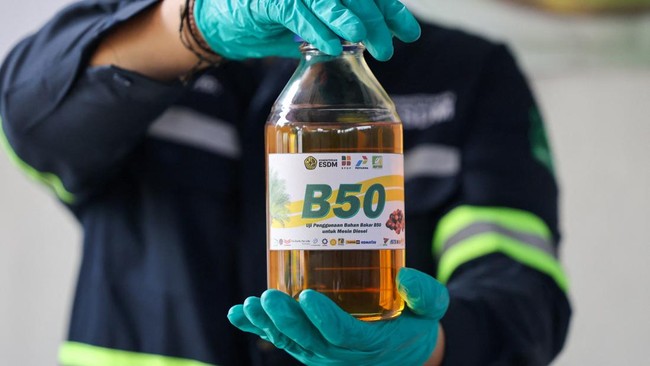
The government has launched the B50 biodiesel programme, effective 1 July 2026, blending 50% palm oil (CPO) derivatives via transesterification into diesel. Aimed at boosting energy independence, reducing diesel imports, and maximising domestic palm oil downstreaming, it is among Indonesia’s most successful transport decarbonisation initiatives. A key advantage is no vehicle modifications required; current cars and trucks can use biodiesel without engine changes. Indonesia is now one of the world’s largest biodiesel producers. Future challenges include CPO supply availability and price stability, requiring careful management to balance energy and food needs.
Bioethanol
Unlike biodiesel, bioethanol development faces a longer road. Petrol remains the most imported transport fuel, despite Government Regulation No. 40 of 2023 establishing legal groundwork for national energy self-sufficiency and bioethanol supply. The Directorate General of New, Renewable Energy, and Energy Conservation (EBTKE) under the Ministry of Energy and Mineral Resources targets E5 (5% bioethanol) by 2024-2028 and E10 by 2029-2035. Key constraints are supply shortages, as feedstocks like sugarcane, corn, and cassava are vital food commodities. Bioethanol prices must also compete with petrol to gain market acceptance.
Brazil’s successful 30-year bioethanol programme offers lessons: advanced agricultural technology, vast land availability, and integration of farming, sugar industry, bioethanol production, and biomass power generation. Currently, market certainty is critical; ethanol producers need guaranteed long-term purchase contracts to attract investors. Despite its potential as a transitional energy source requiring no new vehicles, a robust supporting ecosystem must be built.
Biojet Fuel
Aviation is moving towards cleaner energy via Sustainable Aviation Fuel (SAF), also known as biojet fuel, with Hydrotreated Vegetable Oil (HVO) and Hydroprocessed Esters and Fatty Acids (HEFA) as most promising types. SAF’s main challenge is significantly higher costs than conventional jet fuel, with developed countries expected to adopt it en masse only by 2035. Indonesia should start with small-scale trials while advancing research and development; current commercial aircraft tests have reached 2.4% SAF blend (J2.4), targeting 3% by 2026.
Electric Vehicles
According to Gaikindo data, Indonesian EV sales rose 53% in the first half of 2026, reflecting growing public interest. However, EVs still hold a tiny share of total vehicle sales. A Pertamina Energy Institute (PEI) and PLN Research and Development Centre survey identified three main consumer concerns: high prices (though decreasing), limited driving range, and insufficient charging infrastructure. Respondents trust EV technology but remain doubtful about supporting infrastructure.
Government action is essential to address these hurdles: purchase incentives, nationwide charging station rollout, and battery standardisation. Without clear standards, consumers face confusion as chargers for specific brands may not work with other vehicles.
Bioethanol vs Electric Vehicles
Practitioners and analysts often ask which should be prioritised: bioethanol or EVs? Both are needed and complementary to reduce massive petrol imports. Bioethanol suits existing vehicles with minimal modifications, while EVs are the long-term solution for new vehicles. In developed countries, the transition towards electric vehicles is…