
Major Challenge in Safeguarding 42 Subaks in Denpasar
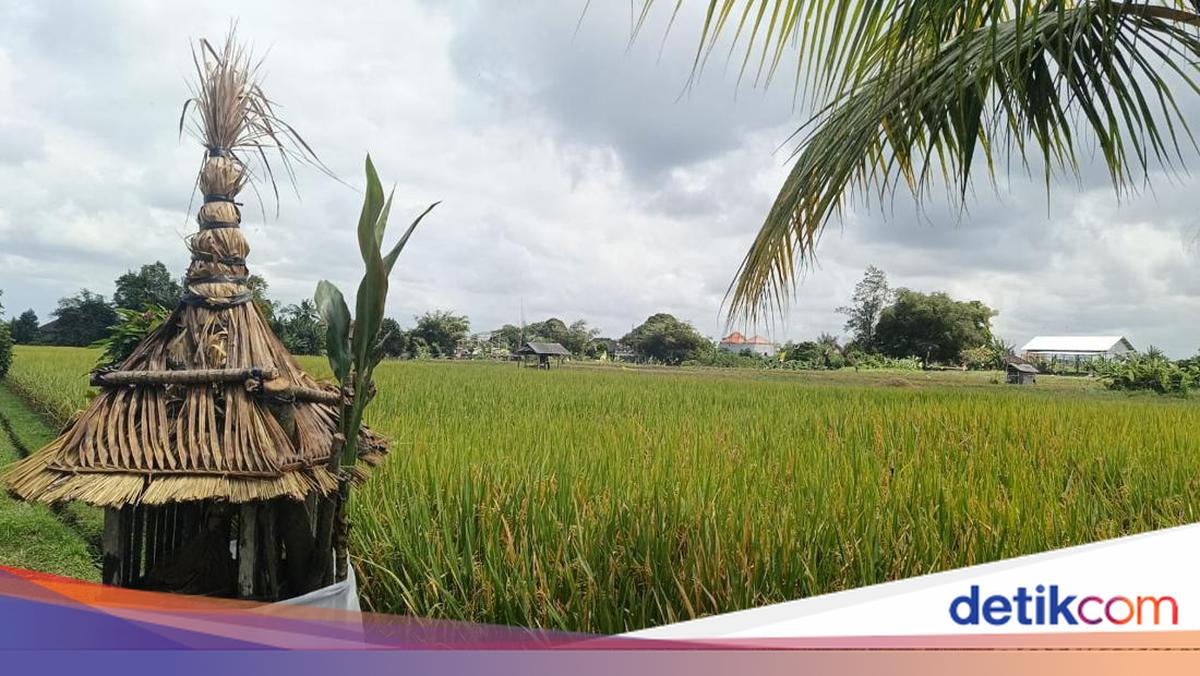
The Denpasar City Government provides regular monthly incentives of Rp 2.5 million per person to 42 pekaseh (subak heads) and Rp 1.5 million per person to 144 pangliman (pekaseh’s deputies) as part of efforts to safeguard the 42 remaining subaks in Denpasar. The challenge of protecting the subak, the traditional Balinese irrigation system, in Denpasar is substantial, ranging from land-use changes to educating farmers.
This is set out in Denpasar Mayor’s Decree No. 100.3.3.3/62/HK/2026 on the Provision of Services to Pekaseh and Pangliman Subak across Denpasar City for Protection, Development, and Utilisation of Objects Promoting Customary Institutions.
Special Financial Assistance (BKK) from the Province indeed covers 35 subaks at Rp 30 million per year. The remainder comes from the city government for preserving the aci-aci. Because the 35 are still wetland land, the other seven are not wetland but still have parahyangan, Purwantara explained when interviewed at the Denpasar Disbud Office on Tuesday (19 May 2026).
There are three main components of a subak: parahyangan (the subak temple), pawongan (subak members such as pekaseh), and palemahan (the subak land). “Example in Peraupan Barat shows that land is dry and used for vegetables, but the temple remains. So when the arable land disappears, the obligation to maintain the parahyangan persists, and government assistance continues,” Purwantara added.
He assesses that the challenges facing urban subaks are increasingly complex. In addition to land-use changes, public interest is driving subaks to metamorphose into ecotourism zones.
Purwantara noted that awig-awig or perarem (customary regulations) are typically created by the customary village. However, in practice, these rules bind only residents who own the land. “So, when the land has already been sold, I as the Desa Adat Intaran, as the landowner, am bound by awig-awig. But when it is sold and owned by someone not from Desa Adat Intaran, it becomes difficult to impose adat sanctions,” he said.
Purwantara states that this condition hinders the ability of customary villages to monitor subaks. He emphasised that land that has certificates falls outside the jurisdiction of the customary village. “If land-use change is already bound by the RTRW Regulation, that helps; awig-awig may not bind such matters,” he added.
However, Purwantara notes a special case when land is pipil (subdivided) and owned by individuals without certificates. “If the land is still in pipil form, coordination to enforce rights is possible through meetings with the National Land Agency (BPN), the village head, the subdistrict head, and the Department of Agriculture when the land has not yet been certified or is pipil.”
Urban Farmers Urged to Change Planting Patterns
Disbud Denpasar sees landholdings narrowing and irrigation increasingly polluted by waste. Therefore, urban farmers are advised to change their planting patterns going forward.
“Even if the land is shrinking, the farming culture should not disappear. In urban land, horticulture farming is more suitable. For 15 ares, planting rice may not be profitable. But if we divide 15 ares to grow flowers, corn, eggplant, tomatoes, and seasonal crops, that could be adopted,” Purwantara said.
Purwantara also noted that this pattern of farming was initially brought by migrants. Local farmers remain focused on rice cultivation.
“Our farmers have not yet recognised the opportunities. Those opportunities are seen by urbanites who come to Denpasar. People of Javanese origin come here, rent our farmers’ land, stay there, for example renting 10 ares for several years; they plant melons and chiles—that is their strategy,” he said.
He stressed the need for farmers to reorient themselves. In addition to seeking profit through changes in planting patterns and adopting modern technology, farmers must be able to anticipate market trends.
“Our farmers are not adept at anticipating the market. During festive periods such as Ramadan, chili and tomato prices rise; how can our paddy harvests be timed for Ramadan? We cannot treat all areas the same. Upstream areas like Denpasar Timur have good water quality and rice cultivation is not affected, but downstream areas such as Sidakarya and Intaran are more suitable for horticultural crops,” he concluded.