
Maintaining the Deficit Amid the Oil Price Surge
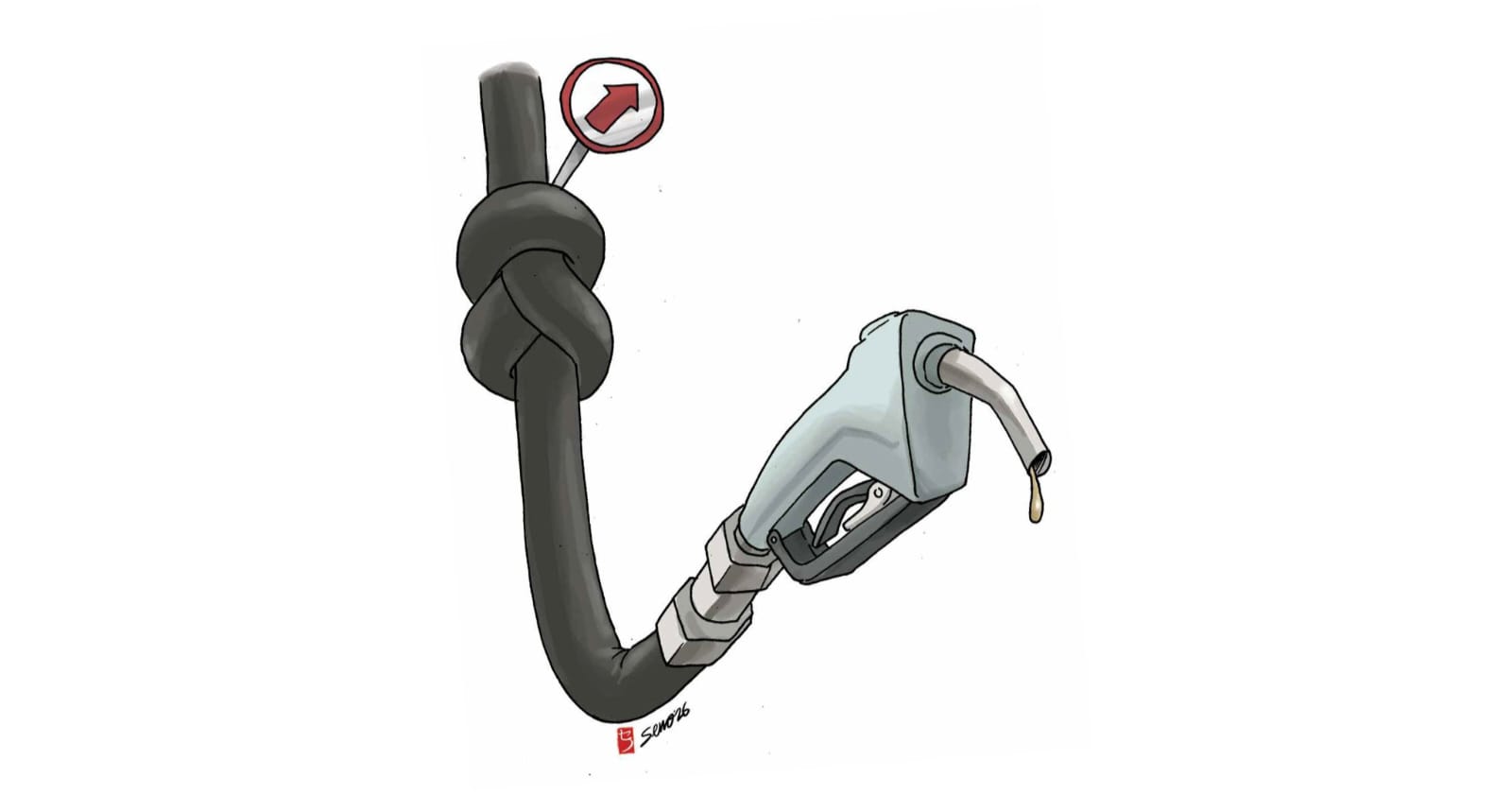
PRESSURE on the State Revenue and Expenditure Budget (APBN) is mounting again as global oil prices move well above the baseline assumption. In the 2026 APBN, oil prices are assumed at US$70 per barrel. However, market realisations show a different dynamic—oil prices have surged above US$100 per barrel. This gap is not merely a statistical deviation. It directly alters the fiscal balance through increases in subsidy spending and automatic energy compensation.
MAINTAINING DOMESTIC PRICE STABILITY
Indonesia’s APBN structure remains quite sensitive to oil price movements. When prices rise, pressure comes not only from the energy import side but also from the government’s obligation to maintain domestic price stability. Each oil price increase enlarges the state’s spending needs. Without policy adjustments, the consequence is a widening fiscal deficit.
In this context, public concerns are quite reasonable. The 3% deficit limit against GDP has not been merely an administrative figure. It is an anchor for Indonesia’s fiscal credibility. When that limit is breached, risk perceptions rise, debt financing costs may increase, and policy space becomes narrower. In a global situation full of uncertainty, maintaining fiscal credibility is as important as sustaining economic growth.
However, viewing this situation only from the pressure side would yield an incomplete conclusion. What is more determining is how policy responses are designed and implemented. In this situation, the government is choosing a relatively disciplined approach: containing fiscal pressure through spending efficiency and budget reallocation, rather than raising domestic energy prices.
This choice is not simple. Raising fuel prices is the quickest way to ease fiscal pressure. However, the cost is directly borne by the public through inflation and reduced purchasing power. In Indonesia’s economic structure, which is still dominated by household consumption, energy price increases risk suppressing domestic demand and slowing economic growth.
Therefore, the government is taking a more complex path in terms of implementation. Large-scale budget refocusing for ministries and agencies is being carried out to redirect spending to more urgent priorities. Efficiency in official travel is being significantly curtailed.
Adjustments to civil servants’ work patterns are directed towards reducing energy consumption. At the same time, structural policies such as accelerating the implementation of B50 biodiesel are being pushed to reduce dependence on imported fossil fuels.
This approach reflects the basic principle in fiscal management: external pressures do not have to always translate into deficit widening. As long as there is room to improve efficiency and enhance spending quality, fiscal stability can still be maintained. However, the effectiveness of this approach depends heavily on one key factor: execution discipline.
Refocusing is not just about shifting numbers in budget documents. It demands consistency in on-the-ground implementation. Spending efficiency is also not an automatic process. Without tight oversight, potential savings often fail to be fully realised.
This is where the real challenge lies. Cross-ministry and agency coordination becomes crucial. Reallocation must not stop at budget documents. It must produce real savings, not just administrative shifts. Without such discipline, the additional subsidy burden will be hard to cover, and pressure on the deficit will re-emerge.
Additionally, it must be recognised that this strategy has clear limits. In a scenario where oil prices remain in a moderate range (US$80-US$90 per barrel)—even up to around US$100 per barrel—the combination of efficiency and spending reallocation still provides room to keep the deficit around 3% of GDP. However, if oil prices move persistently higher, that room will narrow further. In extreme conditions, policy options become more limited, and adjustment costs will rise.
This means fiscal discipline is not a static condition. It is a process that must be continuously adjusted to global dynamics. The government needs to ensure that policies taken are adaptive, with periodic evaluations of implementation effectiveness. Without a strong evaluation mechanism, policies that are initially appropriate may lose effectiveness as conditions change.
Furthermore, this episode reaffirms the structural issues in Indonesia’s APBN. Dependence on imported energy makes the fiscal position highly vulnerable to global price volatility. As long as this structure remains unchanged, similar pressures will recur every time there is turmoil in the global energy market.
Therefore, short-term responses through efficiency must be complemented by more fundamental medium- to long-term strategies. Energy diversification, increased domestic production, and acceleration of the transition to alternative energy become essential parts to reduce fiscal sensitivity to oil prices. Without those steps, fiscal space will continue to erode every time there is an external shock.
MEASURED AND CREDIBLE
In a broader perspective, keeping the deficit below 3% is not merely compliance with fiscal rules. It is a signal to the market that Indonesia’s economic policies remain within a measured and credible corridor. That credibility becomes increasingly important amid rising global uncertainty, where investors are ever more sensitive to policy risks.
In the end, whether the deficit stays below 3% or not will depend heavily on policy consistency. Room to maintain fiscal discipline still exists, but it is not automatic. It must be created through the right decisions and courage