
Maintaining Stable Rice Prices
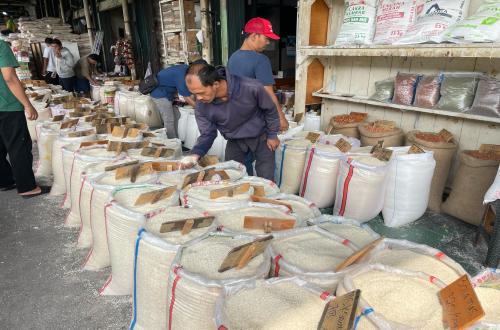
There is important news regarding the movement of rice prices in the market in recent times. Citing a presentation by Ateng Hartono from the Distribution and Services Statistics Division of the Central Statistics Agency (BPS) at the Regional Inflation Control Coordination Meeting 2026, broadcast on the YouTube channel of the Ministry of Home Affairs on Monday (13/4/2026), medium rice prices were reported to have increased in several regions.
BPS records show that medium rice prices have slightly increased. In the second week of April 2026, medium rice prices rose 0.22% compared to March 2026. The current average price of medium rice is Rp 14,287 per kg. Meanwhile, premium rice prices rose 0.17% in the second week of April compared to March 2026. The current average price is at Rp 16,047 per kg.
Causes of Rising Rice Prices
Rice prices are reported to be creeping up again, even though it is currently the peak harvest season. There are several main causes that overlap.
First, production and distribution costs have risen. At the milling level, premium rice increased 1.8% monthly and 9.57% annually. Medium rice also rose 0.61% monthly.
The causes include supply pressures, rising production costs, plus high food inflation. Shipping costs are also a culprit. The Minister of Agriculture stated that national stocks are safe, but deliveries to regions are delayed, causing local prices to surge.
Second, the paradox of peak harvest but prices still rising. In March 2026, there was a harvest peak with production of 5.21 million tonnes and a surplus of 2.62 million tonnes. Normally, prices would fall if stocks are abundant. However, what happened was an increase at the milling, wholesale, and retail levels simultaneously.
Bulog’s stocks are also large, at 4.3 million tonnes. This means the problem is not with the amount of paddy, but with the distribution flow and supply chain.
Third, prices outside Java have long been above the HET (Suggested Retail Price). For Zones II and III, which are mostly rice-deficit areas, retail prices have been above the HET for months. The long supply chain makes prices outside Java/Sulawesi more expensive compared to other countries.
Fourth, global and climate factors. World rice prices have risen nearly 15% year-to-date as of January 2026. Added to the effects of last year’s El Niño which disrupted harvests, supplies have become tight even though global production has increased. Market speculation is also heating up prices.
The impact is directly felt. At the wholesale level, prices rose from Rp 14,282/kg to Rp 14,419/kg in a month. At retail, they rose from Rp 15,099/kg to Rp 15,197/kg. Since rice contributes 3% to inflation, this increase makes living costs even heavier.
In essence, rice stocks are available, harvests are proceeding, but production costs, distribution bottlenecks, global prices, and speculation keep prices rising. BPS itself states that the upward trend has not slowed at all levels.