
Maintaining Balance in Merah Putih Cooperatives: Business Discipline and Cooperative Mission
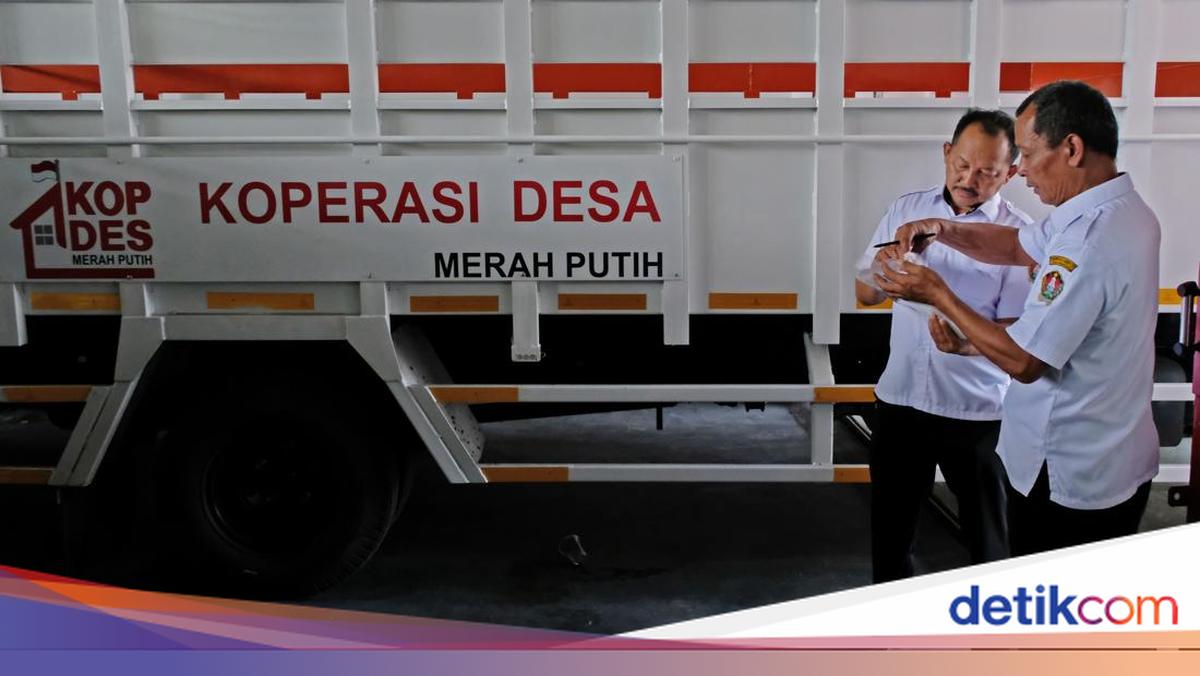
The Merah Putih Village and Subdistrict Cooperatives (KDKMP) serve as a strategic instrument to strengthen village economies. The target of establishing over 80,000 cooperatives in a relatively short period demonstrates a significantly scaling project. This commitment is reinforced through fiscal policy, with the government allocating 58.03% of the 2026 village funds—totaling approximately Rp60.6 trillion, or about Rp35 trillion—to support the Merah Putih Cooperatives programme. With such substantial coverage and budgetary backing, the initiative represents a systematic effort to drive local economic transformation. In a broader context, strengthening local-based economies has become increasingly relevant. SMEs continue to dominate Indonesia’s economic structure, contributing around 61% to the Gross Domestic Product (GDP), employing 97% of the workforce, and accounting for 99% of all national business units, according to the Ministry of Micro, Small and Medium Enterprises (UMKM) data. Similarly, the IMF’s 2024 Country Report highlights that enhancing access to financing, digitalisation, and governance quality are crucial for boosting productivity and resilience among small businesses in Indonesia. Amid global economic challenges, including trade slowdowns and geopolitical uncertainties, community-based economic strengthening has grown more critical. According to Statistics Indonesia (BPS), household consumption remains the largest contributor to national GDP. In this context, bolstering KDKMP is vital for maintaining local economic resilience. Public enthusiasm for the programme is high, with over 600,000 individuals registering as cooperative manager candidates, reflecting community interest in village-based economic strengthening. Given the target of establishing around 80,000 cooperatives, this indicates a substantial human resource potential to support implementation. Programme implementation has progressed swiftly, with over 82,000 Merah Putih Cooperatives legally registered by end-2025, alongside more than 25,000 active outlets across regions and approximately 1.19 million registered active members. This high level of participation reflects both hope and expectations for cooperatives as a new economic space. Consequently, the next focus must be on strengthening governance to ensure sustainable development and tangible impact. Local governments across regions are preparing support measures, including land provision, regional mapping, and cooperative outlet facilities. This indicates that Merah Putih Cooperatives are not merely an administrative programme but a novel approach to structuring and organising village economies. The programme’s scale demands meticulous governance. KDKMP must operate on two pillars: one rooted in corporate discipline—including business planning, cash flow, risk management, managerial competence, oversight, and performance measurement—and the other in cooperative mission—membership, participation, economic democracy, shared benefits, and service to community needs. These approaches must not be opposed but balanced. Cooperatives relying solely on social spirit risk unsustainability, while those overly resembling businesses may lose their core identity as member-owned economic organisations. The challenge for Merah Putih Cooperatives is not choosing one over the other but establishing the right relationship between business discipline and cooperative mission. This challenge is pertinent as Indonesia’s cooperative experience shows institutional sustainability is often a key issue. BPS data from 2025 records around 222,000 active cooperatives in Indonesia. However, cooperatives’ contribution to national GDP remains relatively low at under 1%, indicating that sheer numbers do not automatically translate to economic strength without adequate governance, scale, and productivity. Governance is thus key. Cooperative governance extends beyond organisational structure or financial reporting, encompassing decision-making processes, member involvement, risk management, and accountability assurance. First, cooperative autonomy must be preserved. Government support is crucial, especially in initial stages through mentoring, training, digitalisation, and business network strengthening. However, cooperatives must grow as member institutions, not merely as government administrative extensions. This autonomy is vital for accurately addressing local needs. The needs of agricultural villages, tourism villages, fishing villages, urban areas, and customary regions naturally differ. Autonomy does not mean operating without direction. Instead, it must be balanced with clear governance standards. The government can provide a general framework, digital systems, training, basic business models, and monitoring mechanisms. However, business decisions should still accommodate local context, member participation, and cooperative deliberation. Second, decision-making processes must be transparent. In cooperatives, decisions should not merely be efficient but also acceptable to members. Business type selection, pricing, asset usage, financing schemes, third-party collaborations, and benefit distribution must be fairly disclosed to members. Transparency will build trust. This trust is crucial as cooperatives operate on different logic than companies, where capital owners hold dominant positions.