
Maintaining APBN Deficit Below 3 Percent, Airlangga Develops Strategy to Anticipate Energy Price Rises
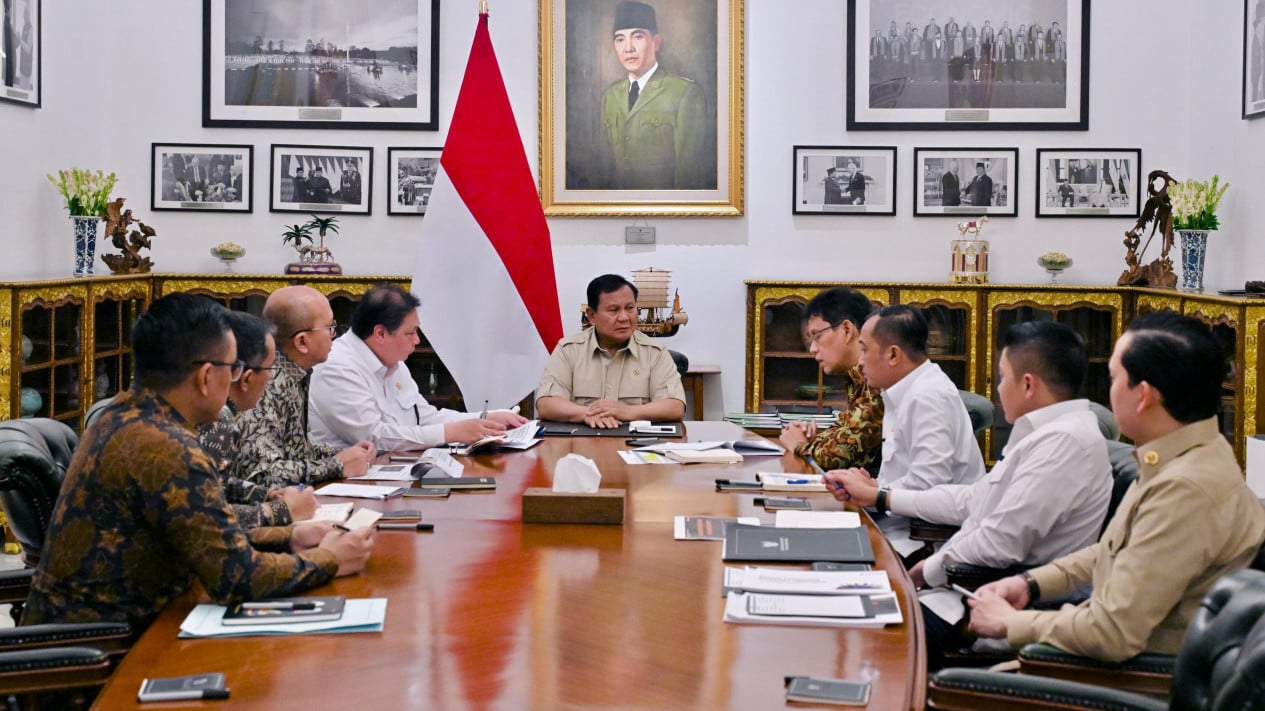
Coordinating Minister for the Economy, Airlangga Hartarto, has assured that the government is continuously strengthening national fiscal resilience amid global dynamics, including anticipating rises in energy prices.
Following a meeting with President Prabowo Subianto on Thursday, 19 March 2026, Airlangga explained that the President has emphasised the importance of keeping the APBN deficit below 3 percent, so the government will implement efficiency measures across various Ministries and Agencies (K/L).
“We are maintaining the APBN so that the deficit remains below 3 percent and in line with the directives from the Full Cabinet Plenary Session, which has been discussed with technical ministries. This is achieved through efficiencies from various K/L. And with these efficiencies from various K/L, the 3 percent deficit can be maintained,” said Airlangga in his statement on Thursday, 19 March 2026.
In addition, the government is preparing anticipatory measures against the impact of rising fuel prices and other commodities. One effort to be undertaken is increasing the volume of coal production.
“The President has also requested that the volume of coal production be increased. This means there will be improvements related to the RKAB (Work Plan and Budget),” stated Airlangga.
Furthermore, the government is reviewing policy adjustments related to coal export taxes to boost state revenues, in line with the upward trend in commodity prices.
In the energy sector, the government is also promoting the acceleration of converting diesel power plants (PLTD) to solar power plants (PLTS) as an efficiency measure amid high oil prices. This mandate has been given to the Danantara Investment Management Agency for immediate follow-up.
In addition, the government is examining work flexibility policies through a one-day work-from-home (WFH) scheme in every five working days. This policy is expected to reduce fuel consumption by up to 20 percent from normal levels through reduced mobility.
“There will be savings in terms of mobility usage; the petrol savings are quite significant, one-fifth of what we normally spend,” said Airlangga.
He added that the WFH scheme will not only apply to civil servants (ASN) but is also hoped to be adopted by the private sector and local governments. The government is currently refining these various policies and will provide more detailed information to the public once all final concepts are prepared.