
Mahfud: Electoral Reform is Open Legal Policy, Parliament Free to Formulate System
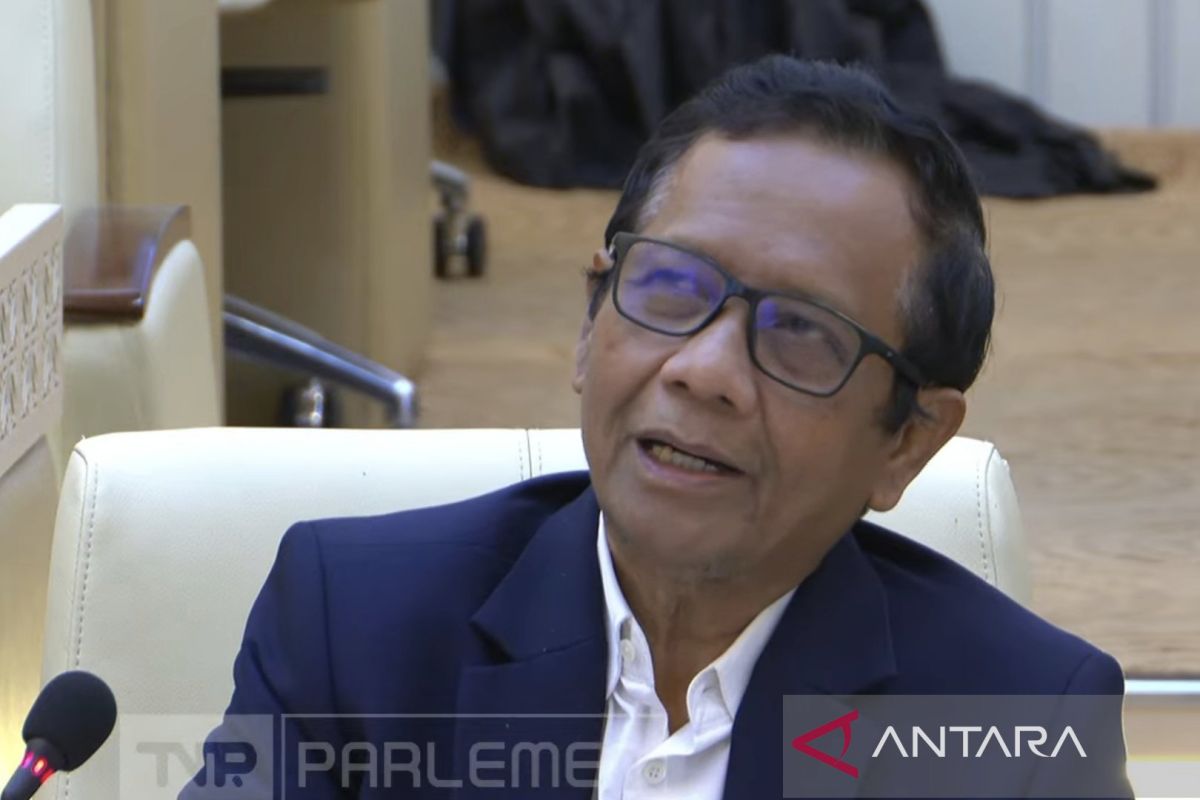
Jakarta — Constitutional law expert Mahfud MD stated that elections represent an open legal policy, allowing the Indonesian Parliament (DPR RI) complete freedom to formulate and decide which electoral system will be used, naturally based on public aspirations.
According to Mahfud, there is nothing wrong with discussions of the Electoral Law Bill (RUU) revisiting the matter of open or closed proportional representation systems.
“Whether to use an open proportional system or closed? There’s nothing wrong with it—parliament can simply decide. Can they revisit this now? Yes, they can. For instance, reverting to a closed proportional list system, is that permitted? Yes, it is,” Mahfud said during a public hearing with Parliament’s Commission II concerning the Electoral Law Bill at the parliamentary complex in Jakarta on Tuesday.
He stated there is no problem if closed proportional representation is revisited in the current Electoral Law Bill discussion.
This is because many parties have submitted that the open proportional system actually impedes the emergence of ideologically-grounded cadres from political parties.
“You’re welcome to do so. I’m saying that opinion is worth discussing; it’s just a matter of what the agreement will look like later,” said the former Coordinating Minister for Politics, Law, and Security.
With the status of open legal policy, according to Mahfud, members of the DPR RI can determine anything regarding the electoral system going forward, through agreement based on the people’s voice.
Because it is an open legal policy, he is confident the discussion will generate many differing opinions.
“The people will then provide input on which is good, which is desired by the people. The public also understands that this is an open legal policy, so there will certainly be differences of opinion,” he said.
Meanwhile, Commission II Chairman Rifqinizamy Karsayuda stated that all parties currently have a stake in making the 2029 elections better so that constitutional democracy becomes more firmly established going forward.
According to him, Commission II also wishes to first hear as much input as possible regarding the Bill, so to date the Electoral Law Bill Working Committee (Panja) has not yet been formed.
“From these thoughts, views, and critiques, a Problem Inventory List (DIM) will emerge. From the DIM that emerges, we will then formulate normative proposals to be made into norms,” said Rifqi.