
Mahantam: A Tradition Upheld Amid Disaster Recovery
Although there have been adjustments, Mahantam serves as proof that this tradition is no longer merely a collective pooling practice but has evolved into a symbol of care and support for those most in need.
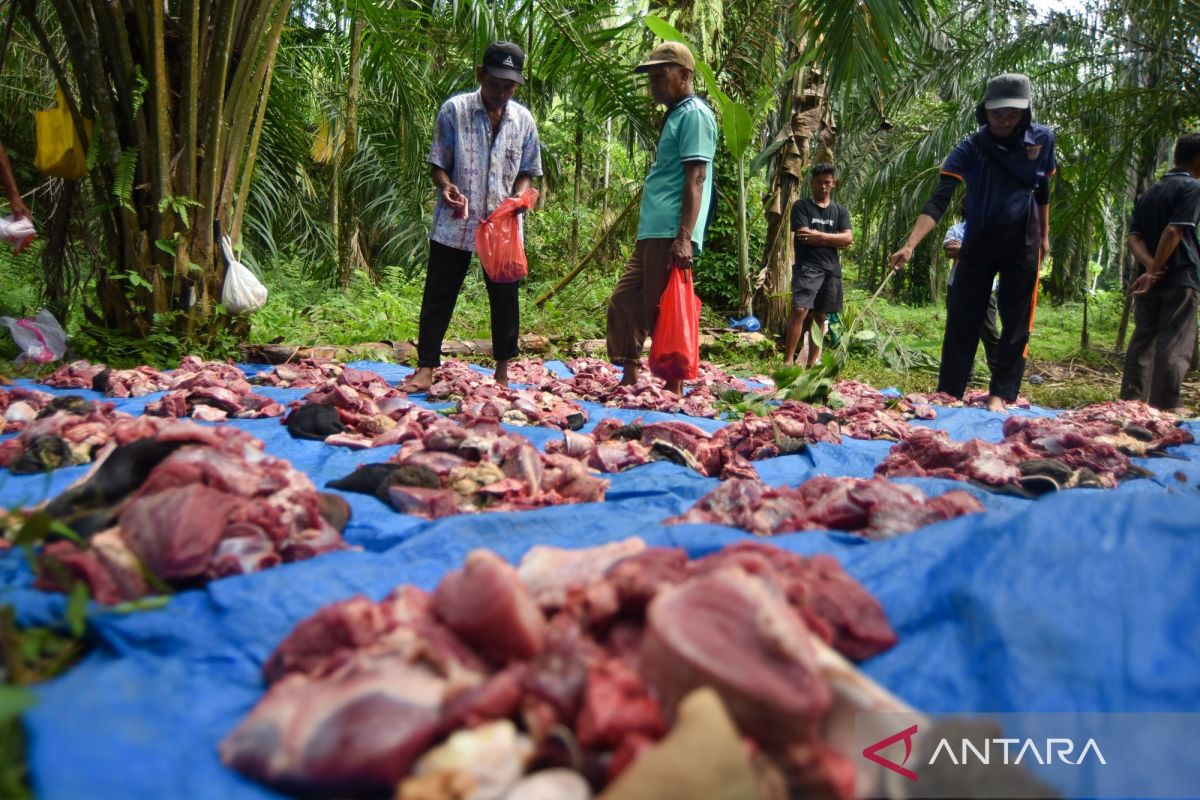
Palembayan, Agam (ANTARA) - In the expanse of the oil palm plantation in Palembayan, Agam Regency, the morning atmosphere felt busier than usual. Several residents were diligently weighing pieces of beef, ensuring each portion had the same weight.
Not far from there, a group of people were busy arranging the meat, lining it up neatly on a tarpaulin spread over the ground. On the side of the tarpaulin, fresh blood stains marked the soil’s surface, indicating that the cattle slaughter had just taken place at the location.
Meanwhile, several residents stood in a circle around the tarpaulin, their eyes fixed on the meat with hopeful gazes. Clear on their faces was a patience, interspersed with impatient anticipation to soon receive their share.
One by one, names were called by the committee. As the names were announced, each resident promptly stepped forward to claim their portion. Each recipient received a total of 5 kilograms of beef, consisting of 2.8 kilograms of pure meat and the rest comprising other parts of the cow. The entire distribution was then placed into plastic bags or rice sacks brought by the residents from home.
This simple moment illustrates how the Mahantam tradition is carried out. A tradition that is not just an annual routine but a sign that Eid is very near. In other areas of West Sumatra, the community calls it barantam.
Historically, Mahantam is a simple yet effective form of economic mutual cooperation. Residents who wish to participate pay a certain amount of money over a specific period, usually starting shortly after the previous Eid has ended.
The collected funds are then used to purchase cattle. Ahead of the holiday, usually two days before Eid, the cattle are slaughtered, and the meat is distributed equally to all participants.
In practice, this tradition is not only about meat distribution but also serves as a means to strengthen social relationships, build solidarity, and ensure that every family can experience the joy of Eid.
This long-standing tradition, which has become part of the local community’s social identity, appears this year with a different face. The atmosphere that should be full of joy is now tinged with deep sorrow due to the disaster. Yet, amidst the grief, hope is still maintained together.