
Magnificent Indonesia 2025: Indonesian Cultural Festival Resonates Again in the Land of Two Continents
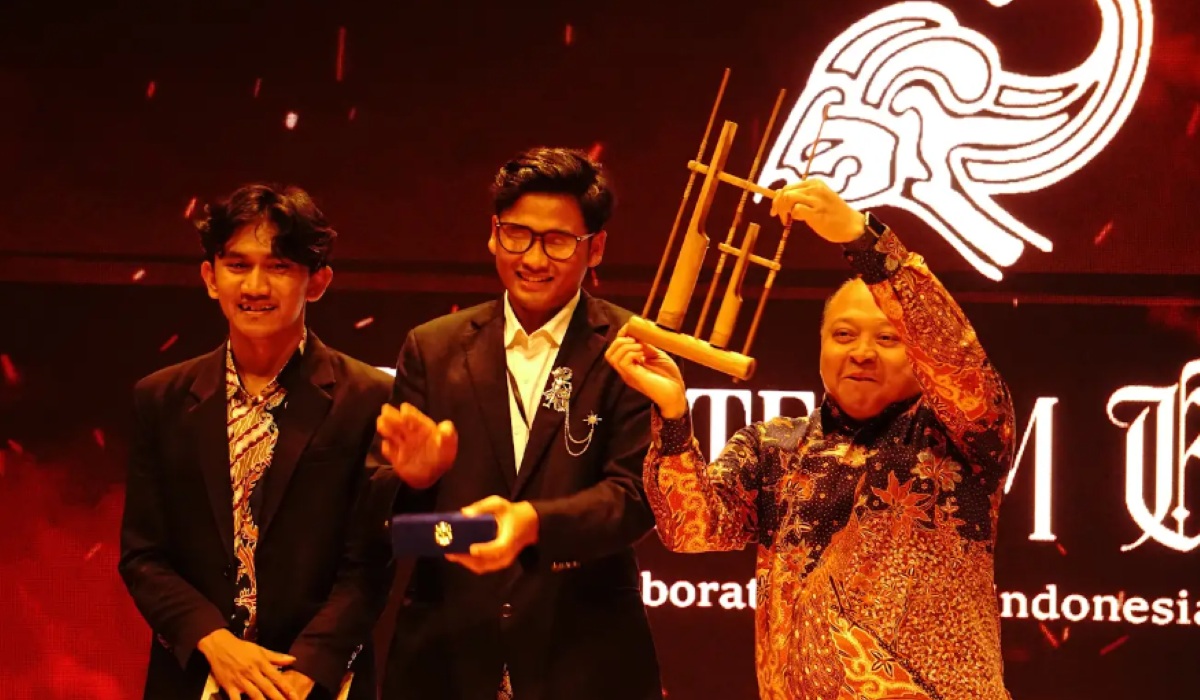
The Indonesian student diaspora in Turkey has once again presented the richness of the Nusantara archipelago through Muhteşem Endonezya, an annual event organised by the Indonesian Students Association (PPI) Sakarya. The cultural festival, which showcases the wealth of traditions from various regions across the archipelago, was held at Sakarya University, specifically at the Sakarya Congress Centre, on Friday, 28 November 2025.
In the lead-up to the main evening of Muhteşem Endonezya on 28 November, on 25 November 2025—three days before the grand finale—the Indonesian diaspora collaborated with local Turkish students to organise a Batik x Ebru event as a platform to promote Muhteşem Endonezya. The event opened with traditional dance performances by both Indonesian and Turkish students.
Batik x Ebru represents a cultural exchange between Indonesia and Turkey, with local and international students having the opportunity to learn traditional Indonesian batik techniques whilst becoming acquainted with Turkish Ebru art. Additionally, several stalls featured cultural exhibitions displaying traditional artefacts, traditional clothing stands, and displays of batik garments which visitors could try on.
Interestingly, batik and Ebru share a distinctive characteristic: both are painting techniques. Whilst batik involves painting using a canting tool on fabric, Ebru is a technique of painting on water. Indonesian and Turkish music blended together in an atmosphere of joy that echoed through the evening’s laughter. The event concluded with a group photograph session and an invitation to attend the more spectacular main evening.
This year’s Muhteşem Endonezya carried the theme “Story of Dreamland,” a symbolic narrative to showcase the diversity of cultures, languages, and religions in Indonesia. Through a photo booth depicting a map of Indonesia with explanations, visitors were encouraged to understand that despite comprising thousands of islands and ethnic groups, Indonesia is a unified whole. The festival served as a platform to introduce the history, uniqueness, and cultural richness of Indonesia to the international world.
The event’s committee chair, Reisyaff Fiermy Cantando Abiyu, stated that Indonesia belongs to us all. Despite a lengthy and difficult process, the event was successfully organised.
“I hope that through the organisation of this event, Indonesians become aware that our nation is very beautiful and deserves to be introduced to the world stage. Continue to be representatives of Indonesia wherever we are and uphold Indonesia’s good name. I hope through this event, foreigners can understand that getting to know a new culture is not always tedious; rather, it is very enjoyable. Therefore, we have packaged this event through several traditional dance performances combined with drama,” he said.
The venue was filled with visitors from 15:00 Turkish time, whilst registration opened at 16:00 Turkish time. They were enthusiastic about celebrating the main evening of Muhteşem Endonezya this year.
The registration system, which separated Indonesian visitors from international visitors, made this registration more structured. Visitors received batik cloth key chains in the shape of wallets as gifts and received play money as a medium of exchange to obtain the snacks provided.
The official opening took place at exactly 18:00 Turkish time, with Qur’anic recitation serving as the opening of the Muhteşem Endonezya event, followed by the singing of the Turkish national anthem and the Indonesian national anthem. Sakarya University’s Vice Rector, Özer Köşeoğlu, expressed appreciation for the seriousness of Indonesian students in organising the cultural festival and emphasised the importance of culture to a nation.
The opening moment was marked by the sound of the angklung played by Indonesia’s Ambassador to Turkey, Achmad Rizal Purnama, signalling the beginning of the event’s grand finale. This was followed by a drama prologue featuring a narrative opening a legend telling the story of Arsa, who was in the process of seeking the dreamland until meeting the goddess of dreamland.
Through Arsa’s curiosity about Indonesian islands and history, armed with a book belonging to his grandfather, the history of Indonesia was told, followed by traditional dances from various regions, such as the saman dance, silat, plate dance, fan flower dance, jejer gandrung dance, Dayak dance, dance of four ethnicities and sarung combat, kecak and eastern dance. Spectators from various countries learned the names of these dances through the drama that took place alternately with the performances.
The event, attended by students from various countries, was the fourth edition held. Since 2018, Indonesia has become better known by the Turkish public, particularly in the city of Sakarya. Muhteşem Endonezya succeeded in moving the hearts of spectators to amazement, from the structured way of entering the area, welcomed by exhibitions after the gate entrance, tumpeng rice placed in the middle of the arena, and various Nusantara culinary offerings served.
The festival received widespread attention, not only from international students but also from Sakarya city officials, such as the Head of the Sakarya Province Migration Department Ramazan Latifoğlu, Head of Serdivan District Ali Candan, Head of the Sakarya Province Sports Department Cemil Boz Atandı, and Vice Rector of Sakarya University Özer Köşeoğlu.
In his remarks, Ambassador Rizal emphasised that culture is a silent bridge capable of bringing nations together without language or territorial limitations. He highlighted the strategic role of student diaspora as drivers of cultural diplomacy, which through their creativity and initiative have created a space for encounter between Indonesia and Turkey. Such festivals, in his view, are not merely artistic performances but moments for building cross-cultural understanding and strengthening inter-community relations.