
Magical! Indonesia's Indigenous Fruit Said to Be Able to Counter the Apocalypse Sought by Europeans
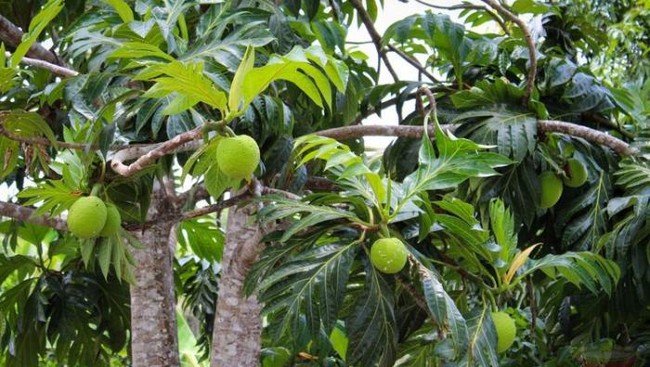
Jakarta, CNBC Indonesia - Indonesia is known as a tropical country rich in fruit. For a long time, the world has known durian and rambutan as the country’s iconic fruits popular in many countries.
But beyond those two fruits, there is another tropical commodity also native to the Archipelago that has attracted global attention: the breadfruit. This fruit even once drew the interest of European nations for its supposed remarkable benefits.
The popularity of breadfruit did not arise out of nowhere. For centuries, Europeans imagined a fruit superior to others in terms of usefulness and nutritional value.
The problem was that the fruit they imagined had never been found in Europe’s cold climate. During the era of seafaring exploration, Europeans finally encountered the fruit in the Nusantara region and the Pacific.
Breadfruit and “The Breadfruit”
Across the 10,603-km expanse of the Nusantara Archipelago, the ‘fruit superior to all others’ in European fantasy is readily found. Its name is sukun.
Historical records show that sukun is widespread across the Nusantara and several Pacific nations. Reliefs at Borobudur Temple depict sukun as one of the staple foods of the people.
However, the first European contact with the fruit, which bears the Latin name Artocarpus altilis, occurred in the 17th century. By then, sukun had already spread to the Pacific Islands as a result of centuries of cultivation by migrants.
The first European to encounter it was English explorer William Dampier. During a visit to Guam in 1686, Dampier saw a unique fruit not found in Europe. He described that the fruit came from a large tree and, when split open, contained no seeds or anything inside.
“Hence, we named it breadfruit,” Dampier wrote in A New Voyage Round the World (1697).
The naming of breadfruit (breadfruit) occurs because the fruit resembles toasted bread. If the fruit is split and the rind peeled, then the flesh is roasted over fire and tastes like toast. According to Dampier, breadfruit was very tasty and could help alleviate hunger and famine, as well as scurvy.
When Dampier returned home, notes related to breadfruit became the subject of conversation. Europeans grew curious about the fruit. Yet the curiosity remained limited to thought; it was difficult for them to taste or bring home sukun cuttings.
Not only Dampier’s testimony, a Dutchman named Rumphius also spoke similarly. In the notes in Herbarium Amboinese (1741), Rumphius described the fruit as magical because it could be a nutritious and versatile snack. It could save people during famine and food shortages.
However, various testimonies about breadfruit remained in the realm of imagination for most people regarding this high-nutrition fruit. Eventually, the dream of bringing sukun to fruition was realised by James Cook.
In 1775, Cook asked botanist Joseph Banks to study sukun so it could be introduced to many areas of the British Empire.
In the study “Grows Us Our Daily Bread: A Review of Breadfruit Cultivation in Traditional and Contemporary Systems” (2019), Banks is described as believing sukun to be highly nutritious. He then asked King George III to permit breadfruit to be grown in British colonies as a food source for enslaved people.
In short, Banks’s request was approved by the British King. He then carried breadfruit saplings and planted them in British colonies. Initially planted in the Caribbean, Central America. Later in other British colonies. Gradually, other European countries also distributed sukun saplings to their colonies.
From then on, breadfruit trees were found in Africa and Asia, and consumed not only by Europeans but by people worldwide.
Nutritious and a saviour from the ‘Apocalypse’
Initially, the high nutritional value of breadfruit was based on empirical testimony alone. There was no laboratory clinical evidence.
Classical records describe breadfruit as highly nutritious and sustaining because it could fill and ward off diseases.
From initially being eaten by slaves, breadfruit gradually came to be consumed by Europeans and the world. Over time, modern clinical records have corroborated the empirical testimony of centuries past.
The United States Department of Health reveals that sukun contains high levels of vitamin C, potassium, and magnesium. Additionally, the fruit is high in fibre, low in fat and sugar.
Even more surprisingly, sukun is described by various studies as a superfood. This label arises not only because sukun is a highly nutritious crop, but also because it bears fruit quickly, requires little maintenance, can endure extreme weather, and is highly adaptable.
At this point, the breadfruit tree is regarded as a solution to the ‘food apocalypse’ now sweeping the planet in the wake of the climate crisis. For this reason, sukun is easy to grow outside its native habitat in Indonesia. No wonder, breadfruit trees are now found not only in Indonesia but in many places around the world.