
Madaya Food Gardens Programme Activates Land to Boost Food Security
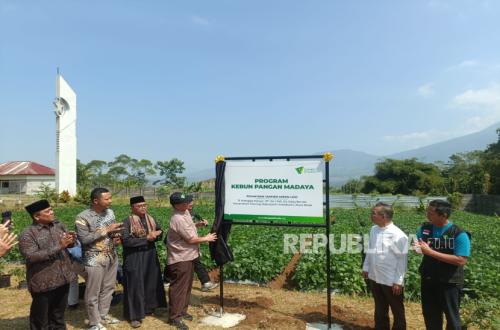
REPUBLIKA.CO.ID, SUKABUMI — Dompet Dhuafa has launched the ‘Kebun Pangan Madaya’ programme at the Pesantren Tahfiz Green Lido (PTGL) Dompet Dhuafa in Sukabumi, West Java, on Friday (24/7/2026). The programme is a community empowerment movement encouraging the use of home gardens, office grounds, community gardens and other under-utilised productive land as sources of family food as well as new economic income.
Chairman of the Dompet Dhuafa Foundation, Ahmad Juwaini, said the organisation continues to expand the benefits of its empowerment programmes whilst strengthening food security. “This Pesantren Tahfiz Green Lido (PTGL) is one of the landmark points for the rollout of the Kebun Pangan Madaya programme. It is also part of the series of events marking Dompet Dhuafa’s 33rd anniversary. God willing, we present Kebun Pangan Madaya for farmers empowered on their own land,” said Ahmad Juwaini.
The programme integrates aspects of food security, environmental conservation, increased family income and agricultural education that is easy for communities to implement. Dompet Dhuafa is also rolling out the programme simultaneously in a number of cities, involving volunteers and local residents.
Based on 2026 data, the productive green environments initiated by Dompet Dhuafa’s Free Health Service (LKC) through the Community Healthy Garden Programme for Sustainable Food Security have spread across 10 provinces: Aceh, South Sumatra, Banten, West Java, Central Java, Central Kalimantan, West Nusa Tenggara, East Nusa Tenggara, South Sulawesi and Papua. Covering 13 community garden sites with 247 household-scale participants, the programme has involved 765 beneficiaries and 124 cadres, with 100 per cent support for supplementary feeding sourced from local produce.
Challenges in fulfilling the Kebun Pangan Madaya programme include land status certainty, managers’ commitment and environmental factors. The programme requires institutional strengthening and land legality to ensure its sustainability.
Dedi Yuda, a representative of the Cicurug Sub-district Head, said the food garden programme is one promoted by the government to meet nutritional needs and improve community economies. “We consider this programme to be in line with the government’s aims, so it must be fully supported, especially for community-based economic improvement,” said Dedi.
The launch of the Kebun Pangan Madaya is expected to build an empowerment ecosystem involving cultivation mentoring, strengthening community institutions, developing businesses based on agricultural produce, and opening up market access. In this way, communities gain broader benefits in the form of increased income, better quality food consumption, and the ability to independently manage the resources they possess.
Tusih (54), one of the beneficiaries of the Kebun Pangan Madaya programme, said the existence of the food garden programme at PTGL has provided direct benefits to her and her family. In addition to direct fulfilment of food needs, she has also gained economic benefits from selling the produce.