
Lunar New Year Lanterns and Ramadan Light Stand Together in Singkawang
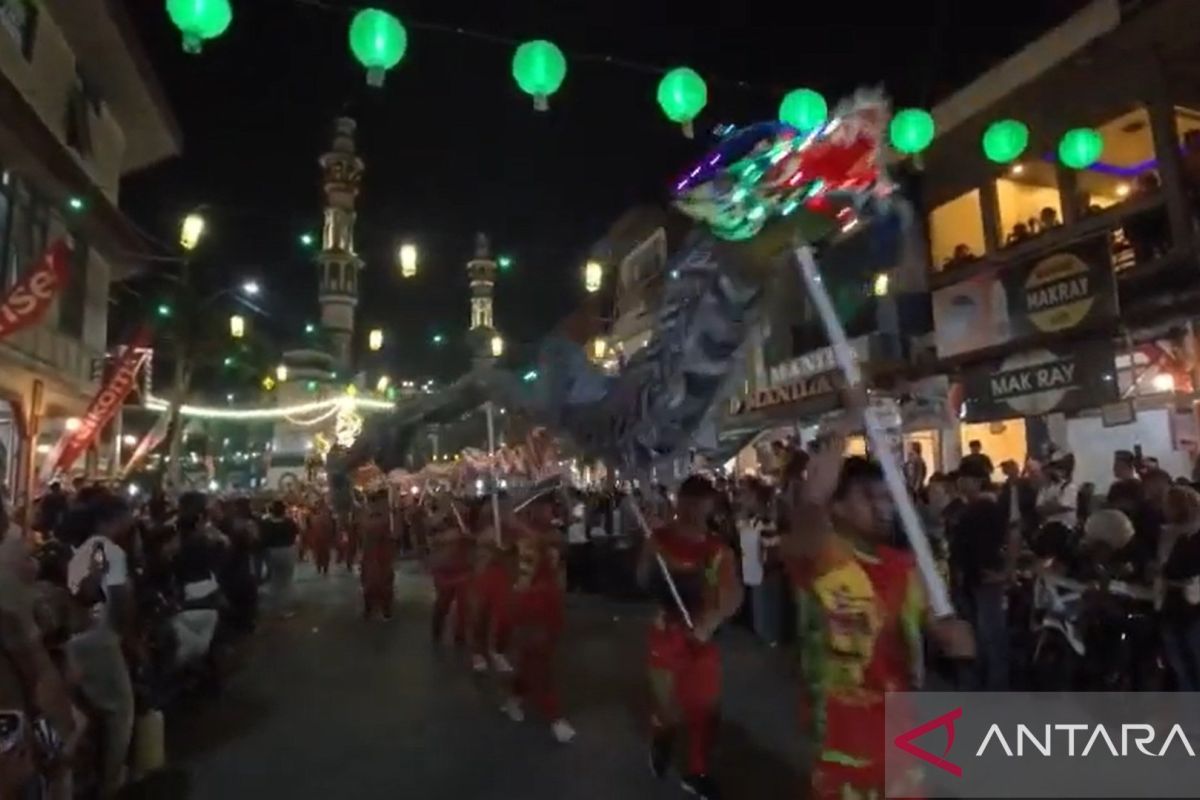
The evening descends slowly over Singkawang. The sky, once orange, gradually darkens, replaced by the glimmering glow of lanterns hanging neatly along the city’s main roads.
Red lanterns stretch in a long line, swaying gently in the ocean breeze. Their light reflects softly onto the faces of thousands of residents crowding the corners of the city—children perched on their parents’ shoulders, teenagers busy capturing moments with their devices, and elderly people sitting peacefully enjoying the atmosphere.
However, that evening, Singkawang presented a different sight. Lanterns were not only the characteristic round red ones of Chinese New Year celebrations. Among them hung star-shaped lanterns and woven ketupat decorations, ornaments closely associated with Islamic traditions.
The combination of these two symbolic traditions created a unique landscape of light: golden red standing alongside soft green, conveying a message of togetherness without words.
That evening, in early March 2026, thousands of local residents and tourists poured into several main roads. They stood packed behind barriers, patiently waiting for the Cap Go Meh lantern procession to begin. Street vendors busily served customers, the aroma of snacks mingling with the warm night air, whilst the buzz of conversation filled the city’s open spaces.
At the same time, from a distance, the melodious recitation of Qur’anic verses echoed from mosques. Muslim worshippers were performing Tarawih prayers, devoted to their Ramadan observance.
No one felt disturbed. No one felt prioritised. All blended into harmony between two sacred religious celebrations equally anticipated by the Muslim and Chinese communities in Singkawang.
In a city repeatedly known as a space of living tolerance, the 2026 Cap Go Meh celebration and the holy month of Ramadan were not two competing moments vying for public space. Instead, they gave each other room, mutually respecting the rhythm of each faith.
The organising committee paused the celebration momentarily, waiting for Muslim worshippers to complete their Tarawih prayers. And residents understood this as an expression of respect.
Conversation slowed, and the waiting atmosphere became a warm silence. After Tarawih concluded, the lanterns were lit simultaneously, piercing the darkness with captivating light.
The festival began. Cheers erupted from residents, cameras rose, and Singkawang’s night transformed into a sea of light. Harmony felt real, not in slogans, but in the attitude of mutual care.