
Lunar Eclipse on 3 March in Bali-East Nusa Tenggara at 19:33 Central Indonesia Time, Here Are the Procedures for Eclipse Prayer
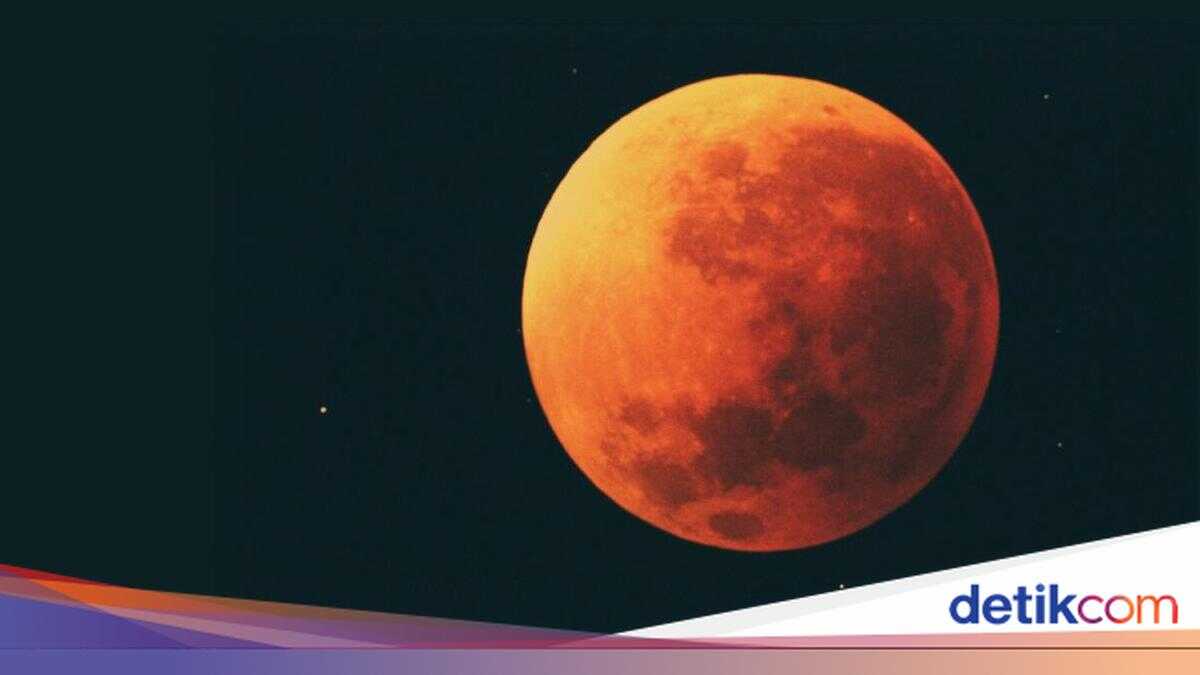
A total lunar eclipse in red will occur today, 3 March 2026. This eclipse will be particularly significant as it coincides with the middle of Ramadan 2026.
The public can witness the lunar eclipse without assistance. Unlike solar eclipses, which are harmful to the eyes if viewed directly, this total lunar eclipse will display the moon’s face in red. This phenomenon is known as a “blood moon”.
Which locations will be able to witness the lunar eclipse on 3 March 2026? According to the Indonesian Agency for Meteorology, Climatology and Geophysics (BMKG) website, here is a complete explanation!
Lunar Eclipse in Bali and East Nusa Tenggara – What Time?
The Indonesian Agency for Meteorology, Climatology and Geophysics (BMKG) has stated that this total lunar eclipse will be visible throughout Indonesia, including Bali, Nusa Tenggara Barat (NTB), and Nusa Tenggara Timur (NTT).
Eastern Indonesia will be the best location to observe the lunar eclipse event. All phases of the lunar eclipse can be observed from moonrise. It is advisable to find dark locations or areas with minimal light pollution, such as beaches, mountains, or rice fields.
What Time Will the Peak of the Lunar Eclipse Occur?
Still referring to BMKG, the initial phase of the lunar eclipse begins at 18:03 Western Indonesian Time (WIB) / 19:03 Central Indonesian Time (WITA) / 20:03 Eastern Indonesian Time (WIT). The regions of Bali, NTB, and NTT will experience the peak of the lunar eclipse at 19:33 Central Indonesia Time.
At that time, all regions will have entered Maghrib prayer time or breaking of the fast, except for parts of NTT which will have entered Isya prayer time.
The occurrence of eclipses, whether lunar or solar, is recommended to be observed through congregational prayer. The eclipse prayer is performed during the eclipse until the eclipse phase is complete. Eclipse prayer is also known as Kusuf prayer (for solar eclipses) or Khusuf prayer (for lunar eclipses).
Procedures for Lunar Eclipse Prayer
The eclipse prayer was performed by Prophet Muhammad when a solar eclipse occurred. The basis for this is the hadith narrated by Aisha, the Prophet’s wife. The hadith states: “From Aisha, wife of the Prophet, peace be upon him. She said: ‘The sun was eclipsed during the life of the Messenger of Allah, peace be upon him. The Messenger of Allah came out to the mosque, stood, and called out the takbir, and people lined up behind him. The Messenger of Allah read a long recitation in a loud voice, then called out the takbir and bowed with a long bowing. Then he raised his head saying: “Allah hears those who praise Him, our Lord, and to You be the praise.” Then he stood again and read a long recitation that was shorter than the first recitation. Then he called out the takbir and bowed with a long bowing that was shorter than the first bowing. Then he said: “Allah hears those who praise Him, our Lord, and to You be the praise,” then he prostrated. He did the same in the second cycle until he completed four bowings and four prostrations, and the sun became clear before he finished his prayer. Then he stood and addressed the people, praising Allah as is befitting, then said: “Indeed, the sun and the moon are two signs among the signs of Allah. They do not eclipse because of the death or life of anyone. So when you see them, hasten to prayer.”’” (Reported by Muslim).
The Khusuf prayer for the lunar eclipse on 3 March 2026 can be performed after breaking the fast. The performance of this prayer has no call to prayer (adzan) or iqamah. Furthermore, this prayer has a special characteristic in that the bowing is performed twice in each cycle. The Khusuf prayer concludes with the salam greeting and is followed by a single sermon about the greatness of Allah.
According to the Muhammadiyah website, here are the procedures for the Khusuf prayer:
First Cycle
The imam calls out “As-salatu jami’ah” to summon the congregation.
Begin the prayer with the takbir, then recite Surah al-Fatihah and a long surah aloud.
Perform bowing while reciting lengthy glorifications of Allah.
Rise from bowing by reciting “Samia’allahu liman hamidah”, with the congregation reciting “Rabbana wa lakal-hamd”.
Stand upright again, then recite al-Fatihah and a long surah (though shorter than the first).
Bow again while reciting lengthy glorifications of Allah (though shorter than the first).
Rise from the second bowing by reciting “Samia’allahu liman hamidah”.
Perform prostration.
Sit between the two prostrations.
Perform the second prostration.
Second Cycle
Stand upright to perform the second cycle in the same order as the first cycle (two bowings and two standing positions).
Complete the prayer with the salam greeting.
After Prayer
- After the prayer is complete, the imam stands to deliver a single sermon. The content of the sermon includes:
• Advice and reminder regarding the signs of Allah’s power.
• An invitation to increase asking for forgiveness and giving charity.
• Encouragement to perform various acts of righteousness.
The eclipse prayer, or Khusuf prayer, serves as a direct religious practice while also reminding one of the greatness of Allah during the month of Ramadan.