
LPPM Tanjungpura University studies renewable energy potential in Sambas, West Kalimantan
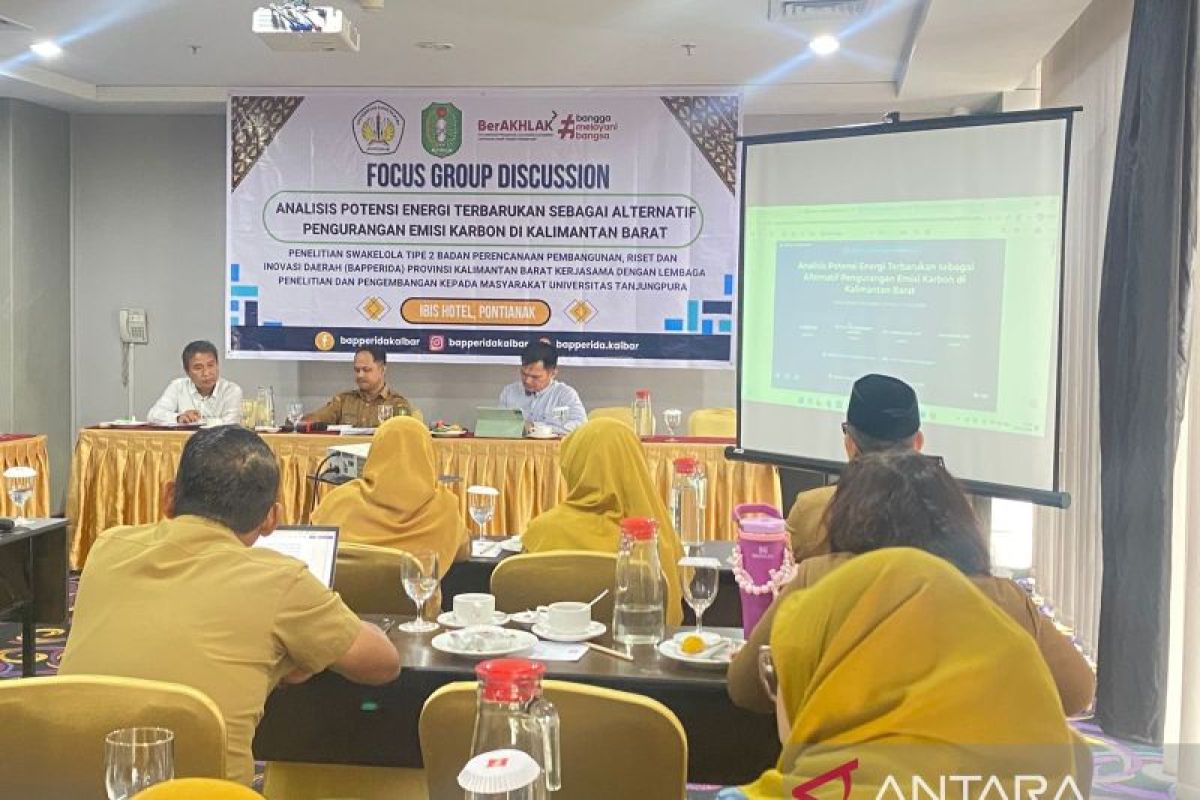
The Research and Community Service Institution (LPPM) of Tanjungpura University in Pontianak has studied the potential for developing three renewable energy sources in Sambas Regency, West Kalimantan.
‘We have identified three standout renewable energy sources in Sambas that can be developed to meet electricity needs and reduce carbon emissions in West Kalimantan,’ said Dr Erdi, lead researcher from LPPM Tanjungpura University, in Pontianak on Monday.
During a presentation of the research titled ‘Analysis of renewable energy potential as an alternative to reduce carbon emissions in West Kalimantan’, Dr Erdi stated that the three promising renewable energy sources in Sambas are solar, hydropower, and biomass.
These three sources are estimated to generate 466 megawatts of electricity, sufficient to meet the region’s power needs, particularly in Sambas Regency, which shares a border with Malaysia.
According to Dr Erdi, the collaborative research with West Kalimantan’s Regional Development Planning, Research, and Innovation Agency (Bapperida) found that solar energy has the highest potential at 45%, followed by biomass at 35% and hydropower at 20%.
‘We have also mapped the potential areas for these three renewable sources, with solar energy particularly viable in Paloh, Tebas, Teluk Keramat, Sejangkung, and Sajingan Besar districts,’ he said.
Hydropower potential lies in the Sambas, Sebangkau, and Paloh river basins, while biomass development can focus on 11 large-scale private palm oil plantations in Sambas, with a realistic power potential of 93.8 megawatts.
Furthermore, developing these renewable sources could reduce greenhouse gas emissions in Sambas by 32,000 to 97,000 tonnes of CO2 annually, down from a baseline of 108,000 to 162,000 tonnes.
Additionally, this development will support Indonesia’s commitment to reduce greenhouse gas emissions by 31.89% independently and 43.20% with international assistance by 2030.
‘The development of these renewable power plants will also increase the clean energy mix and improve grid reliability, as PLN currently imports electricity from Malaysia to supply West Kalimantan,’ he added.
Haryanto, chairman of the West Kalimantan chapter of the Indonesian Electricity Society (MKI), said biomass energy, particularly from palm oil mill effluent (POME), has significant potential given West Kalimantan’s over 100 large-scale palm oil plantations.
‘There is already a POME programme that converts palm oil wastewater into methane for alternative power generation, and collaboration with PLN is in place—now it’s just a matter of implementation,’ he added.