
LPPI: Islamic Banking Grows, Public Literacy Remains a Challenge
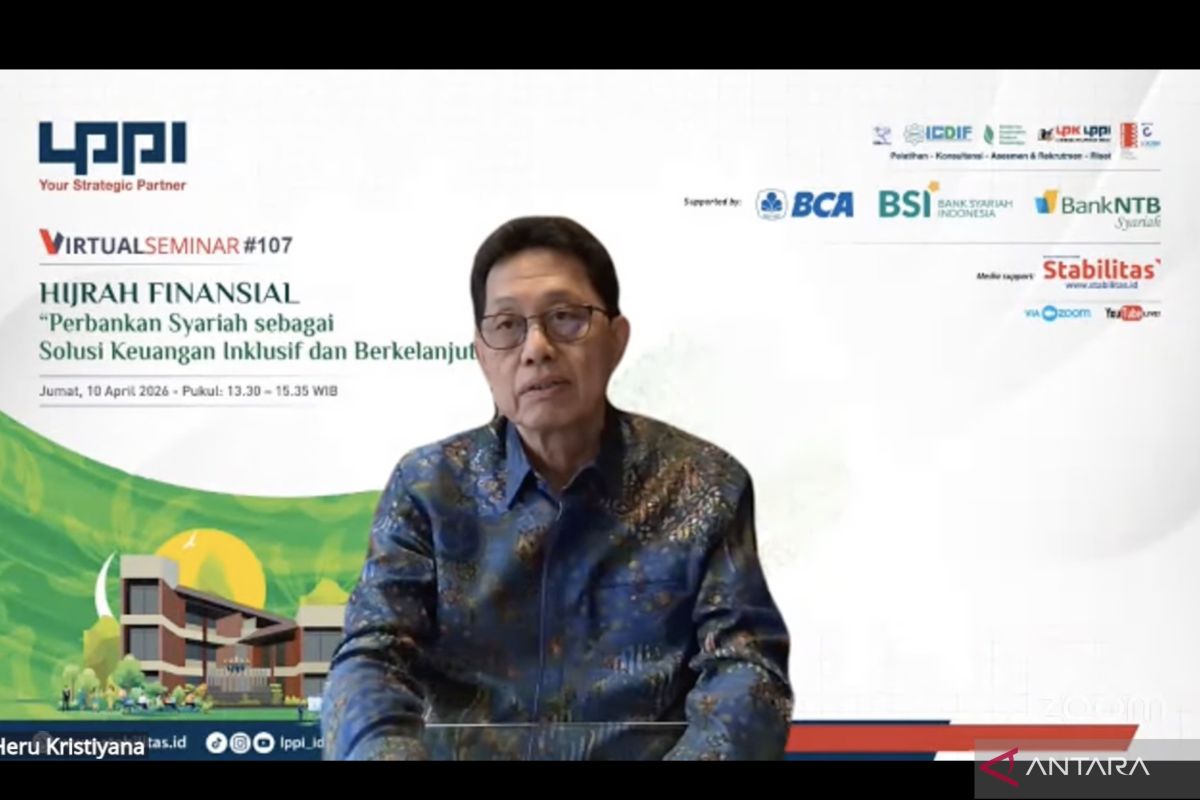
The greatest challenge we face in developing Islamic banking is not merely on the regulatory or product side, but also on public perception.
Jakarta (ANTARA) - The Director of the Indonesian Banking Development Institute (LPPI), Heru Kristiyana, stated that public literacy remains a challenge for Islamic finance amid the growth of Islamic banking.
“The greatest challenge we face in developing Islamic banking is not merely on the regulatory or product side, but also on public perception,” said Heru during an event titled “LPPI Virsem#107: Islamic Banking as a Solution for Inclusive and Sustainable Finance” held virtually in Jakarta on Friday.
Heru explained that the total assets of Islamic banking have reached approximately Rp870 trillion by the end of 2025, with a market share of around 7.5% of the total national banking industry.
The growth rate of this sector is also in the range of 9 to 12% per year, higher than the overall banking industry growth.
These achievements indicate that public interest in Sharia-based financial services continues to increase, while also signalling that Islamic banking increasingly plays a strategic role in strengthening the national financial system that is inclusive and sustainable.
However, some members of the public still view Islamic banking only as a religious system or merely a terminological change from the conventional system.
“In fact, behind it, we know that there are universal economic principles that are highly relevant to anyone, both in terms of stability, justice, and sustainability,” said Heru.
In addition, there has been a shift in public assessment of the financial system, which now not only considers financial profit aspects but also increasingly prioritises ethical values, transparency, sustainability, and the social impact of economic activities undertaken.
In this context, the basic principles of Islamic finance, such as profit-sharing, linkage to the real sector, and prohibition of excessive speculation, become increasingly relevant to the needs of a more stable and sustainable modern economic system.
“Therefore, efforts to promote the development of Islamic finance cannot rely solely on regulations and products. We also need to build broader understanding in society that Islamic finance is a rational, inclusive, and sustainable economic solution,” he stated.