
LPOI emphasises mitigation measures to address impact of war and ecological crisis
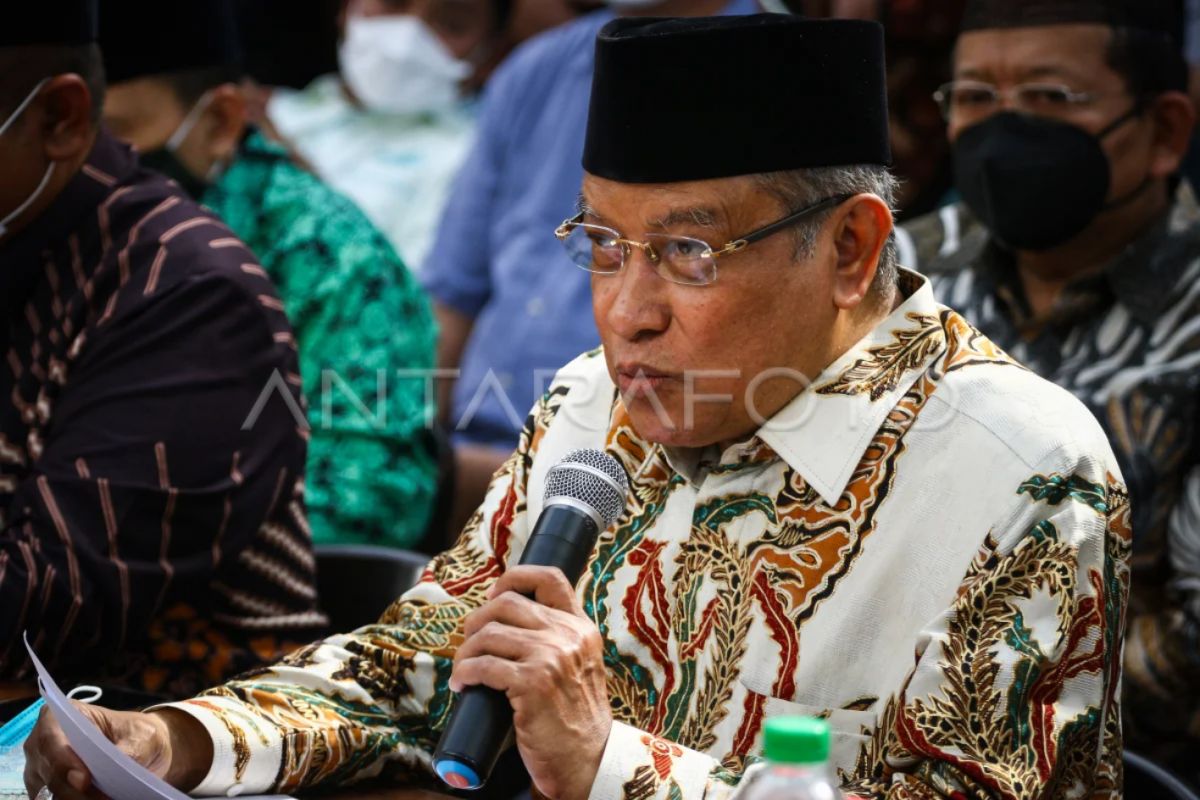
Jakarta — The Islamic Organisations Friendship Institute (LPOI) has emphasised the importance of adaptation and mitigation measures to address the impact of war in the Middle East and ecological crises that could affect global stability.
LPOI chairman Said Aqil Sirodj stated that prolonged geopolitical conflicts and increasing environmental damage threats could directly impact various strategic sectors of the nation.
“Adaptation and mitigation measures must be undertaken against various possibilities arising from war and threats of ecological disasters,” said Kiai Said Aqil in a statement in Jakarta on Saturday.
He assessed that potential threats to food sovereignty, energy independence, and financial system stability needed to be anticipated immediately through planned policies and strategic government action.
Furthermore, these global dynamics could impact religious aspects, particularly the comfort and smooth operation of Hajj and Umrah pilgrimages for Muslims.
“Food, energy, and financial sovereignty, as well as the comfort of conducting Hajj and Umrah pilgrimages which could be disrupted, must be addressed urgently,” he said.
According to him, strengthening national self-reliance, including efforts to reduce import dependency across various sectors, needed to be accelerated to address increasingly complex global challenges.
Separately, Kiai Said, a former chairman of Nahdlatul Ulama (PBNU), added that a nation’s sovereignty today is determined not only by territorial sovereignty but also by digital sovereignty, historical and cultural assets, ecological sovereignty, food and energy sovereignty, and mastery of future technology.
He urged nations within the BRICS group and expansion partners (BRICS Plus) to play a more active role in responding to global dynamics and issues.
“War in any name must be stopped and the ecological crisis must be ended so that world civilisation does not move towards destruction,” he said.
Kiai Said also proposed that the Indonesian government conduct an audit of natural resources and human resources to map out national potential that could serve as capital for state development.