
LPG Reserves Exceed 10 Days, Government Ensures Stable Supply
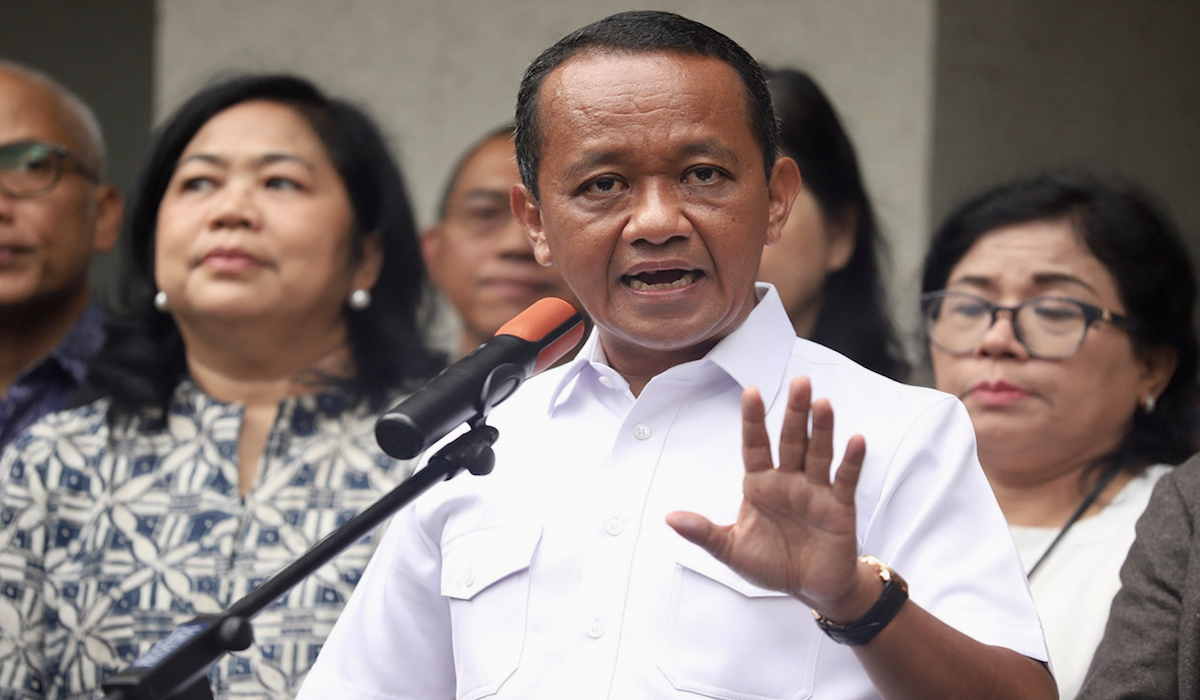
The government has assured that pressures on the national liquefied petroleum gas (LPG) supply are beginning to ease. Energy and Mineral Resources Minister Bahlil Lahadalia stated that Indonesia now has LPG reserves of more than 10 days, marking the end of the critical supply phase that had loomed since the beginning of the month.
Following a briefing with President Prabowo at the Presidential Palace in Jakarta on Wednesday (8/4), Bahlil said the difficult period of LPG distribution and availability had been successfully overcome since 4 April 2026. According to him, additional supplies from several countries have restored domestic stocks to safe levels.
“Our LPG reserves are now above 10 days’ capacity,” Bahlil said, as quoted from Antara on Wednesday (8/2).
He emphasised that the current national LPG availability is not directly dependent on dynamics in the Strait of Hormuz. The government, he said, has secured supplies from several main sources, including Australia, the United States, and other supplying countries.
Bahlil explained that Indonesia’s current LPG import composition is still dominated by the United States with a share of around 70-75 percent. Meanwhile, about 20 percent is supplied from the Middle East region, and the rest comes from several other countries, including Australia.
This statement signals that the government is working to allay market concerns about the impact of geopolitical conflicts in the Middle East on domestic energy needs. With reserves starting to build up, the government wants to convey the message that LPG supplies for the public remain under control.
On the other hand, Bahlil also touched on the potential adjustment of non-subsidised fuel oil (BBM) prices, particularly for RON 92, RON 95, RON 98, and Pertamina Dex diesel. However, he stressed that the decision on prices is not yet final as it is still in the calculation stage.
According to him, the government is still awaiting the results of calculations taking into account developments in the Indonesian Crude Price (ICP). If the trend in Indonesia’s crude oil price declines, the room for price adjustments is deemed to be increasingly open.
“Currently, calculations are still being carried out; hopefully, the ICP price can drop. That would be much better,” he said.
To date, Bahlil continued, discussions on prices are still being deliberated with Pertamina and private parties. This means there has been no official decision regarding changes to those BBM prices.
Regarding energy distribution, Bahlil also revealed that there are still two Pertamina-owned ships that cannot cross the Strait of Hormuz. The government is now continuously communicating with relevant parties to restore normal shipping routes.
He hopes that a two-week pause in the escalation of conflict in the Middle East can open up room for resolution, so that shipping obstacles do not drag on and the energy supply chain remains intact.