
LPEM UI Study Reveals Major Economic Impact of AMMAN Operations on Indonesia
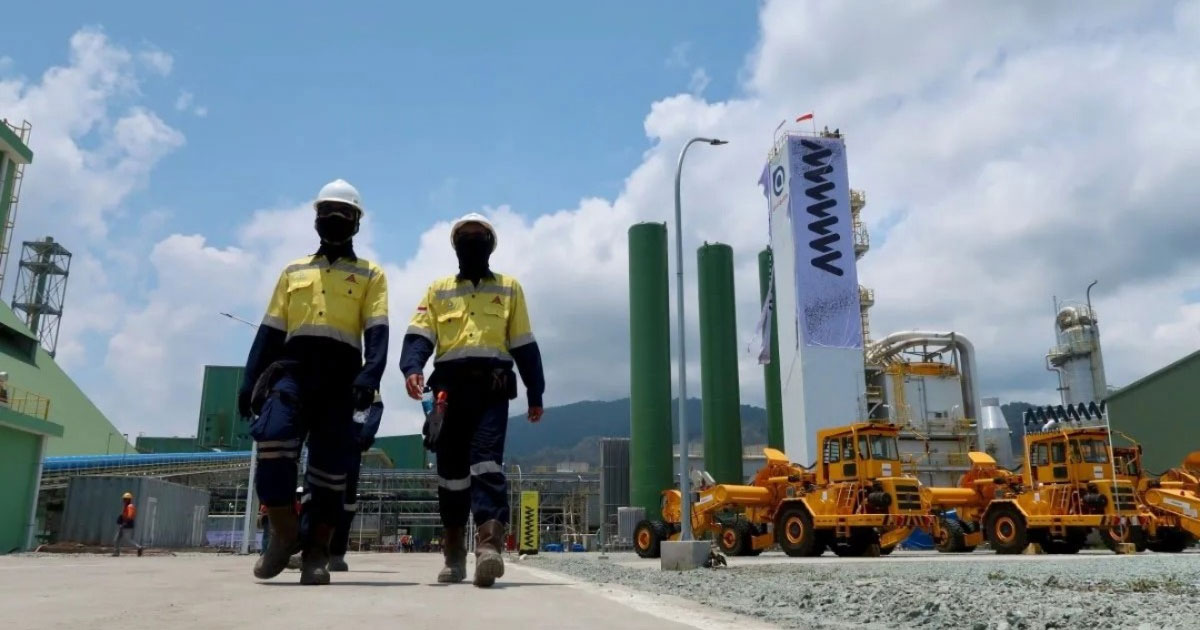
The Institute for Economic and Social Research at the Faculty of Economics and Business, University of Indonesia (LPEM FEB UI) has published a study titled “Analysis of Macroeconomic and Socio-Economic Impact of PT Amman Mineral Nusa Tenggara (AMMAN)”. This study measures the extent to which AMMAN’s mining activities, smelter development, and Community Development and Empowerment Programme (PPM) have influenced the national and regional economy throughout the period from 2018 to 2024.
The research employed an economic multiplier approach based on Inter-Regional Input-Output (IRIO) methodology. This method was used to calculate the economic impact of various company expenditures, ranging from investment and operational costs to community empowerment programmes, on economic activity at national and regional levels.
Through this methodology, economic impact is not calculated solely from direct spending, such as purchases of goods and services from contractors or suppliers related to AMMAN’s business operations. The analysis also incorporates indirect impacts that emerge when suppliers increase production to meet the company’s requirements. These inter-sectoral and inter-regional linkages subsequently trigger a series of new economic activities. The multiplier effect created is not only felt in AMMAN’s operational region but also extends to various other areas connected within the national economic chain.
According to the study’s findings, AMMAN’s activities are assessed to make a significant contribution to Indonesia’s economy, including increases in economic output, formation of Gross Domestic Product (GDP), job creation, and support for the nation’s fiscal and external stability.
Throughout the research period, the company’s contribution to national GDP formation reached Rp173.4 trillion, or an average of Rp24.8 trillion annually. This figure is equivalent to approximately 0.13 per cent of GDP at current national prices in 2024. Beyond macroeconomic impact, the study also highlights extensive socioeconomic effects for communities.
Uka Wikarya, Head of Natural Resources and Energy Studies at LPEM FEB UI, stated that the company’s activities have opened various economic opportunities across many regions.
“The study’s findings show that AMMAN’s contribution is evident not only in macroeconomic figures but also at the household and community level. AMMAN’s operational activities create a wide range of multiplier effects. For example, the need to provide food for thousands of employees has revitalised the businesses of local farmers, livestock breeders, and food providers,” said Uka.
“Similarly, logistics and other service requirements have opened employment opportunities across various sectors and regions. This is what makes economic growth driven by AMMAN have far-reaching impacts and reach various segments of society,” he added.
The study also noted an increase in community welfare through household income growth totalling Rp67.6 trillion throughout the research period. This income increase has contributed to reducing the national poverty rate by approximately 0.024 to 0.098 percentage points, or equivalent to approximately 80,000 to 206,000 people. Additionally, the national unemployment rate has also decreased by approximately 0.012 to 0.069 percentage points, or about 29,000 to 90,000 people.
From a fiscal perspective, AMMAN’s contribution to government revenues is also considerable. “Throughout the period 2018 to 2024, the company’s total fiscal contribution, including both direct payments to the state treasury and indirect contributions from taxpayers affected by AMMAN’s activities, reached Rp39.05 trillion, which encompasses tax payments, royalties, and non-tax state revenues (PNBP), as well as increased fiscal revenue from related sectors,” explained Uka.
On the external front, the company’s export activities have also had a positive influence on Indonesia’s balance of payments. During the research period, AMMAN’s total exports reached USD10.29 billion, generating net foreign exchange savings of USD7.66 billion, or an average of USD1.09 billion per year.
“This finding indicates AMMAN’s role in strengthening Indonesia’s external stability and foreign exchange reserves,” he stated.
From an employment perspective, AMMAN’s activities have created an average of approximately 55,000 job opportunities annually at the national level. This number even reached its peak in 2024 with more than 105,000 employment opportunities.
“This job creation stems not only from the company’s direct operational activities but also through multiplier effects on other economic sectors that are directly and indirectly connected within the domestic supply chain,” said Uka.
“Looking ahead, LPEM FEB UI believes that the operation of AMMAN’s copper smelter is expected to further increase domestic value addition, strengthen the nation’s mineral industry downstream integration, and drive the development of metal-based downstream industries such as electronics, energy, and manufacturing,” he added.
With appropriate policy support and strengthened downstream industry ecosystems, AMMAN is assessed to have the potential to become one of the important drivers in Indonesia’s economic structural transformation. The utilisation of natural resources that generate high added value is expected to be able to drive more inclusive and sustainable economic growth in the future.