
LPEM FEB UI Deems US-Indonesia Reciprocal Trade Agreement Not Entirely Balanced for Indonesia
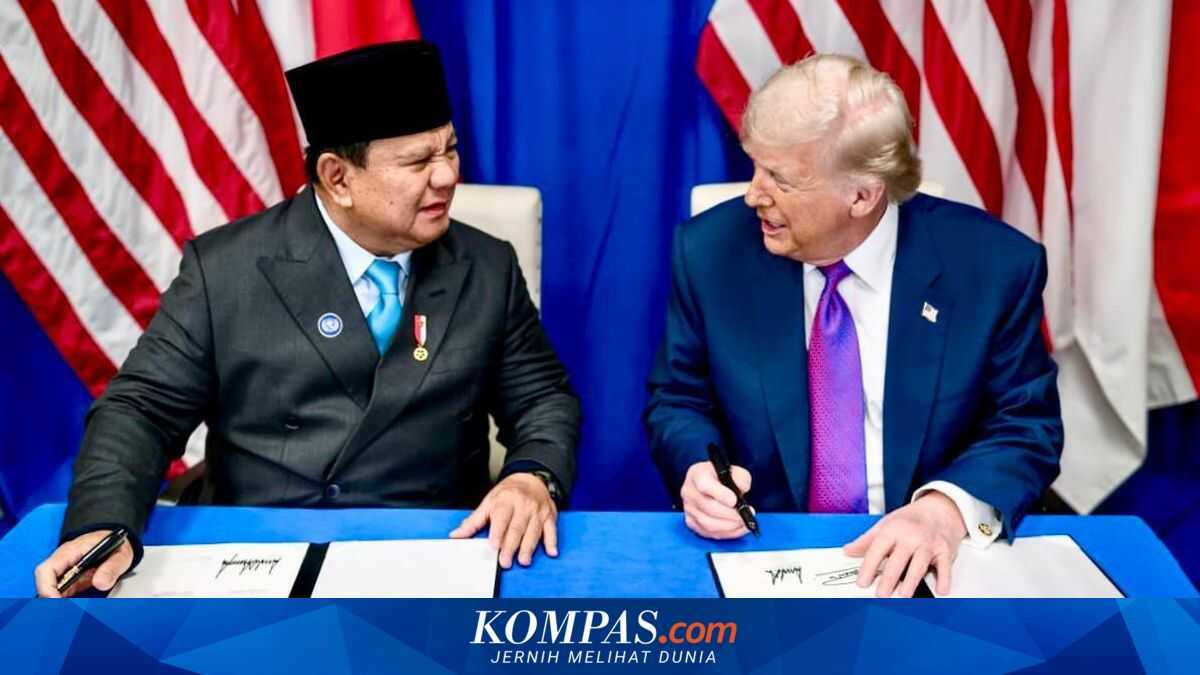
Jakarta — The Reciprocal Trade Agreement (ART) between the United States and Indonesia, signed on 19 February 2026, was projected as an instrument to stabilise bilateral economic relations.
This occurred amid uncertainty over US trade policy following President Donald Trump’s announcement of reciprocal tariffs in 2025.
However, beneath the potential stabilisation lie structural implications for Indonesian trade, industry and economic policy space.
One key element of the ART agreement is the elimination of reciprocal tariffs previously imposed by the US. Yet the Institute for Economic and Social Research at the University of Indonesia (LPEM FEB UI) noted that this elimination is not entirely symmetrical.
“The ART agreement was initially expected to include commitments for balanced reciprocal tariff reductions. However, upon detailed examination, the opportunities for Indonesia are not sufficiently significant,” the institute stated in its report.
Nevertheless, the report emphasised that tariff liberalisation has important limitations.
“Zero-percent tariffs for textiles are conditional, employing tariff rate quota (TRQ) mechanisms and specific rules of origin based on local content requirements. This means that tariff benefits across 1,819 products are not granted exclusively to Indonesia, but have also been granted by the US to other trading partners, thus not automatically conferring advantage on Indonesian products in the US market,” LPEM FEB UI explained.
From a sectoral perspective, the report indicated that tariff reductions will produce varying impacts.
Whilst the leather and light manufacturing sectors will receive moderate benefits as their tariffs remain at middle levels, sectors such as chemicals, metals, energy and electronics face relatively limited benefits because their initial tariffs were already low, leaving little room for reduction.
However, the LPEM FEB UI report also underscored that US documentation indicates critical sectors that actually tend to favour the US due to their lower tariff structures.