
Low PSR Realisation, Acceleration Efforts Begin to Be Intensified
Jakarta, VIVA – The realisation of the Smallholder Palm Oil Rejuvenation (PSR) programme remains a major unfinished task for the national palm oil industry. Amid the strategic role of palm oil as an economic pillar, the productivity of smallholder plantations is deemed suboptimal due to the slow rejuvenation process of ageing gardens.
This situation is prompting various parties to once again push for a more structured acceleration of PSR implementation.
PT Agrinas Palma Nusantara, as a state-owned enterprise in the palm oil plantation sector, states that the main challenge currently lies in the low productivity of smallholder plantations, which cover nearly half of the total national palm oil plantations.
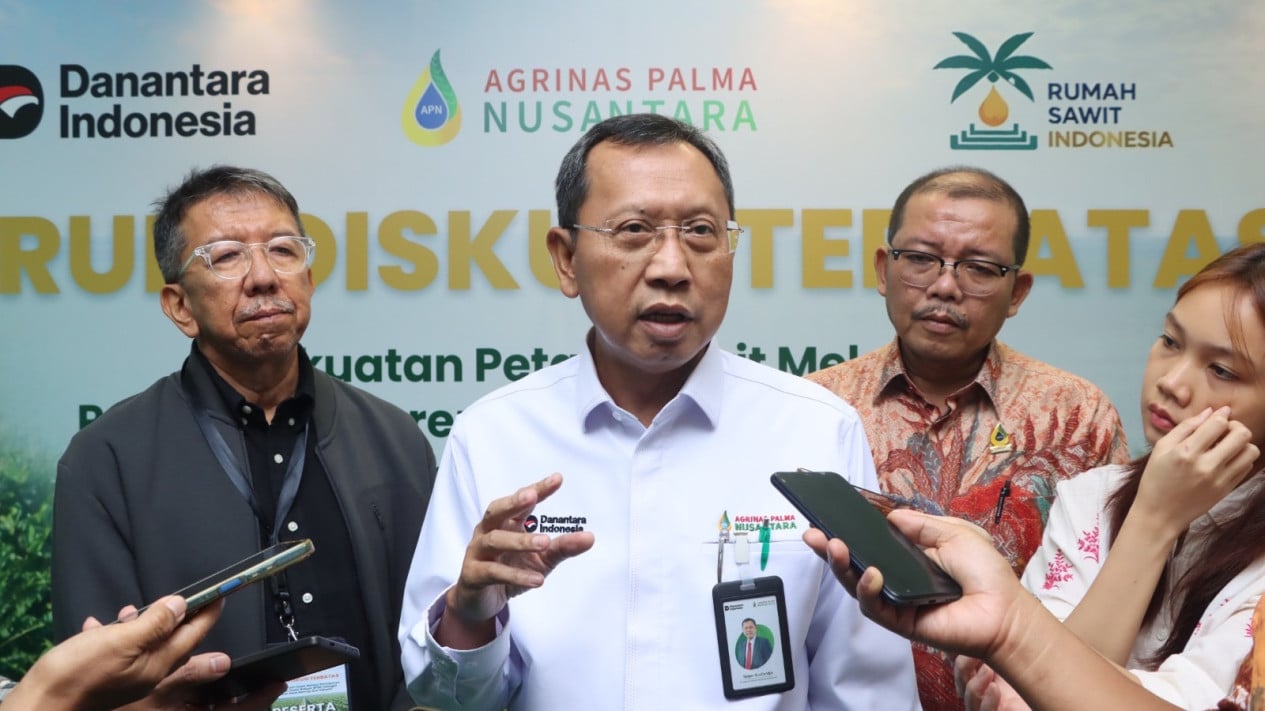
Assistance to farmers continues to be provided, particularly to support the implementation of PSR, which is considered far from its targets. Director of Partnership and Plasma at PT Agrinas Palma Nusantara (APN), Seger Budiardjo, highlights the strategic position of the palm oil commodity in the national economy.
“Palm oil is a flagship strategic commodity that plays a role in driving national economic growth and the development of industrial downstreaming,” said Director of Partnership and Plasma at PT Agrinas Palma Nusantara (APN), Seger Budiardjo, during a Limited Discussion Forum (FDT) at Menara Agrinas Palma, quoted from a press release on Monday, 27 April 2026.
Seger explained that one of the fundamental issues is the dominance of old palm trees in smallholder plantations, which directly impacts low production yields. He noted that this condition is widespread and involves millions of farmers in various regions.
“The area of trees over 25 years old reaches 40 per cent or 2.8 million hectares, involving 1.1 million family heads,” said Seger Budiardjo.
From a production perspective, he added that there is a significant gap between smallholder plantations and large-scale plantations. Currently, smallholder palm oil productivity is only around 2.6 tonnes per hectare per year, lower than that of private and PTPN plantations.
“This low productivity is also due to the very low realisation of PSR. In the last three years, it has only averaged 20 thousand per year. Therefore, a PSR acceleration strategy is needed. Government support and the active role of Agrinas Palma are key to the success of PSR acceleration,” he said.
According to him, accelerating PSR cannot rely on one party alone, but requires cross-institutional coordination as well as simplification of mechanisms that have so far been seen as obstacles in the field.