
Low Coverage Continues, BBPOM Begins Interventions in 13 Schools in Denpasar
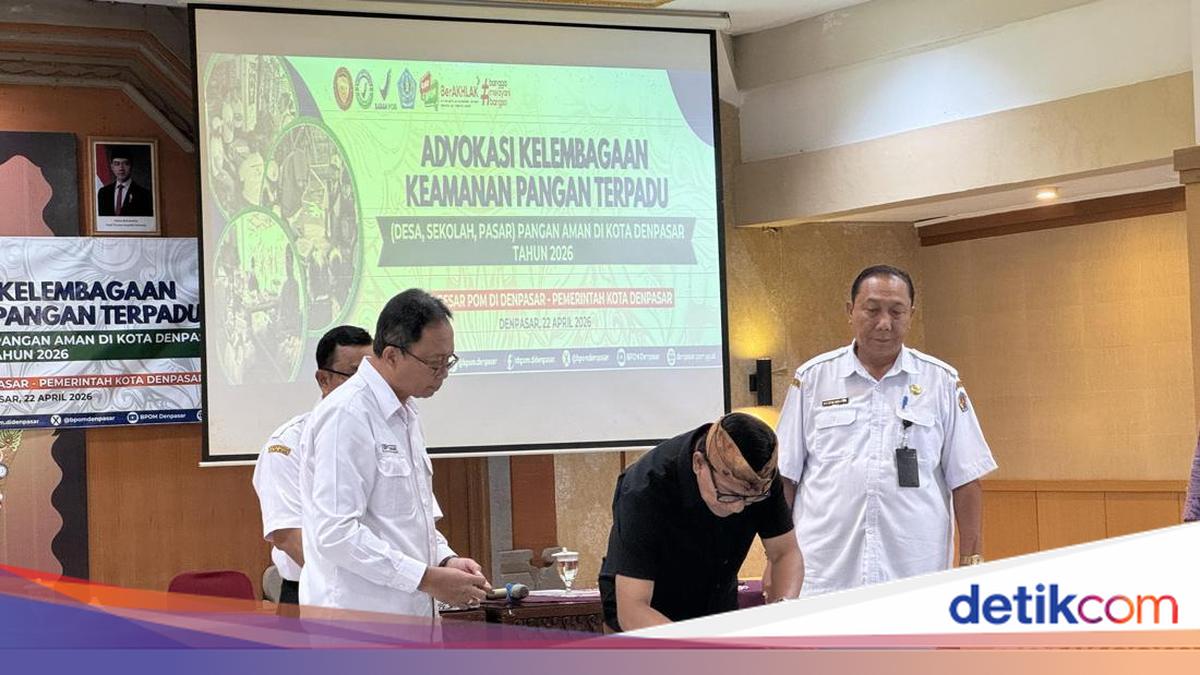
Food security intervention coverage in Bali and Denpasar remains low. The Balai Besar Pengawas Obat dan Makanan (BBPOM) in Denpasar is now commencing its inaugural interventions by targeting 13 schools. These 13 schools consist of 7 primary schools, 4 junior high schools, and 2 senior high schools. This intervention programme is a priority for BBPOM, covering schools (Schools Implementing Food Security Culture), villages (Safe Food Villages), and markets (Community-Based Safe Food Markets). “This intervention is related to the budget, yes. So at the provincial level, our region covers all regencies/cities, so it’s gradual. Some programmes have already been implemented, but full interventions through these stages are only being carried out this year,” stated Acting Head of BBPOM Denpasar, Made Ery Bahari Hantana, at the Opening of Integrated Institutional Food Security Advocacy event in Denpasar on Wednesday (22/4/2026). In addition, Hantana mentioned that this year’s school programme will involve another 30 schools in the second intervention phase, focusing on education. Besides schools, three villages/sub-districts are also targeted by the programme: Sumerta Kelod Village, Sidakarya, Padangsambian Klod, and Peguyangan Sub-district. The market programme also targets Padangsambian Market. “We only have the opportunity to target one market per year. This year, it’s Padangsambian Market. But other markets will still receive guidance,” explained Hantana. Based on data up to 2025 in Bali and Denpasar City, BBPOM’s intervention coverage is still relatively low. At the provincial level, interventions cover 12 percent of villages, 3.71 percent of schools, and 3.6 percent of markets. Meanwhile, in Denpasar City, coverage reaches 12 percent of villages, 0 percent of schools, and 3.03 percent of markets. “We are coordinating with the local government. We had an audience with the Deputy and the Department Heads. Then we compile it; for villages, of course, with PMD (Community and Village Empowerment), Disperindag (Industry and Trade Department), Disdikpora (Education, Youth, and Sports Department) as well. We are also ensuring even distribution; we hope for representation from the sub-districts too. Full interventions are still related to time and budget,” clarified Hantana. The Secretary General of Denpasar City, I Gusti Ngurah Eddy Mulya, stated the importance of the roles of three entities—markets, villages, and schools—as driving forces in socialisation, education, and assistance to realise food security. “If the food is safe, the community becomes healthy. Hopefully, the community becomes increasingly aware of serving safe consumption. Starting from the provision of ingredients, production, to distribution, and finally consumed by the community in a safe condition,” explained Eddy Mulya. Eddy Mulya also emphasised the need for monitoring, particularly on online food services, including products independently distributed throughout Denpasar.