
Love-Based Curriculum as an Effort to Address Challenges in the World of Education
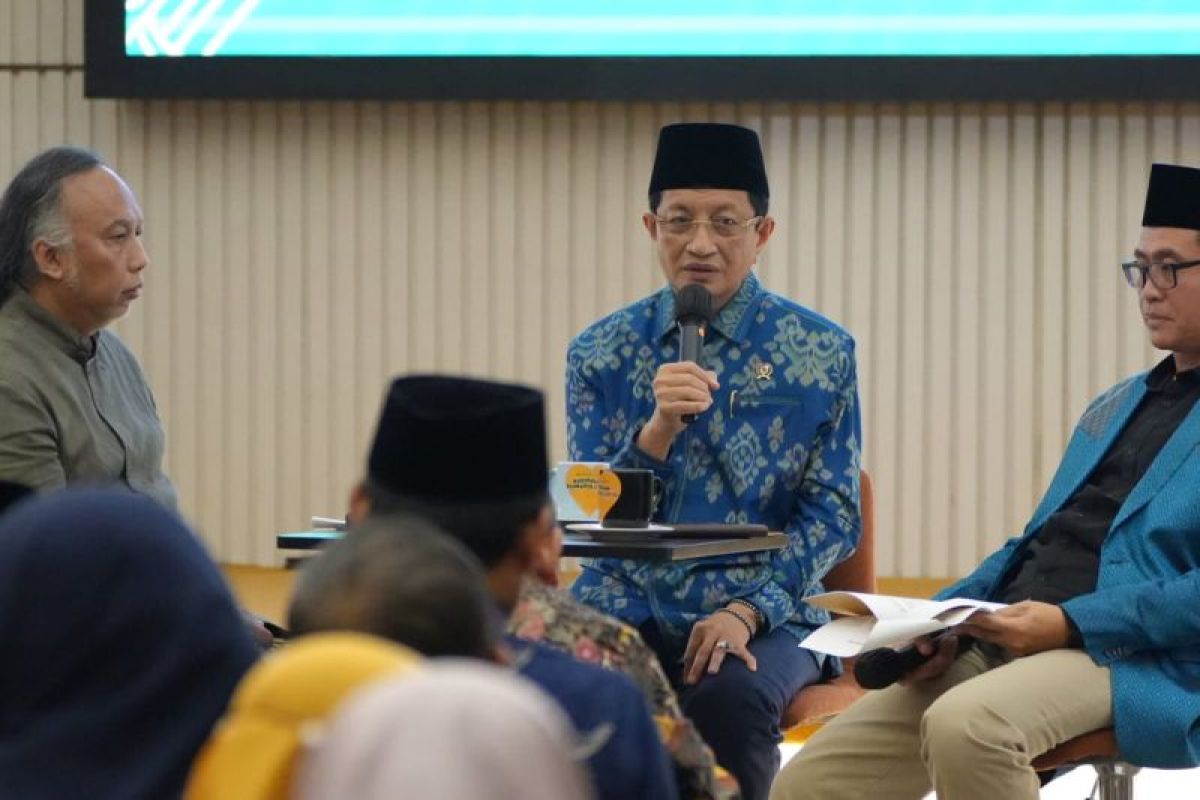
Jakarta (ANTARA) - Minister of Religious Affairs Nasaruddin Umar stated that the Love-Based Curriculum (KBC) emerges as an effort to address various challenges in the world of education, including spiritual dryness, declining moral quality, bullying, violence, and hatred. “We do not want to produce students who are spiritually dry, with only sharp minds. What we hope for is sharp minds but also fertile hearts,” said the Minister during the launch of the Self-Learning Love-Based Curriculum in Jakarta on Wednesday. The Minister explained that the Ministry of Religious Affairs (Kemenag) introduces KBC as a new paradigm that emphasises education which is not only intellectually intelligent but also emotionally and spiritually mature. He urged teachers, instructors, and Kemenag civil servants to become the main agents in spreading values of love, empathy, and social care, both in school environments and in the wider community. The Love-Based Curriculum also aims to produce productive and blessed Indonesian children. Because, according to the Minister, not all productivity is blessed, and there cannot be blessings without productivity. “Participants are expected to be able to integrate values of love into the learning process, community guidance, and public services in a concrete and sustainable manner,” said the Minister. “So that they will tolerate one another, love their fellow human beings, even fellow creatures and their living environment,” he added. Meanwhile, the Head of the Agency for Religious Moderation and Human Resource Development, Muhammad Ali Ramdhani, stated that the KBC self-learning activity aims to enhance the pedagogical and personality competencies of teachers and instructors. The KBC Self-Learning, attended by 305,344 participants online, demonstrates the high enthusiasm of teachers in improving their capacity and quality in the digital era.