
Local Sighting or Global Crescent? Weighing the Start of Ramadan 1447 H
Today, Tuesday (17 February 2026), public attention will once again turn to the Ministry of Religious Affairs’ Isbat Session to determine the start of Ramadan 1447 H. Astronomically, there is a possibility that the government will set 1 Ramadan on Thursday, 19 February 2026, through the istikmal mechanism: completing Sha’ban to 30 days because the crescent moon (hilal) has not yet met visibility criteria.
However, before the official decision is announced, public discourse has already emerged. Some circles refer to the appearance of the hilal in Alaska, United States, which astronomically was already at an altitude of approximately five degrees.
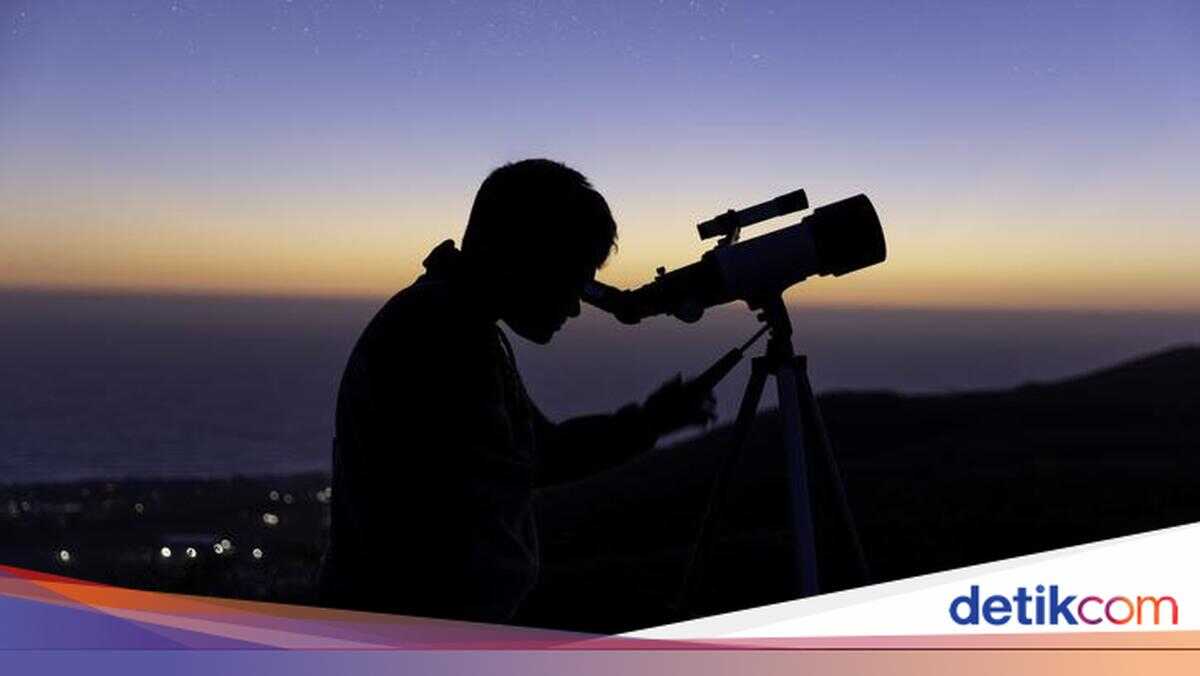
Using a global calendar approach, they began fasting on Wednesday, 18 February. On the other hand, local communities such as those in Nagari Lunang (historically known as Lunang Kampung), Pesisir Selatan, West Sumatra, maintain their traditional ru’yat method: direct observation with the naked eye. This difference is not merely a matter of astronomical technicality.
It touches upon a fundamental question: how sacred texts are understood within different geographical contexts.
The Quran, in Surah Al-Baqarah verse 185, states: “Whoever among you witnesses the month, let him fast.”
The word “witnesses” (syahida) becomes the starting point of all differing ijtihad (scholarly reasoning). In classical Arabic linguistic studies, this word does not solely mean “to see” but also “to be present” or “to encounter.”
This is where the two approaches both converge and diverge. The global approach understands “witnessing” as the astronomical existence of the moon anywhere on earth. If the hilal already exists and is potentially visible somewhere, that is sufficient basis.
Meanwhile, the local approach asserts that witnessing is an actual visual experience within one’s own region.
Both views have methodological grounding within Islamic tradition. In Tafsir Al-Qurtubi, it is affirmed that the obligation to fast is tied to clear certainty about the arrival of the new month.
If the hilal is obscured by clouds or not yet visible, Islamic law provides a solution through istikmal so that the faithful may worship with full certainty.
On the other hand, the idea of unifying the global Islamic calendar also has intellectual foundations. However, as M. Quraish Shihab argues in Tafsir Al-Misbah, the unity of fasting times has physical limitations that cannot be ignored. Such unity is relevant so long as the regions in question are still within the same night.
This is where geographical reasoning becomes important. The time difference between Indonesia and Saudi Arabia, ranging from four to five hours, still allows for an overlap of nightfall. However, between Indonesia and the United States, the time gap is enormous.
If the hilal only appears in Alaska when Indonesia has already entered the following daytime, then it is practically impossible to require people to begin fasting in the middle of the day. The law of taklif (religious obligation) does not operate in a vacuum; it always interacts with the realities of time and place.
The phenomenon in Nagari Lunang is worth examining. This community remains faithful to local ru’yat even when it differs from the national determination.
Historically, such practice has precedent in the hadith of Kuraib, when Ibn Abbas in Medina did not follow the ru’yat results of Muawiyah in Syria due to geographical difference. Geographical distinction was recognised as a relevant factor in determining the start of the month.
This means that plurality of method is not a deviation but rather part of the treasury of Islamic jurisprudence itself.
Of course, in the context of a modern state, the Isbat Session has a strategic function as a mediating authority. The state is not negating ijtihad but rather facilitating a meeting point so that social life proceeds in an orderly fashion.
The MABIMS criteria used by the government represent an effort to find common standards across the Southeast Asian region.
However, religious maturity is not measured by uniformity of dates alone. It is reflected in our ability to understand that differences in the start of Ramadan are rooted in differences of methodology, not differences of faith.
Amidst advances in astronomical technology and the currents of globalisation, the question of global hilal versus local ru’yat will continue to arise every year. But perhaps what matters more is not who begins fasting earliest, but how the Muslim community is able to nurture differences with intellectual maturity.
The start of Ramadan should be a moment for the unification of hearts, not a trigger for social fragmentation. The essence of “syahida” is not only about finding the crescent on the horizon but about cultivating a collective awareness that Islam provides space for diverse ijtihad.
Therein lies the richness of our tradition: in the ability of sacred texts to engage with geographical realities, and in the wisdom to honour differences without losing brotherhood.
Wahyuddin Luthfi Abdullah is a lecturer in Islamic Religious Education at Andalas University, Padang.