
Local Governments That Fail to Close Open Dumps by 2026 Will Face Sanctions
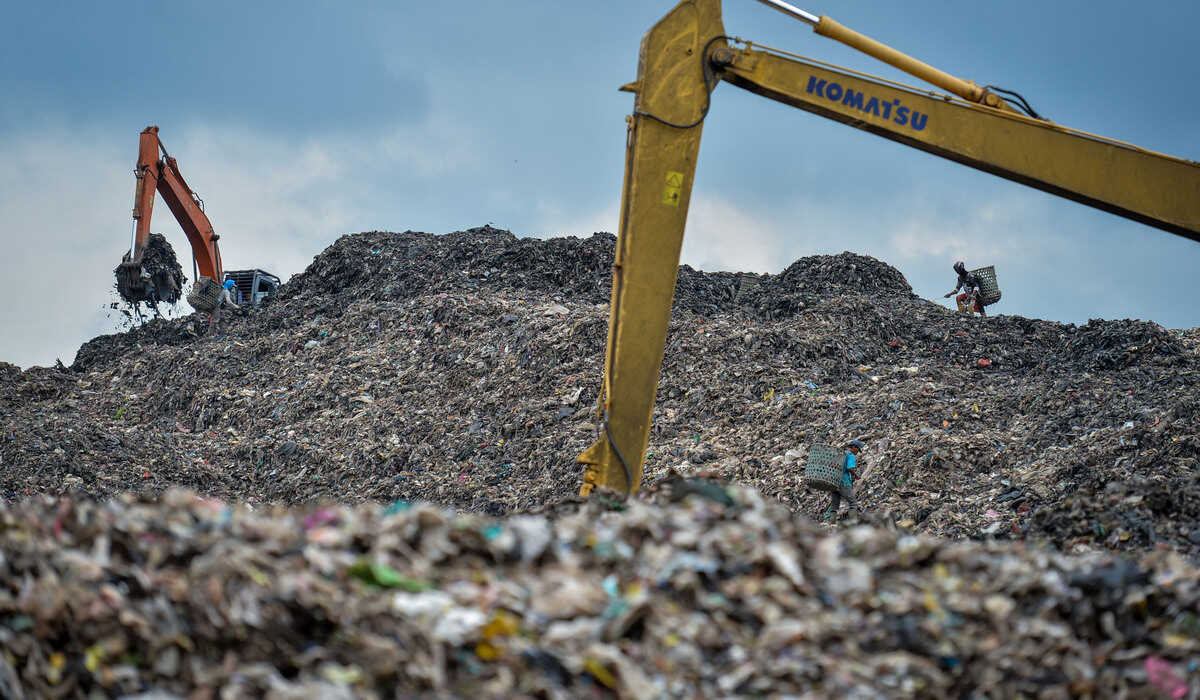
The central government has affirmed that it will take firm action against local governments that continue to implement open dumping practices at landfills beyond the established deadline of 2026.
Coordinating Minister for Food Affairs, Zulkifli Hasan, stated that the cessation of open dumping for waste management is no longer merely a suggestion but a mandatory requirement that all regions must adhere to.
“The Minister of Environment stated that open dumping landfills must be closed by 2026. So, how many months do we have left? Only nine months,” said Zulhas during the National Coordination Meeting on Waste Management for 2026 and the Waste Management Performance Awards at Balai Kartini, South Jakarta, Wednesday (February 25).
He revealed that several local governments have even submitted requests to postpone the deadline for ending this practice. However, the government ensures that no leniency will be granted.
“Currently, some are requesting an extension until November, and some until June. But the deadline has already been set for 2026. There will be no further negotiations,” he emphasized.
According to Zulhas, the issue of waste has now reached an emergency stage in various regions. Therefore, the central government will not hesitate to enforce regulations on regions that do not demonstrate commitment to transforming their waste management systems.
“There must be firm action. Because if not, our waste will continue to pile up,” he said.
He added that open dumping practices have been a major cause of increasing environmental burdens due to poorly managed waste in the regions.
The termination of this open dumping method is regulated in Law Number 18 of 2008 concerning Waste Management, which explicitly prohibits waste management through open dumping systems at landfills.
The government also encourages regional heads to immediately prepare regulations, facilities, and infrastructure, as well as funding schemes to support the transition to a more sustainable waste management system.
In addition, waste management is also expected to be carried out from the source, including in office areas, restaurants, hotels, and even households, so that not all waste needs to be transported to landfills.
“Offices should be able to manage waste within their premises. Restaurants should manage their waste on-site. Hotels should be able to do the same. Campuses should be able to manage waste on-site,” said Zulhas.
With the limited time remaining, the government requests that local governments immediately accelerate improvements in waste management to avoid potential sanctions and broader environmental impacts in the future. (H-3)
The government states that there are still about 40 landfills in Indonesia that fully practice open dumping.
If the waste problem is not addressed immediately, several landfills are expected to reach their maximum capacity by 2028.
The waste problem in Bali has reached a high level of vulnerability and can no longer be handled with the old pattern that relies on landfills.
The Ministry of Environment (KLH) has imposed administrative sanctions on 21 landfills in districts/cities in West Java.
President Prabowo Subianto targets the completion of 100 percent of the waste problem by 2029. The government must be more active in taking action on the ground.
The closure of open dumping landfills is to prevent environmental pollution and the spread of microplastics.
The Minister of Environment/Head of the Environmental Protection Agency (KLH/BPLH), Hanif Faisol Nurofiq, is currently evaluating the Basirih landfill in Banjarmasin, South Kalimantan.